








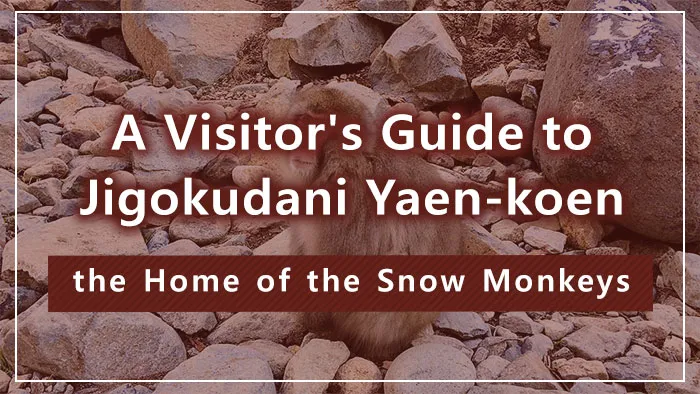
There is a place in Japan where you can watch monkeys soaking in a hot spring from just a few steps away: Jigokudani Yaen-koen (Jigokudani Monkey Park) in Nagano Prefecture. Travelers from all over the world come to Nagano for a glimpse of Japan’s snow monkeys.
This article introduces the park itself, how to get there from Tokyo, the best season to see the snow monkeys, admission fees and opening hours, and the rules to keep in mind during your visit. Use it as a reference when working Jigokudani Yaen-koen into your Japan travel plans.

1. What is Jigokudani Yaen-koen (the Snow Monkey Park)?

Jigokudani Yaen-koen is a wild monkey observation site in the town of Yamanouchi, Nagano Prefecture. It sits at an altitude of roughly 850 meters (about 2,800 feet) in the valley of the Yokoyu River, which flows through Joshinetsu-Kogen National Park. Since the park opened in 1964, it has been known around the world as a place to see monkeys bathing in a hot spring.
The monkeys that live in the valley are Japanese macaques (scientific name: Macaca fuscata). Because they live in snow country, they are commonly called snow monkeys outside Japan, and the nearest bus stop is even named Snow Monkey Park. The park has an open-air hot spring pool reserved for the monkeys, which they enter entirely of their own accord. There are no tall fences separating visitors from the animals, so you can observe the macaques up close in a setting very close to their natural state.
2. How to get to Jigokudani Yaen-koen from Tokyo

Jigokudani Yaen-koen can be visited as a day trip from Tokyo. There are two main routes, and both begin the same way: take the Hokuriku Shinkansen to Nagano Station. From Nagano, you can either transfer to the Nagano Dentetsu line or board an express bus bound for Shiga Kogen.
Whichever route you choose, note that it is roughly a 35-minute walk from the Snow Monkey Park bus stop to the park entrance. The trail is unpaved, so bring comfortable walking shoes. If arranging tickets on your own feels daunting, day tours departing from Tokyo are also available.
2-1. Via the Hokuriku Shinkansen and the Nagano Dentetsu line
The route combining the Hokuriku Shinkansen with the Nagano Dentetsu line involves straightforward transfers, making it a good choice for first-time visitors to Japan. From Tokyo Station, take a Kagayaki, Hakutaka, or Asama service on the Hokuriku Shinkansen and get off at Nagano Station. Fares vary by train, travel date, and how you purchase your ticket, so check the details when booking.
At Nagano Station, transfer to the Nagano Dentetsu line and ride the limited express for 38 minutes to Yudanaka Station. The total cost, including the limited express surcharge, is 1,760 yen. From Yudanaka Station, take a local bus for about 15 minutes and get off at Snow Monkey Park. The bus fare is 390 yen, and the route also stops at Shibu Onsen along the way. Staying overnight at an inn in Shibu Onsen or Yudanaka Onsen has the added advantage of letting you visit the park at an unhurried pace the following morning.
2-2. Via the Hokuriku Shinkansen and the express bus bound for Shiga Kogen
If you would rather minimize transfers, the express bus bound for Shiga Kogen is a convenient option. Take the Hokuriku Shinkansen from Tokyo Station to Nagano Station, then board the express bus at the bus terminal outside the station’s east exit.
The ride from Nagano Station to Snow Monkey Park takes roughly 40 to 50 minutes depending on the service,with no transfers along the way. Since you will still need to walk about 35 minutes from the bus stop to the park, it is a good idea to leave large luggage at the station or at your accommodation. Operating periods and timetables for the express bus change with the season, so check the latest Nagaden Bus schedule before you set out.
3. When is the best season to see the snow monkeys?

If your goal is to see the snow monkeys soaking in the hot spring surrounded by snow, visit during the winter months of December through March. The valley is blanketed in snow, and the monkeys are far more likely to be in the water. January and February in particular are the months when the white winter scenery and the bathing macaques come together. That said, there is no set day or time when the monkeys get into the hot spring. They are wild animals, and depending on the weather and food conditions, there are days even in winter when they do not appear in the park at all.
This is where the official Jigokudani Yaen-koen website comes in handy.It publishes a weekly Monkey Appearance Forecast, updates on whether the monkeys are in the park that day, and a live camera feed. Check the latest conditions before you head out. Keep in mind that the sun sets early in winter and that the park closes at 4:00 p.m. during the winter season, so arriving in the morning or early afternoon gives you plenty of daylight to watch at a relaxed pace.
The park is open year-round, so visits from spring through autumn are also possible. The birthing season runs from late April to late June, when you may spot newborn infants. In summer, you can watch the spring-born youngsters playing energetically. From mid-October, the valley also puts on a display of autumn foliage. Note, however, that food is plentiful in the mountains in autumn, so there are days when the monkeys do not come down to the park.
4. Admission fees and opening hours at Jigokudani Yaen-koen

Admission to Jigokudani Yaen-koen is 800 yen for adults (18 and over) and 400 yen for children (elementary through high school age). Children under 6 enter free of charge when accompanied by a guardian. Tickets are purchased on the day of your visit at the park entrance. Major credit cards and electronic money are accepted, but QR code and barcode payments are not.
Opening hours change with the season. During the summer season, from April to October, the park is open from 8:30 a.m. to 5:00 p.m.; during the winter season, from November to March, the hours are 9:00 a.m. to 4:00 p.m. The park has no regular closing days and is in principle open year-round, though it may close or shorten its hours without notice due to weather, monkey behavior, natural disasters, or similar circumstances.
The trail leading to the park is unpaved, and there are slopes, uneven ground, and steps within the grounds as well. The site cannot accommodate wheelchairs or strollers, so please come dressed in comfortable clothing and sturdy shoes. The path can freeze over in winter, when snow boots or a pair of slip-on crampons will give you extra peace of mind.
5. Rules to follow when visiting Jigokudani Yaen-koen

The macaques at Jigokudani Yaen-koen are wild animals. To allow people and monkeys to share the same space safely, the park has established a number of rules, and visitors who ignore them may be asked to leave. For an enjoyable visit, familiarize yourself with the four key rules before you go: no feeding, no contact, no animals, and restrictions on how you take photos.
5-1. Do not feed the monkeys
Never give the monkeys food of any kind. Once they learn to expect food from people, they will approach every visitor they see looking for a handout. This leads to behavior such as clinging to your legs or snatching bags, which puts visitors at risk. Being fed also disrupts the monkeys’ natural way of life. Please store any food and drinks in a locker before entering the park.
5-2. Do not touch or startle the monkeys
Do not reach out toward the monkeys or startle them with loud noises. Japanese macaques will threaten and occasionally bite when they feel threatened. Keeping your distance and observing quietly is the surest way to see them behaving naturally. Staring directly into a monkey’s eyes is also read as a sign of hostility, so if you happen to make eye contact, calmly look away. When taking photos, keep your camera or smartphone at a safe distance from the animals as well.
5-3. Do not bring dogs, cats, or other animals into the park
Dogs, cats, and other animals may not be brought into the park. Dogs and cats are natural predators of monkeys, and the sight of them puts the macaques on high alert. Service animals such as assistance dogs and guide dogs are also not permitted, for the same reason. If you are traveling with a pet, look into pet hotels or the pet-sitting services offered by your accommodation in advance. Temperatures in this mountainous area swing widely, so leaving an animal in a parked car is not a safe alternative either.
5-4. Do not use drones or selfie sticks
Photography using drones and selfie sticks is prohibited within the park, and placing cameras in the hot spring pool is not permitted either. The sound of a drone overhead, or a pole suddenly extending toward them, agitates the monkeys considerably. Please shoot with a handheld camera or smartphone. Flash photography is allowed. However, getting too close to the monkeys is dangerous, so use your zoom from a distance instead.
Summary
Jigokudani Yaen-koen is a destination in Nagano Prefecture where you can watch wild Japanese macaques soaking in a hot spring at close range. From Tokyo, take the Hokuriku Shinkansen combined with the Nagano Dentetsu line or an express bus bound for Shiga Kogen, then walk about 35 minutes from the bus stop to reach the park. December through March, when the valley is under snow, is the best season, though the monkeys do not bathe every single day. Check the weekly Monkey Appearance Forecast on the official website before setting out, follow the rules against feeding and touching the animals, and you can enjoy this uniquely Japanese sight with complete peace of mind.
*This article is based on information current as of July 2026.