







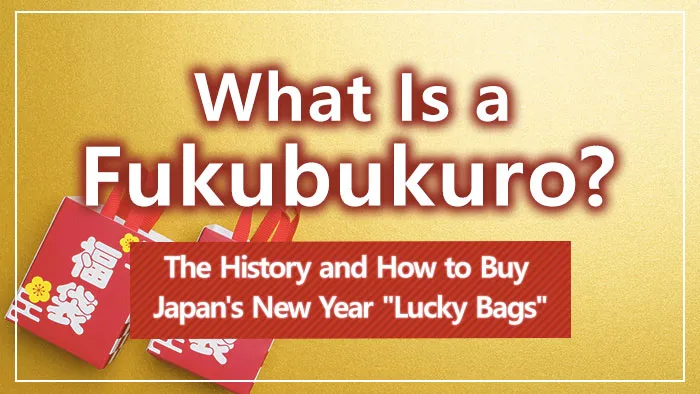
If you want to enjoy shopping in Japan over the New Year period, fukubukuro are worth your attention. A fukubukuro is a uniquely Japanese New Year tradition in which multiple items — clothing, food, cosmetics, household goods and more — are packed into a bag or box and sold at a set price. Alongside bags whose contents stay secret until you open them, there are now products that reveal their contents in advance, as well as ones that include tickets or coupons.
This article explains the meaning and history of fukubukuro and the main ways to buy them, then introduces the 2026 lucky bags sold by Seven-Eleven, Sanrio, Mister Donut, Starbucks and department stores. It also covers what travelers should know about carrying them home and about returns and exchanges.

1. What is a fukubukuro?

A fukubukuro is a Japanese New Year tradition in which multiple products are packed into a bag or box and sold at a set price. In English they are often called “lucky bags” or “mystery bags.” Fukubukuro are sold by a wide range of stores and brands, covering clothing, cosmetics, food, household goods and more.
With a traditional fukubukuro, buyers do not know what is inside until they open the bag. The appeal lies in the fun of not knowing what you will get, together with the sense of value that comes from receiving goods worth more than the selling price. Today, some fukubukuro disclose all or part of their contents before going on sale.
Fukubukuro are mainly sold to coincide with the New Year hatsuuri. Hatsuuri refers to the first day a store sells goods in the new year. Because the date differs from store to store, travelers who want to buy a fukubukuro should check opening dates in advance.
In addition to in-store sales after New Year, some stores now accept online reservations or lottery entries from around November to December. Since sales methods and timing vary by store, if you already have a brand in mind it is safest to check the latest information on its official website.
1-1. The history of fukubukuro
There are several theories about the origin of the fukubukuro, and the first store to sell them and the exact period have not been clearly established. A sales method that led to today’s fukubukuro is said to have existed as far back as the Edo period.
One well-known theory points to the “Ebisu bag” said to have been sold by the kimono fabric merchant Echigoya. Echigoya was the forerunner of today’s Mitsukoshi, and it is said to have packed leftover fabric from tailoring kimono into bags and sold them. The same sales method then spread to other kimono merchants.
Later, fukubukuro became tied to the New Year sales season at department stores and took root as the New Year shopping culture that continues today.
2. How do you buy a fukubukuro?

The main ways to buy a fukubukuro are in store and online, and online sales methods vary by product — reservations, lotteries, or first-come, first-served.
In-store fukubukuro generally go on sale in line with each store’s hatsuuri. That day is not always January 1: department stores and shopping complexes may hold their first sale on January 2 or January 3. Popular items may be limited in number, so check the sale date and sales method on the store’s official website before your trip.
For online sales, some brands begin taking reservations or lottery entries from around November to December. Because there are also online-only products and lottery-only products, checking both in-store and online sales gives you more options.
3. What kinds of fukubukuro do well-known stores sell?

In Japan, a wide range of businesses sell fukubukuro, including convenience stores, restaurants, character shops and department stores. Some contain only merchandise, while others combine goods with tickets or coupons that can be used in store.
Since the contents change every year, the following are representative examples of fukubukuro sold for 2026.
3-1. Seven-Eleven
Seven-Eleven sold the “Seven-Eleven Fukubukuro 2026” for 3,630 yen (tax included).
The bag contained four original goods, including a kitchen timer and a rubber coaster. It also came with electronic coupons worth up to 3,300 yen in total discounts, usable at participating stores nationwide.
Reservations opened on November 18, 2025 through Seven Net Shopping, with items collected at a Seven-Eleven store. Reservations were not accepted in stores, making this an example of a fukubukuro where you need to check the purchase method in advance.
3-2. Sanrio
Sanrio sold fukubukuro for 2026 at 4,990 yen (tax included) each, available in seven character variations.
The characters were Hello Kitty, My Melody, Little Twin Stars, Pompompurin, Cinnamoroll, Kuromi and Pochacco.The bags contained items such as a tote bag, a zodiac plush toy, a mascot holder and room socks.
Reservations opened on December 1, 2025. Because the reservation process differed between Sanrio shops and the online shop, buyers needed to check the procedure for the location they wanted to use.
3-3. Mister Donut
Mister Donut sold two types of fukubukuro for 2026, priced at 3,800 yen and 6,500 yen.
The 3,800 yen bag contained a decoration kit, a mini tote bag, a set of two hand towels and exchange cards for 20 donuts. The 6,500 yen bag contained a Pon de Ring plush toy and a tote bag, among other items, plus exchange cards for 35 donuts.
Reservations began on December 10, 2025, and sales started progressively from December 26. Since release dates can vary by store, check the details for the store you plan to visit if you are buying during your trip.
3-4. Starbucks
Starbucks Coffee Japan sold its 2026 fukubukuro for 8,800 yen (tax included, free shipping).
The bag contained a limited-edition stainless steel bottle, three goods items, coffee beans, a coffee bean ticket and seven drink tickets, among other items. The tote bag itself was also part of the fukubukuro.
The 2026 bag was not sold in stores but through an online lottery. Entering the lottery required registration for “My Starbucks.” Travelers hoping to get a Starbucks fukubukuro need to check the entry conditions and delivery arrangements for each year’s sale.
3-5. Department stores (Mitsukoshi, Takashimaya, Daimaru and others)
A defining feature of department store fukubukuro is the breadth of choice, spanning food, fashion, household goods and more. In addition to bags planned by the store itself, fukubukuro from brands carried in store or in the online store are also sold.
Takashimaya’s 2026 fukubukuro, for example, covered food and sweets, women’s and men’s fashion, homeware, and baby and kids’ items. The Daimaru Matsuzakaya online store also handled a wide variety of bags, including children’s clothing, bedding and food.
Department stores offer both fukubukuro that can be reserved online in advance and fukubukuro sold in store on the hatsuuri day. The hatsuuri date also differs by store. If you are looking for department store fukubukuro while traveling, check both the store you plan to visit and its online store.
4. What should travelers keep in mind when buying a fukubukuro?

If you are a traveler buying a fukubukuro, check not only the sales method but also how you will carry it home and the conditions for returns and exchanges.
Because a fukubukuro holds several items such as clothing, food and household goods, some bags are large or heavy. Travelers leaving Japan by air should factor in the spare capacity in their suitcase and their airline’s baggage limits.
Also remember that with a traditional fukubukuro you cannot check all the contents before buying. If you want to know what is inside, check each store’s product description. Conditions for returns and exchanges also need to be confirmed store by store. Checking the terms of sale on the official website before you buy will help you avoid trouble during your trip.
Conclusion
Fukubukuro are a signature part of Japan’s New Year shopping culture, in which several products are packed into a bag or box and sold together. The appeal lies in the fun of not knowing what is inside and the value of receiving goods worth more than the price paid, though some bags now disclose all or part of their contents.
That said, the timing and purchase method differ by store. Alongside bags sold in store on the hatsuuri day, there are also products that take online reservations or lottery entries from around November to December, so checking early is essential. Travelers visiting Japan should confirm not only the purchase method but also the size and weight of the goods, the delivery address, the collection date, and the conditions for returns and exchanges.
*This article is based on information available as of August 2026.