







Cashless payments are widely used in Japan and are available in many situations during a trip, including shopping, dining, and traveling by train or bus. However, the payment methods accepted vary by store and facility, and some places still accept cash only.
This article introduces the main payment methods used in Japan, including credit cards, transportation IC cards, QR code payments, and smartphone payments. Learn about their features, setup procedures, recommended combinations, and where they can be used to make payments during your trip to Japan more convenient.
1. Cashless Payments in Japan
In 2025, the total value of cashless payments in Japan reached JPY 162.7 trillion. Cashless payments accounted for 58.0% of private final consumption expenditure. Credit cards made up 82.7% of the total, equivalent to JPY 134.6 trillion, followed by code-based payments at 10.2% or JPY 16.6 trillion, electronic money at 3.7% or JPY 6.0 trillion, and debit cards at 3.4% or JPY 5.5 trillion.
Although cashless payments are becoming increasingly common, some businesses still accept cash only. Check the available payment methods before making a purchase and carry a small amount of Japanese yen when going out.
1-1. Benefits of Using Cashless Payments in Japan
Using cashless payments in Japan saves international visitors the trouble of counting unfamiliar Japanese banknotes and coins and allows them to complete transactions more quickly. Transportation IC cards are particularly convenient because they can be used not only for trains and buses but also at participating convenience stores and restaurants. This allows travelers to use one payment method for both transportation and shopping.
Using an internationally issued credit or debit card can also reduce the need to exchange currency or withdraw cash from an ATM. However, some businesses in regional areas and independently operated stores accept cash only, so it is advisable to carry a small amount of Japanese yen.
2. Main Types of Cashless Payments Used in Japan
Japan offers various cashless payment methods, including credit cards, transportation IC cards, QR code payments, smartphone payments, and retailer-issued electronic money. The following sections explain the features of each option.
2-1. Credit and Debit Cards (Visa, Mastercard, JCB, etc.)
Credit cards allow users to pay at a later date, while payments made with debit cards are generally deducted from the linked bank account immediately. Cards carrying international brands such as Visa, Mastercard, and JCB can be used at many hotels, department stores, convenience stores, restaurants, and taxi companies. At checkout, insert the card into the payment terminal or tap it against the terminal when contactless payment is available.
Before traveling, confirm that your card can be used internationally in Japan. You should also check your spending limit, applicable fees, and four-digit personal identification number. When a dedicated card application is available, enabling international use and transaction notifications can make the card easier to manage.
Check the logos displayed at the entrance or checkout counter to see which card brands are accepted. Carrying cash is also recommended in case your card cannot be used.
2-2. Transportation IC Cards (Suica, ICOCA, PASMO, etc.)
Transportation IC cards are prepaid payment cards. Users add funds in advance and tap the card against ticket gates or payment terminals. Suica, ICOCA, and PASMO can be used on trains and buses in compatible service areas, as well as at convenience stores, restaurants, vending machines, and other locations displaying the transportation IC card logo. They are useful for international visitors because they reduce the need to purchase individual train tickets and can also be used for small purchases.
Physical cards can be purchased from ticket machines or counters at train stations and are generally topped up with cash. To use a transportation IC card on a smartphone, install the relevant service application on a compatible device or issue and add the card through Apple Pay or another supported wallet. You can then register the required account information and payment card to add funds.
Compatible devices and accepted payment cards vary by service, so check the official website before traveling.
2-3. QR Code Payments (PayPay, Rakuten Pay, etc.)
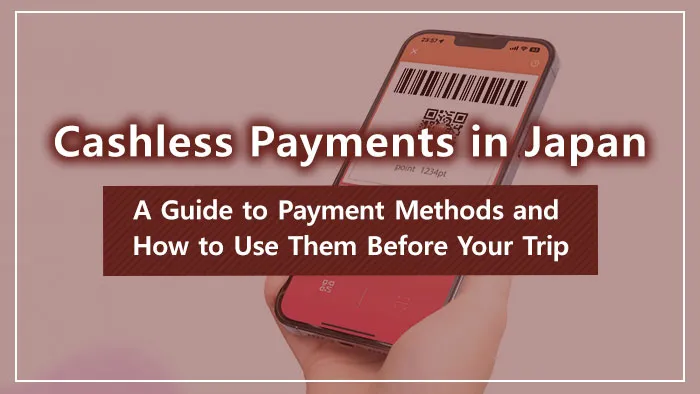
QR code payments use a dedicated application linked to a stored balance, credit card, or another funding source. At checkout, users either display a barcode for the store to scan or scan the QR code provided by the store. PayPay and Rakuten Pay can be used at participating convenience stores, restaurants, drugstores, and other businesses, allowing customers to pay using only a smartphone.
To use PayPay, download the application, complete phone or SMS verification using a Japanese mobile phone number, and set up a payment method. To use Rakuten Pay, download the application, create or sign in to a Rakuten account, verify a phone number beginning with 090, 080, or 070, and register a credit card or another payment method.
Both services have registration requirements intended for users in Japan. Short-term international visitors may therefore be unable to use them. Check the telephone number and card requirements before traveling and prepare an alternative payment method.
2-4. Smartphone Payments (Apple Pay and Google Pay)
Apple Pay and Google Pay allow users to register compatible credit cards, debit cards, transportation IC cards, and other payment methods on a smartphone. Users can then make payments by tapping the device against a compatible terminal. These services make it possible to manage multiple payment methods in one place and complete purchases without taking out a physical wallet.
To set up Apple Pay, scan or enter the card information in the Wallet application on an iPhone and complete the verification required by the card issuer. On an Android device, add the card through Google Wallet and follow the authentication instructions. Transportation IC cards can also be added by following the on-screen instructions.
In Japan, the payment system supported by the store—such as contactless card payment, iD, or QUICPay—must match the method supported by the registered card.Some internationally issued cards may not work, so confirm compatibility with the card issuer before traveling.
2-5. Retailer-Issued Electronic Money (WAON, nanaco, etc.)
Retailer-issued electronic money is a prepaid payment method. Users add funds in advance and tap a card or smartphone against the payment terminal at checkout. WAON can be used at AEON Group stores, FamilyMart, and other participating locations. nanaco is accepted at 7-Eleven and other businesses displaying the service logo. Users may also earn points when purchasing eligible products or shopping at participating stores.
Physical cards can be obtained from participating supermarkets, convenience stores, and other retailers. Funds can be added with cash at checkout counters, dedicated charging machines, and supported ATMs.
For smartphone use, install the WAON or nanaco application on a compatible device or add the service to Apple Pay or another supported wallet. Follow the on-screen instructions to complete registration. Device compatibility and available top-up methods are subject to certain conditions, so check the official website before visiting Japan.
3. Which Cashless Payment Services Are Recommended for a Trip to Japan?
For a trip to Japan, it is recommended to use both an internationally branded credit card, such as Visa or Mastercard, and a transportation IC card, such as Suica or PASMO. Credit cards are accepted at many hotels, department stores, convenience stores, and restaurants, and travelers can often continue using the card they normally use at home. Transportation IC cards are convenient for trains and buses and can also be used for small purchases at convenience stores and other participating businesses.
iPhone users may be able to add Suica or PASMO to Apple Wallet, depending on their device and payment card. This makes it possible to use a smartphone for both transportation and shopping.
Japanese QR code payment services such as PayPay may require a Japanese telephone number or bank account, making registration difficult for short-term visitors. It is also advisable to carry a small amount of Japanese yen for stores that accept cash only.
4. Where Can You Use Cashless Payments in Japan?
Cashless payments can be used in many situations during a trip to Japan, including shopping, dining, transportation, and accommodation. Common locations include:
- Convenience stores and supermarkets
- Restaurants and shopping facilities
- Train stations and public transportation
- Tourist attractions and hotels
Accepted payment methods vary by store and facility. A business that accepts credit cards may not accept transportation IC cards or QR code payments. Before paying, check the entrance or checkout counter for the logos of supported international card brands, electronic money services, and QR code payment services.
Some small businesses in regional areas, independently operated restaurants, admission counters at temples and shrines, and certain ticket machines may accept cash only. Even when mainly using cashless payments, carrying a small amount of Japanese yen will help you prepare for situations where cashless payment is unavailable.
Conclusion
Japan offers a wide range of cashless payment methods, including credit cards, transportation IC cards, and smartphone payments. For international visitors, a combination of an internationally branded credit card that can be used at hotels and restaurants and a transportation IC card that is convenient for trains, buses, and small purchases is particularly practical.
Before using these payment methods, check whether your card supports international transactions, as well as the applicable fees, PIN requirements, and device compatibility. Accepted payment methods vary by store and facility, and some small businesses and temples or shrines in regional areas may accept cash only.
Using cashless payments as your main payment method while carrying a small amount of Japanese yen will help make transactions during your trip smoother.
This article is based on information available as of July 2026.