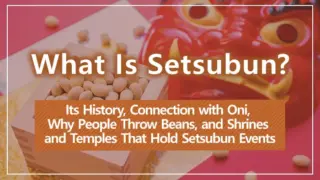








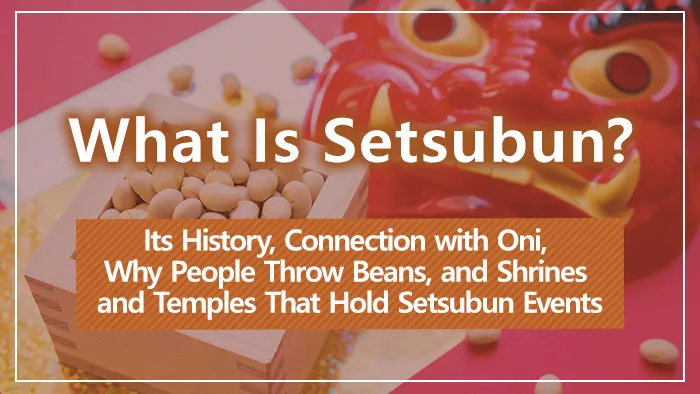
When people think of Setsubun, bean-throwing and ehomaki sushi rolls may come to mind. However, there are fewer opportunities to learn why beans are thrown at oni, or when the customs practiced today first began. Setsubun has a long history as an occasion to drive away evil influences at the change of seasons and pray for good fortune and good health.
This article explains when Setsubun falls in 2027, the history of the event, its connection with oni, representative foods and customs, and Setsubun events held at shrines and temples across Japan.

1. What Is Setsubun?

Originally, the word “Setsubun” referred to the day before each of the four seasonal turning points: Risshun, Rikka, Risshu, and Ritto, marking the beginning of spring, summer, autumn, and winter. Today, however, it generally refers to the day before Risshun, the traditional beginning of spring. It is widely observed with customs such as bean-throwing and eating ehomaki, through which people drive away evil influences and pray for good health and happiness throughout the year. Setsubun is one of Japan’s traditional events associated with the change of seasons.
1-1. When Is Setsubun in 2027?
Setsubun in 2027 falls on Wednesday, February 3. According to the National Astronomical Observatory of Japan’s official calendar for 2027, Risshun falls on February 4, making the previous day, February 3, Setsubun. Although Setsubun originally referred to the day before Risshun, Rikka, Risshu, and Ritto, today it generally means the day before Risshun.
The date of Risshun can vary from year to year due to factors including the Earth’s orbit, so Setsubun does not always fall on February 3. If you plan to enjoy traditions such as bean-throwing or eating ehomaki in 2027, prepare for February 3.
1-2. The History of Setsubun

One of the customs considered to be a root of Setsubun is Tsuina, a ritual for driving away evil influences that was introduced from China. Records show that it was already being performed in Japan by 706. It was held at the imperial court on New Year’s Eve to drive away oni believed to bring epidemics and other misfortunes.
Setsubun, meanwhile, originally referred to seasonal turning points, and during the Heian period, Buddhist sutras were recited to ward off disasters and pray for long life. Tsuina and Setsubun were originally separate practices, but they gradually became connected. By the Nanboku-cho period, there are records of people scattering beans while chanting “Oni wa soto, fuku wa uchi” (“Oni out, good fortune in”). By this time, the custom had spread beyond the imperial court and warrior class to ordinary people.
By the Edo period, Tsuina and Setsubun had become fully intertwined. Along with bean-throwing, various regional customs developed, including placing a sardine head on a holly branch and performing rituals to ward off misfortune. Through this history, Setsubun became established as an occasion to drive away evil influences at a seasonal turning point and pray for good health and good fortune for the coming year, traditions that continue today.
1-3. The Connection Between Setsubun and Oni
The oni driven away at Setsubun have traditionally represented not simply monsters from folklore, but misfortunes that are difficult for people to avoid, such as illness, natural disasters, and famine. Seasonal turning points were once believed to be times when harmful influences could more easily enter the world. In particular, the day before Risshun, an important seasonal milestone associated with the beginning of a new year in the traditional calendar, became an occasion to drive away oni and evil influences and pray for good health. Tsuina, which is considered one of the origins of Setsubun, was also a ritual intended to drive away malevolent oni believed to bring epidemics and other disasters.
The northeast direction is also traditionally known as the “kimon,” or “oni gate.” In the Chinese zodiac, it lies between the Ox and Tiger directions, which is said to be one reason oni came to be depicted with ox-like horns, tiger fangs, and tiger-skin loincloths. When people throw beans while chanting “Oni wa soto, fuku wa uchi,” meaning “Oni out, good fortune in,” they are symbolically driving misfortune out of the home and inviting good fortune inside. Beans were also believed to have the power to ward off evil, and one popular explanation links the Japanese word for beans, “mame,” with the phrase “ma o horobosu,” meaning “to destroy evil.” These ideas combined over time, and the custom of driving away oni as symbols of evil influences has continued to the present day.
2. Setsubun Foods and Customs

Setsubun includes a variety of foods and customs intended to drive away evil influences and invite good fortune. Representative examples include bean-throwing, eating ehomaki, and eating or displaying sardines. The specific practices and names vary by region, so comparing them with customs from different parts of Japan can also be interesting. Each tradition carries wishes associated with Setsubun.
・Mamemaki (Bean-Throwing)
Roasted soybeans are scattered while people chant “Oni wa soto, fuku wa uchi” (“Oni out, good fortune in”) to drive away evil and invite good fortune. Japan’s Ministry of Agriculture, Forestry and Fisheries states that the custom began in the Muromachi period. After throwing the beans, some people also eat the same number of beans as their age, or one more than their age.
・Ehomaki
Ehomaki are thick sushi rolls eaten while facing the year’s lucky direction, known as the “eho,” and making a wish. The custom spread from Osaka and later became popular throughout Japan. Ehomaki are sometimes said to contain seven ingredients in reference to the Seven Lucky Gods, although there is no strict rule regarding the fillings.
・Setsubun Sardines
In western Japan, particularly around the Kansai region, there is a custom of eating sardines on Setsubun. Traditionally, the strong smell and smoke produced when sardines are grilled are believed to drive away evil influences. Eating sardines is also said to remove negative energy from the body.
・Hiiragi-Iwashi
Hiiragi-iwashi is a decoration made by placing the head of a grilled sardine on a pointed holly branch and displaying it near the entrance of a home. The sharp thorns of the holly and the strong smell of the grilled sardine are believed to keep oni away, giving the decoration a protective meaning.
3. Shrines and Temples That Hold Setsubun Events

Representative shrines and temples that hold Setsubun events include Senso-ji Temple, Zojoji Temple, Heian Jingu Shrine, and Shiogama Shrine. Below are some of the distinctive features of their Setsubun celebrations.
3-1. Senso-ji Temple (Tokyo)
Senso-ji Temple holds its “Setsubun-e” celebration each year during Setsubun. One of the main events is a procession of toshi-otoko, men born under the zodiac sign of the current year, from Denbo-in to the Main Hall, followed by bean-throwing from a special stage on the east side of the hall.
At Senso-ji, it is said that “there are no oni in the presence of Kannon,” so instead of chanting “Oni wa soto,” participants call out “Senshu banzai, fuku wa uchi,” a phrase wishing for lasting prosperity and inviting good fortune inside. Other highlights include the Fukuju-no-Mai, or Dance of the Seven Lucky Gods, as well as bean-throwing by entertainers associated with Asakusa. General visitors can watch the events from the temple grounds.
From after New Year through Setsubun, the temple also distributes special Setsubun and Risshun talismans, and visitors can receive lucky beans. It is a good choice for travelers who would like to experience a lively Setsubun celebration with a distinctly Asakusa atmosphere.
3-2. Zojoji Temple (Tokyo)
Zojoji Temple holds its “Setsubun Tsuina Ceremony” on Setsubun.The lively event includes a procession of toshi-otoko and toshi-onna dressed in traditional kamishimo garments, mochi pounding on stage, an oni-themed question-and-answer performance, and bean-throwing by the year’s zodiac men and women, as well as figures from the sumo and entertainment worlds.
General visitors can enjoy the festivities from the temple grounds, while people who would like to take part in the bean-throwing themselves can apply to become “Special Toshi-otoko” or “Special Toshi-onna.” Participants wear kamishimo, join the procession and prayers for protection from misfortune, and then throw beans from the stage. Advance application is required, so anyone interested in participating should check the temple’s official information.
3-3. Heian Jingu Shrine (Kyoto)
Heian Jingu Shrine holds a “Setsubun-sai” festival during Setsubun. One of its major highlights is the Da no Gi ceremony, which recreates an exorcism ritual once performed at the imperial court during the Heian period. Figures such as the hososhi appear and drive away evil influences according to traditional ritual procedures. Other events include a kyogen performance offered by the Shigeyama troupe, an oni dance, lucky-bean throwing by toshi-otoko and toshi-onna, and a sacred fire ritual. General visitors can watch these events within the shrine grounds.
During the lucky-bean throwing, visitors can enjoy trying to catch the beans scattered into the crowd. Rather than being a special experience that requires advance reservations, the event is suitable for visitors who would like to combine a shrine visit with a traditional Kyoto-style Setsubun celebration.
3-4. Shiogama Shrine (Miyagi)
Shiogama Shrine holds its “Setsubun-sai” on the day before Risshun. Each year, the event generally features a Tsuina ritual and bean-throwing, attracting many worshippers to the shrine grounds in search of good fortune. During the bean-throwing, lucky beans are scattered to the chant of “Fuku wa uchi, fuku wa uchi, oni wa soto” (“Good fortune in, good fortune in, oni out”), and general visitors can enjoy the event from the grounds.
In some years, members of the public are also invited to apply to take part as bean throwers, with advance registration used in previous years. Because the program and participation requirements can vary from year to year, anyone interested in taking part in the bean-throwing should check Shiogama Shrine’s official website for the latest information.
Summary
Setsubun is a Japanese seasonal event in which people drive away evil influences and pray for good fortune and good health. In 2027, Setsubun falls on February 3, and traditions such as bean-throwing, eating ehomaki and Setsubun sardines, and displaying hiiragi-iwashi continue to be practiced today.
Senso-ji Temple, Zojoji Temple, Heian Jingu Shrine, and Shiogama Shrine each hold distinctive Setsubun events. Learning about the origins and meanings of the customs beforehand can make bean-throwing and shrine or temple celebrations even more enjoyable. Event details may vary from year to year, so check the official information from each shrine or temple before visiting.
This article is based on information available as of September 2026.