








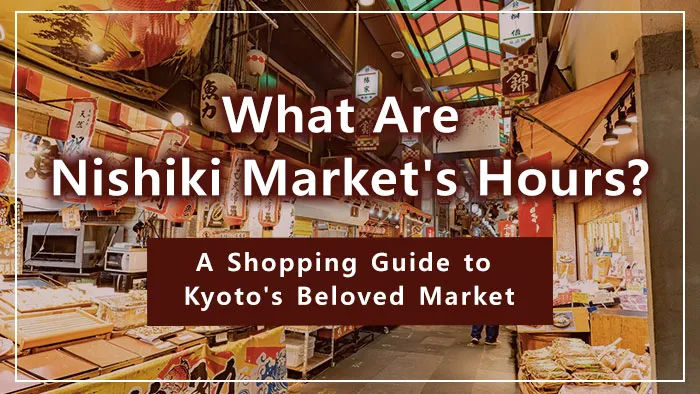
Nishiki Market is a covered shopping arcade stretching approximately 390 meters through the heart of Kyoto, with a history of over 400 years. Widely known as “Kyoto’s Kitchen,” it’s a place where visitors from Japan and around the world come to experience the city’s distinctive food culture firsthand — from yuba (tofu skin) and dashimaki tamago (Japanese dashi rolled omelet) to tako tamago (candied baby octopus stuffed with a quail egg) and many other Kyoto specialties.
This guide covers everything you need to make the most of your visit to Nishiki Market, from basic information like opening hours and access to must-try street foods, etiquette tips, and important things to keep in mind.

1. Why Visit Nishiki Market: Essential Information
Nishiki Market is one of Kyoto’s most beloved destinations for experiencing the city’s food culture and trying a wide variety of street foods. The arcade is lined with shops selling Kyo-yasai (traditional Kyoto vegetables), tsukemono (Japanese pickles), dashimaki tamago, seafood skewers, and much more — offering a perfect blend of sightseeing and eating. If it’s your first visit, knowing the opening hours and how to get there in advance will help you make the most of your time. Here is the essential information you need.
1-1. Opening Hours
Nishiki Market does not have unified opening hours — each shop sets its own schedule. As a general guide, most shops open between 9:00 AM and 11:00 AM and close between 5:00 PM and 7:00 PM, though this varies by store. Some shops open early in the morning, while others close before the evening.
Opening hours may also differ between food stalls and retail shops. If you have a specific shop in mind, it’s worth checking its hours in advance. In general, if you want to browse freely and enjoy plenty of street food, visiting around midday — when the most shops are open — is your best bet.
1-2. How to Get There
Nishiki Market is located in central Kyoto and is easy to reach by public transport.From Kyoto Station, take the Karasuma Subway Line to Shijo Station, then walk to the market. The market runs east to west along Nishikikoji Street, one block north of Shijo Street, with Takakura Street at the western end and Teramachi Street at the eastern end.
The nearest stations are Shijo Station on the Karasuma Subway Line and Karasuma Station on the Hankyu Kyoto Line, both just a few minutes’ walk from the market. Nishiki Market is only two subway stops from Kyoto Station, making it a convenient stop to add to any sightseeing day. Its central location also makes it easy to reach from other key areas of the city, so even first-time visitors to Kyoto should have no trouble finding it.
2. The Best Time to Visit Nishiki Market
新しい贅沢を経験してみる✨ https://t.co/8tIsUgmwtjpic.twitter.com/Qc1iZXzini
— 錦市場【公式】 (@nisiki__ichiba) October 16, 2021
Nishiki Market is enjoyable year-round, but the sights and seasonal produce on offer change with the seasons. Spring and autumn are particularly pleasant, with mild weather that makes strolling the market easy and comfortable. In spring, you’ll find wagashi (traditional Japanese sweets) inspired by cherry blossom season and fresh spring vegetables; in autumn, look out for chestnut and pumpkin treats, seasonal Kyo-yasai, and fresh seafood.
While the market is lively no matter when you visit, spring and autumn are the ideal seasons for those who want to enjoy Kyoto’s seasonal flavors and food culture at their best. Both seasons are also relatively easy to navigate for first-time visitors.
3. Must-Try Street Foods at Nishiki Market
Nishiki Market is packed with iconic street foods that are best enjoyed as you explore the arcade. From dishes that capture the essence of Kyoto’s culinary tradition to satisfying snacks for a quick bite between stops, there’s something for everyone. Here are some of the most popular street foods at Nishiki Market.
3-1. Yuba (Tofu Skin)
Yuba is a classic Kyoto delicacy made by skimming the thin, delicate film that forms on the surface of heated soy milk. It has a smooth texture and a gentle soybean flavor, and you can enjoy different variations depending on the shop — from deep-fried yuba to fresh raw yuba. Light enough to satisfy a small appetite without feeling heavy, yuba is the kind of refined, characteristically Kyoto snack that pairs perfectly with a relaxed stop at a shop’s counter or eat-in area.
3-2. Tako Tamago (Octopus & Quail Egg)
Tako tamago is one of Nishiki Market’s most iconic and visually striking snacks — a small baby octopus with a boiled quail egg stuffed inside its head, served on a skewer.Seasoned in a sweet and savory glaze, it’s as delicious as it is eye-catching. The skewer makes it easy to eat on the spot, and its bold, memorable appearance makes it a great souvenir photo opportunity — a true symbol of the lively atmosphere that defines Nishiki Market.
3-3. Dashimaki Tamago (Dashi Rolled Omelet)
Dashimaki tamago is one of Nishiki Market’s signature dishes. This Japanese rolled omelet is made with dashi (savory Japanese soup stock) for a rich umami flavor and a light, fluffy texture. The exact balance of sweetness, saltiness, and softness varies from shop to shop, making it fun to taste and compare. Many shops prepare the omelet fresh to order, so you can enjoy it piping hot. It’s a perfect choice for anyone who wants a taste of Kyoto’s gentle, refined flavors — and it makes a popular souvenir to take home, too.
3-4. Croquettes
Croquettes (korokke) are a beloved Japanese staple made by coating a filling — typically mashed potato — in breadcrumbs and deep-frying it.Crispy on the outside and satisfying to eat, they come in many varieties: classic potato croquettes with a hint of natural sweetness, beef croquettes, and versions made with local Kyoto ingredients. Their ability to fill a small appetite quickly makes them one of the most popular quick bites at the market.
3-5. Grilled Skewers
Grilled skewers offer a hearty and satisfying way to enjoy fresh seafood and meat. Depending on the shop, you might find scallops, shrimp, eel, beef, and more — each presenting their own visual flair alongside their flavors. These skewers let you savor the natural umami of quality ingredients, and are a great option for visitors who want something more substantial alongside the lighter, more delicate Kyoto-style dishes. They’re guaranteed to add to the excitement of exploring the market.
3-6. Soy Milk Doughnuts
Soy milk doughnuts are a popular sweet treat known for their gentle sweetness and light texture.Because they are made with soy milk, they don’t feel heavy, making them a great option when you just want a small sweet bite. With a mild, wholesome flavor that appeals to a wide range of tastes, they also make an excellent palate cleanser after savory dishes. The use of soy milk — a key ingredient in Kyoto’s culinary tradition — gives these doughnuts a distinctly local character.
4. Tips for Visiting Nishiki Market
To fully enjoy your time at Nishiki Market, it helps to know a few etiquette guidelines and practical tips in advance. The market can get quite crowded, so being mindful of those around you and moving through the arcade efficiently will make for a much more pleasant experience. Here are the key things to keep in mind, especially for first-time visitors.
4-1. No Eating While Walking
Eating while walking is not permitted at Nishiki Market. Once you’ve purchased something, please eat it at the shop’s counter or in a designated eating area. The narrow passageways can get very busy, and eating on the move makes it harder for everyone to get around comfortably. Respecting this rule is part of enjoying the market in the spirit it was intended — take a moment to stop, eat, and savor your food.
4-2. Bring Some Cash
While some shops at Nishiki Market accept cashless payments, this is not universal — many stalls are cash only, particularly for smaller purchases. Since you’re likely to make several small transactions throughout your visit, having a reasonable amount of cash on hand will keep things running smoothly and let you buy anything that catches your eye without worry.
4-3. Travel Light
The passageways at Nishiki Market are relatively narrow, and the market can get busy depending on the time of day. Large bags and heavy luggage make it harder to move through the arcade freely and can get in the way when browsing stalls or receiving purchases.For the most comfortable and enjoyable experience, visit with as little baggage as possible.
5. The History of Nishiki Market: Why Is It Called “Kyoto’s Kitchen”?
Nishiki Market has a remarkably long history. Its origins are believed to trace back to fish vending in the area during the Enryaku era (782–805). The name Nishikikoji came into use during the Heian period, and records from the Kamakura period already document the presence of fish shops along the street. In 1615, during the Edo period, the Tokugawa shogunate granted official recognition to fish wholesalers operating here, establishing the foundations of the market as it is known today.
The market continued to grow over the following centuries, receiving authorization to sell produce and eventually developing into a fully public market.By the modern era, it handled not only seafood but also fresh vegetables and meat. In 1928, the market reorganized to cover a full range of food products, marking a new chapter in its history as “Kyoto’s Kitchen.” To this day, Nishiki Market carries on that long legacy as a beloved hub of Kyoto’s food culture.
Conclusion
Nishiki Market is one of Kyoto’s most popular destinations for experiencing the city’s rich food culture firsthand. While opening hours vary by shop, midday is generally when the most stalls are open and the market is easiest to explore. Spring and autumn offer the most comfortable weather and the best seasonal flavors.
Iconic foods like yuba, dashimaki tamago, and tako tamago are among the many highlights — but to make the most of your visit, remember to eat only in designated areas, carry cash, and travel light. Nishiki Market is not only a tourist attraction; it is “Kyoto’s Kitchen” — a place that has long served as the heart of Kyoto’s everyday food life. Come and take your time discovering the flavors that have defined this city for centuries.
※This article is based on information available as of April 2026.