





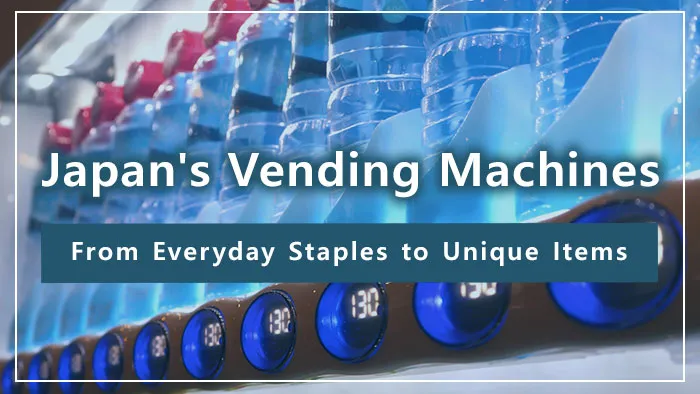
Walk through any city in Japan and you’ll spot vending machines almost everywhere — on station platforms, outside convenience stores, in parks, and at tourist attractions. While most people think of them simply as drink dispensers, Japan’s vending machines offer a surprisingly diverse range of products, including snacks, fresh produce, souvenirs, everyday goods, anime and character merchandise, and even emergency supplies. Many machines display “HOT” and “COLD” labels so you can choose according to the season or your mood, and a growing number accept cash, IC cards, and QR code payments — making them easy to use for international visitors as well.
This article explains why Japan has so many vending machines, traces their history, introduces the types of products you can buy, and walks you through how to use them.

1. Why Are There So Many Vending Machines in Japan?
にゃんベンディングからおはようございます🙂
— 自動販売機のwith DRINK【公式】サン・ベンディング東北 (@sunvendingtohok) March 20, 2026
今日は「自動販売機の日」❗️
日本で最初に自動販売機を発明した俵谷高七の誕生日を記念して制定されました。
日本が育てた世界に誇る自動販売機文化を
祝っていただければ嬉しいです😊#自動販売機の日#3月21日#俵谷高七pic.twitter.com/h5CZIAjZEj
As of the end of 2025, Japan has approximately 3.88 million vending machines — including automated service units — firmly maintaining its status as one of the world’s leading vending machine nations. You’ll find them in easily accessible spots: outside convenience stores, on street corners, on station platforms and in concourses, near park management offices, and around benches.
Several factors account for this high density: Japan’s low crime rate, efficient restocking and maintenance systems, and strong demand for the ability to grab a drink on the go. Most beverages are priced between ¥150 and ¥200, and “HOT” and “COLD” labels on each product make it easy to choose the right drink for the season or your mood.
1-1. The History of Vending Machines in Japan
Japan’s vending machine history goes back further than you might expect.In 1888, an inventor named 俵谷高七(Tawaraya Takashichi) is credited with building the country’s first tobacco vending machine, in what is now Shimonoseki City, Yamaguchi Prefecture. The oldest surviving example is a wooden “stamp and postcard vending machine” by the same inventor — a remarkably sophisticated device that not only sold stamps and postcards but also functioned as a mailbox.
After World War II, juice vending machines began spreading in the late 1950s, and beverage vending machines became widespread throughout the 1960s. Over the decades, they evolved to handle canned drinks, HOT/COLD selections, PET bottles, and cashless payments, cementing their place as a convenient retail fixture.
2. What Can You Buy from Vending Machines in Japan?
おつかれさんベンディング!
— 自動販売機のwith DRINK【公式】サン・ベンディング東北 (@sunvendingtohok) March 2, 2026
ここはどこだ…..?秋葉原だ!!!🚃
先日東京出張の際に、様々な「ガチャ缶」を楽しめるアキバの自販機BASEさんにお邪魔しました!✨🥫
ガチャ✖️自販機
ワクワクするしかないじゃないですか…🔥
皆さんの思い出の自販機はありますか❓👀 pic.twitter.com/24hGkFhLOr
Japan’s vending machines stock far more than beverages — you can find food, daily necessities, and locally unique products. Stumbling upon an unexpected item is all part of the fun when sightseeing. Here is a look at what’s available, from everyday staples to rare finds.
2-1. Everyday Beverages
The most common type of vending machine in Japan sells drinks.Green tea, coffee, black tea, mineral water, carbonated drinks, juice, and energy drinks are all readily available at stations and on city streets. Most machines display “HOT” and “COLD” labels, letting you pick a warm canned coffee or a chilled green tea depending on the season. In winter, you might even find canned oshiruko (sweet red bean soup) or corn soup; at tourist spots, locally produced cider or milk; and at airports or sake breweries, machines stocking Japanese sake.
2-2. Snacks and Food
Vending machines in Japan go well beyond beverages — many also sell snacks and ready-to-eat food.At stations and in office districts, you’ll often find bread, onigiri (rice balls), sandwiches, and cup noodles, making them handy for a quick bite on the move. In recent years, machines using advanced refrigeration and freezing technology have begun selling ramen, gyoza (dumplings), hamburger steak, and desserts. In rural areas, you may come across machines carrying bento (boxed meals) and local specialty foods — a fun way to sample regional Japanese flavors while traveling. Available 24 hours a day without any staff, they’re especially welcome late at night or when hunger strikes unexpectedly.
2-3. Fresh Produce
Some vending machines in Japan sell fresh produce.In suburban neighborhoods, residential areas, and near farms, you can find machines stocked with tomatoes, cucumbers, eggs, mandarin oranges, apples, and rice. In some cases, the farmers themselves restock the machines directly, so the produce is often very fresh. The experience is similar to shopping at an unstaffed farm stand (known in Japanese as a 無人販売所, or “unmanned roadside stall”), and locals rely on them for everyday shopping too. If you spot one while traveling, it’s a great opportunity to taste something authentically local. Prices are clearly displayed and easy to understand.
2-4. Souvenirs and Local Specialties
Certain vending machines in Japan sell souvenirs and regional specialties.At tourist spots, train stations, and airports, you may find local confections (銘菓, or traditional regional sweets), dashi (Japanese stock), condiments, retort-pouch curry, ramen, and processed seafood products. They’re particularly useful when shops are closed and you’ve just realized you forgot to buy a gift. You may also discover limited-edition or small-batch regional products — one of the pleasant surprises of traveling. Many items have the region name or local specialty clearly printed on the packaging, making them easy for international visitors to choose with confidence.
2-5. Daily Necessities and Clothing
Some vending machines in Japan stock daily necessities and clothing. At stations, airports, hotels, and shopping facilities, you may be able to purchase face masks, umbrellas, portable chargers, charging cables, stockings, underwear, and T-shirts. They’re a lifesaver when you’re caught in unexpected rain, have forgotten something, or need a change of clothes on a business trip. At tourist destinations, you’ll sometimes find products like tenugui (traditional Japanese cotton towels) and socks, which double nicely as practical souvenirs. Because you can buy without interacting with anyone and in just a few seconds, they’re especially visitor-friendly.
2-6. Anime and Character Goods
Japan also has vending machines selling anime and character merchandise. Near train stations, shopping centers, tourist attractions, and event venues, you can find enamel pins, acrylic keychains, stickers, mini figurines, and trading cards. Many of the items are mystery boxes — you won’t know what you’ll get until you open them, which is half the fun. You may come across limited-edition designs from popular titles or region-specific collaboration products, making these machines a great way for international visitors to engage with Japanese pop culture. The items are also compact and easy to carry home.
2-7. Disaster Preparedness and Emergency Supplies
Some vending machines in Japan stock disaster preparedness and emergency supplies.Certain machines sell drinking water, emergency food rations, portable chargers, and compact lights. There is also a type known as a 災害救援型 (“disaster relief vending machine”) — under normal circumstances it operates as a standard beverage machine, but during a disaster, an administrator can switch it to dispense drinks free of charge. Some machines are equipped with backup power supplies for use during blackouts, or have mechanisms that allow products to be retrieved without electricity. These machines serve as part of emergency preparedness plans for public facilities and businesses. If you encounter a problem during your travels, they can offer reassuring support.
2-8. Unique and Unusual Items
Japan has vending machines that are genuinely worth stopping to look at.Freshly squeezed juices, canned desserts, cotton candy (known as わたあめ, or wataamé), and cakes are popular for the novelty of seeing them prepared on the spot or for their surprising appearance. On the savory side, some machines sell udon noodles, takikomi gohan (Japanese seasoned rice), meat dishes, burgers, and noodle dishes — all frozen or chilled. There are also machines selling handcrafted goods, giving you a glimpse into local communities and the makers behind the products. Part of the joy is simply discovering these machines along the way.
3. How Do You Use a Vending Machine in Japan?
おはようございます🙂
— 自動販売機のwith DRINK【公式】サン・ベンディング東北 (@sunvendingtohok) October 12, 2025
今日は祝日ですが仙台は朝からあいにくの雨ですね😭
with DRINK自販機では、この秋も缶コーヒー100円でなんとか頑張っております…
あたたか〜い缶コーヒーを買いに来てくださいね✨✨#企業公式が朝の挨拶を言い合う#企業公式が毎朝地元の天気を言い合うpic.twitter.com/nPHRXRJgXX
Vending machines in Japan accept cash, IC cards (electronic money), and QR code payments. To pay with cash, insert coins or banknotes into the slot and press the button for your chosen item. Once the product appears in the retrieval tray, use the change lever or button if needed to collect your change.
To pay with an IC card — such as a Suica or PASMO transit card — touch the card to the reader and then select the item you want. On some machines, you press the product button first and then touch the card.
For QR code payment, follow the on-screen prompts to scan a code with your smartphone, or hold your payment QR code up to the machine’s reader.
Before purchasing, always check the “HOT” or “COLD” label to make sure you’re selecting the temperature you want. Sold-out items are indicated by a light or on-screen notice, so simply choose something else. Note that some machines do not accept cards issued outside Japan, so it’s a good idea to carry some coins or a transit IC card when sightseeing.
Summary
Vending machines are a fixture of everyday life across Japan — at stations, on city streets, in parks, and beyond — offering an impressive range of products centered on beverages. In addition to staple drinks like green tea and coffee, you can find machines selling snacks, fresh produce, regional specialties, everyday goods, anime merchandise, disaster supplies, unique sweets, and frozen foods. An increasing number of machines also accept IC cards and QR code payments alongside cash, making them straightforward to use for international visitors.
When making a purchase, check the “HOT”/”COLD” label and any sold-out indicators, and keep some coins or a transit IC card handy just in case. If you come across an unusual machine on your travels, it’s a wonderful way to experience Japan’s blend of practicality and playful ingenuity.
※This article is based on information available as of May 2026.