








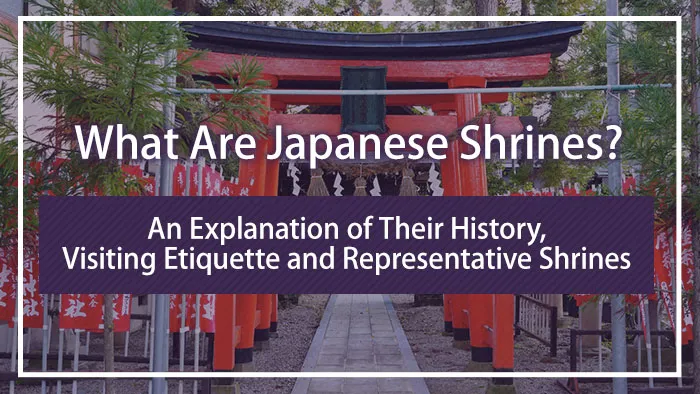
Japanese shrines originated from a faith that reveres the forces of nature as divine and developed in deep connection with Japanese people’s daily lives. Shinto has the flexible characteristic of embracing yaoyorozu no kami (countless deities), enshrining gods that protect a wide range of aspects of life, including mountains and forests, changing seasons, family safety, and regional prosperity. People have long connected with the gods through festivals and prayers, and shrines have taken root throughout the country as centers of this practice.
Even today, many worshippers visit shrines for events such as hatsumode (New Year’s shrine visits), shichi-go-san (ceremonies for children), and yakuyoke (prayers for protection from misfortune). Shrines attract great interest from both Japan and abroad as symbols of Japanese culture and are valuable places where one can understand architectural styles, traditional customs, and regional faiths. This article provides a clear explanation of the role of shrines, visiting etiquette, and the characteristics of representative shrines.

1. What Are Japanese Shrines (Shinto Shrines)?

引用:unsplash.com
Japanese shrines are sacred places that enshrine deities believed to dwell within nature. In Japan, a faith developed that revered the great forces working in mountains, forests, rocks, and waterfalls as gods and expressed gratitude for their power. This uniquely Japanese faith is Shinto.
Shinto has the characteristic of embracing yaoyorozu no kami, widely enshrining gods that protect nature, daily life, and communities. People connected with the gods through festivals praying for bountiful harvests and prayers wishing for family safety, and shrines spread throughout regions as centers of this practice. Today, many events such as hatsumode and shichi-go-san are based on Shinto, and shrines are widely cherished by foreigners as places symbolizing Japanese culture.
1-1. Differences Between Shrines and Temples

引用:pixabay.com
Shrines and temples are religious facilities that have long coexisted in Japan, but there are clear differences in what they enshrine and their origins. Shrines enshrine nature and ancestral deities and are places to show gratitude and respect based on Shinto beliefs. Temples, on the other hand, house Buddhist statues and are places where monks practice while studying Buddhist teachings.
Buddhism was introduced from the continent around the 6th century and spread with values different from Shinto. In Japan, the two merged for a long time, giving birth to a unique culture called shinbutsu-shugo (syncretism of Shinto and Buddhism), but their roles were distinguished through the modern-era shinbutsu-bunri (separation of Shinto and Buddhism).Even today, worship methods differ: at temples, one joins hands in prayer, while at shrines, the nirei-nihakushu-ichirei (two bows, two claps, one bow) etiquette is used.
2. Elements That Comprise Japanese Shrines

引用:pixabay.com
Japanese shrines have distinctive buildings and implements arranged according to the order of worship. Here, we explain the roles of representative structures and basic manners to observe when visiting.
2-1. Torii

引用:unsplash.com
Torii are built as gates separating the outer world from the sacred precincts of shrines, serving to make worshippers conscious of entering a sacred space. The polite custom is to bow slightly toward the main hall before passing through the torii and to avoid walking through the center. This is because the center is considered the path through which the gods pass. The act of passing through a torii is an important action that switches one’s mind from the everyday to a sacred space.
2-2. Komainu and Foxes

引用:unsplash.com
Komainu are placed at the entrance of shrines or in front of the haiden, welcoming worshippers as guardians that ward off evil spirits. Most are arranged in pairs, with the agyo (mouth open) and ungyo (mouth closed) standing side by side.
The origin of komainu is said to be overseas, having been transmitted to Japan via the Silk Road.Some shrines have different animals such as foxes or oxen, which are revered as shinshi (divine messengers) serving the gods. For example, at Inari shrines, foxes are considered shinshi protecting grain. When visiting, it is polite to bow slightly when passing by komainu, preparing one’s mind to proceed into the sacred grounds.
2-3. Temizuya

引用:unsplash.com
Temizuya is a place to purify hands and mouth before worship, an important facility for preparing one’s mind and body. The origin of temizu comes from the act of misogi (purification) appearing in mythology, with the underlying concept of washing away impurities with water.
The basic etiquette is to purify the left hand, right hand, and mouth in that order using a hishaku (ladle), and finally to rinse the handle of the hishaku with water. By following the proper etiquette, one demonstrates respect for worship and can better prepare a respectful attitude of prayer.
2-4. Honden and Haiden

引用:unsplash.com
The honden is the most sacred building where the deity resides, usually with closed doors that general worshippers do not enter. Worshippers offer prayers at the haiden built in front of the honden.
At the haiden, one places saisen (monetary offerings), rings the bell, and conveys gratitude using the nirei-nihakushu-ichirei etiquette. Shrine architectural styles include shinmei-zukuri, taisha-zukuri, and nagare-zukuri, with diverse forms having developed according to region and history. The honden and haiden are the center of shrines, symbolizing a culture of praying while sensing the distance to the gods.
2-5. Emakakesho

引用:pixabay.com
Emakakesho is a place where worshippers dedicate ema on which they have written their wishes. Ema evolved from the old custom of dedicating horses to the gods into the form of wooden plaques, and are now used to entrust wishes such as academic success and travel safety. By carefully hanging ema with written wishes at the kakesho, it is believed that prayers are conveyed to the gods.
When visiting, it is proper etiquette to dedicate ema quietly without touching others’ ema.Ema are implements symbolizing shrine culture and are popular among foreigners as a uniquely Japanese custom connecting personal wishes with faith.
3. Representative Japanese Shrines
Japan has many renowned shrines that symbolize the culture and history of each region. These shrines are deeply connected to regional natural environments and faiths, providing important clues to understanding Japanese people’s lives and values. Here, we introduce the characteristics and attractions of representative shrines.
3-1. Fushimi Inari Taisha (Kyoto)
Fushimi Inari Taisha is the head shrine of approximately 30,000 Inari shrines nationwide, with expansive grounds centered on Inari-yama in Kyoto. The vermillion torii lining the precincts number about 10,000 and were dedicated in gratitude for wishes “passing through.”
Foxes are considered shinshi at Inari shrines because they symbolize the power to protect grain and are revered as sacred beings. At Fushimi Inari Taisha, after worshipping at the honden, visitors can walk the approach that circles Inari-yama and experience an environment where nature and faith merge.
When visiting shrines, observing basic etiquette such as bowing before the torii and avoiding the center of the approach shows greater respect in worship.
3-2. Meiji Jingu (Tokyo)
Meiji Jingu was established in 1920 (Taisho 9) enshrining Emperor Meiji and Empress Shoken as deities. The mori (forest) spreading across approximately 700,000 square meters is an artificial forest created by planting about 100,000 trees donated from across the country, cultivated with the aim of becoming an “eternal forest.” During New Year’s, Japan’s largest number of worshippers visit, but ordinarily it is enveloped in deep tranquility, with a calm atmosphere unimaginable for the center of a city.
The grounds feature attractions including the Gyoen (Imperial Garden) associated with Emperor Meiji, the Treasure House designated as an Important Cultural Property, and Meiji Jingu Museum.Meiji Jingu attracts great interest from both Japan and abroad as a place to learn about modern Japanese history and imperial culture.
3-3. Itsukushima Jinja (Hiroshima)

引用:広島県「嚴島神社」引用日2025/12/08
Itsukushima Jinja is located on Miyajima in Hiroshima Prefecture and is said to have been established in the era of Empress Suiko (593). The enshrined deities protect maritime traffic and national security, and the shrine buildings that change appearance with the ebb and flow of tides symbolize the architectural beauty of shinden-zukuri style. The O-torii (Great Torii) standing in the sea is a representative Japanese landscape, and when the tide is high, the shrine buildings appear to float on the sea.
Itsukushima Jinja is one of the Nihon Sankei (Three Views of Japan) along with Matsushima and Amanohashidate, and was registered as a UNESCO World Cultural Heritage site in 1996. The landscape where nature and faith harmonize gives deep inspiration to many worshippers.
Conclusion
Shrines are sacred places where Japan’s unique view of nature and living culture breathe. The act of passing through a torii is an important first step in switching one’s mind from the everyday to sacred grounds, and the acts of purifying oneself with temizu and praying respectfully at the haiden have been passed down as basic actions showing respect to the gods.
Renowned shrines such as Fushimi Inari Taisha, Meiji Jingu, and Itsukushima Jinja create landscapes where nature and prayer harmonize, giving deep inspiration to many worshippers. Visitors to shrines can further savor the depth of Japanese culture by walking through the precincts while being mindful of basic etiquette. Shrines still quietly welcome people today and are carefully protected as places of prayer.
*This article is based on information available as of December 2025.