









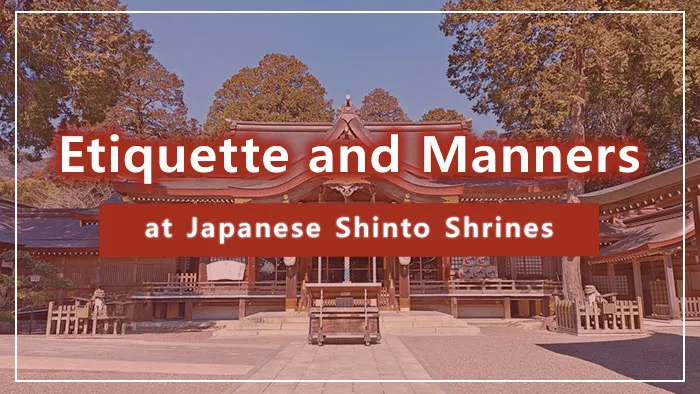
Shinto shrines in Japan are sacred places that have long received people’s prayers and expressions of gratitude. Even today, as shrines attract an increasing number of tourists, it is important to understand the basic etiquette of shrine visits and to conduct yourself in a calm and respectful manner.
The customs observed at shrines are not complicated rules — they are simply a collection of actions that express respect toward the deities and those around you. Because Shinto and Buddhism have coexisted throughout Japan’s long history, understanding the difference between shrines and temples can also deepen your appreciation of Japanese culture. In this article, we introduce the basic etiquette and customs for visiting a Shinto shrine, while also touching on the differences between Shinto and Buddhism.

- 1. What Is Shinto Shrine Etiquette in Japan?
- 2. The Correct Way to Worship at a Shinto Shrine
- 2-1. Etiquette to Keep in Mind at the Shrine Entrance
- 2-2. Basic Procedure for the Temizu (Hand-Washing) Purification Ritual
- 2-3. How Much to Offer and How to Place Your Saisen (Monetary Offering)
- 2-4. The Meaning and Etiquette of Ringing the Bell Before Worship
- 2-5. How to Pray at a Shinto Shrine (Worship Method)
- 3. Manners and Points to Keep in Mind When Visiting a Shinto Shrine
- Conclusion
1. What Is Shinto Shrine Etiquette in Japan?
When visiting a Shinto shrine in Japan, it is important to understand the basic etiquette.
The customs observed at shrines are deeply connected to the principles of Shinto, Japan’s indigenous religious tradition. Because Shinto and Buddhism have long coexisted in Japan, knowing the difference between shrines and temples is also important.
Here, we explain the differences between Shinto and Buddhism, as well as the differences between shrines and temples, in an easy-to-understand way.
1-1. The Difference Between Shinto and Buddhism
Shinto is a religion that originated in Japan. It holds that divine spirits, or kami, reside in all things — nature, the land, ancestors, and every form of existence. This concept is known as “Yaoyorozu no Kami” (literally “eight million gods,” a figurative expression symbolizing the countless deities). Shinto has no specific founder or scripture; people simply live their daily lives with reverence for the kami.
Buddhism, on the other hand, originated in ancient India and is centered on the teachings of the Buddha (Shakyamuni). Its goal is to attain enlightenment through practice and discipline. Buddhism was transmitted to Japan by way of China and the Korean Peninsula, where it gave rise to many different schools.
In this way, the key differences between Shinto and Buddhism lie in their objects of worship and their religious purposes.
1-2. Understanding the Difference Between Shrines and Temples
A Shinto shrine is a facility for Shinto rituals, and is treated with great care as a place where kami are believed to dwell. The shrine grounds are considered sacred, and visitors are expected to behave with proper decorum. Sacred objects known as shintai (the physical embodiment of a deity) — such as mirrors or sacred trees (goshinboku) — are enshrined within the shrine, but in most cases, visitors are not permitted to view them directly.
Buddhist temples, by contrast, are facilities at the heart of Buddhist practice and faith. They house Buddhist statues that visitors can view and pay their respects to. The manner of worship also differs: at a Shinto shrine, the ritual known as “nirei nihakushu ichirei” (“two bows, two claps, one bow”) is performed, while at a Buddhist temple, visitors do not clap — instead, they press their palms together in silent prayer.
2. The Correct Way to Worship at a Shinto Shrine
By following the traditional customs that have been passed down at Shinto shrines, you can gain a deeper understanding of Japanese culture. These customs are not mere formalities — they are actions that express respect and gratitude toward a sacred place.
Here, we explain in a way that is easy for visitors to follow: the etiquette at the shrine entrance, the steps for temizu (hand-washing purification), how to make a saisen offering, the significance of ringing the bell, and the proper order for prayer.
2-1. Etiquette to Keep in Mind at the Shrine Entrance
At the entrance to a Shinto shrine stands a torii gate, which marks the boundary between the everyday world and sacred ground. Visitors should stop in front of the torii and give a brief bow before entering the grounds. This gesture serves as a greeting to the deity and a sign of your intention to visit.
The path leading to the shrine is called the sando (approach path). The center of the path is considered to be reserved for the kami, so it is proper etiquette to walk quietly along the sides. Avoid speaking loudly or running, and proceed in a calm and composed manner.
When leaving the shrine grounds after your visit, it is also a thoughtful gesture to turn and face the direction of the honden (main hall) just outside the torii and offer a final bow of gratitude.
2-2. Basic Procedure for the Temizu (Hand-Washing) Purification Ritual
Before proceeding to the honden (main hall), it is customary to purify your hands and mouth at the temizuya (purification water pavilion).
First, hold the hishaku (ladle) in your right hand, scoop up water, and pour it gently over your left hand. Then transfer the ladle to your left hand and pour water over your right hand to cleanse it. Next, hold the ladle in your right hand again, scoop up a little water, and pour a small amount into your cupped left hand to lightly rinse your mouth. Do not drink the water — spit it out quietly to the side. Finally, rinse your left hand once more, then tilt the ladle upright to let the remaining water run down over the handle, and return it to its original place.
This sequence of actions at the temizuya is not only about physical cleanliness — it also carries the meaning of calming your mind and preparing yourself to stand before the deity.
2-3. How Much to Offer and How to Place Your Saisen (Monetary Offering)
In front of the haiden (worship hall), there is an offertory box called a saisen-bako. Visitors place their saisen offering here as an expression of gratitude and prayer to the deity. Since saisen carries the meaning of a donation or offering, it is considered proper to place the coin gently into the box rather than tossing it.
There is no set rule for the amount. Any amount you are comfortable offering is perfectly fine. In Japan, the 5-yen coin is sometimes chosen as a lucky offering because “go-en” (5 yen) is a homophone of the Japanese word for “good fortune” or “meaningful connection” — however, it is by no means required. What matters is not the amount, but the attitude of offering with sincerity, respect, and gratitude toward the deity.
2-4. The Meaning and Etiquette of Ringing the Bell Before Worship
At shrines where a bell is installed in front of the haiden (worship hall), it is common practice to ring the bell before beginning your worship. The sound of the bell is said to signal your arrival to the deity, and it also serves to help focus your mind and spirit.
When holding the bell rope, avoid pulling it sharply or swinging it widely — ring the bell with a calm, gentle motion. Be mindful of other worshippers around you as well. Note that not all shrines have a bell.
2-5. How to Pray at a Shinto Shrine (Worship Method)
The standard worship ritual at a Shinto shrine is “nirei nihakushu ichirei” — two bows, two claps, and one bow. First, stand in front of the deity, compose yourself, and bow deeply from the waist twice. Then bring both hands together in front of your chest, lower your right hand slightly, and clap twice. This gesture is said to summon the deity and signal your presence. Afterward, hold both hands together and quietly convey your prayers or words of gratitude in your heart. When you have finished praying, close your worship with one final deep bow.
By performing each step of the ritual with care, you can express your respect for the deity while experiencing Japan’s traditional culture of worship.
3. Manners and Points to Keep in Mind When Visiting a Shinto Shrine
The grounds of a Shinto shrine are not a tourist attraction — they are a sacred place where deities are enshrined.Visitors are therefore expected to observe basic etiquette and conduct themselves in a quiet and respectful manner.
First, be sure not to take photographs in areas where photography is prohibited. In particular, the use of flash photography or selfie sticks may be restricted near the honden (main hall) or in the treasure hall (homotsuden). Entering the interior of any buildings without permission is also not permitted.
Attention to dress is also important. Avoid overly revealing clothing, and refrain from wearing a hat or sunglasses during your visit — aim for a modest, understated appearance. Additionally, touching historical structures or displayed objects can cause damage or deterioration, so please refrain from doing so.
Speaking loudly, drinking alcohol, or smoking within the shrine grounds should also be avoided, and always remain considerate of other worshippers.
By observing the basic etiquette of shrine visits, you will be able to experience Japan’s shrine culture with confidence and respect.
Conclusion
By understanding and following proper shrine etiquette and manners, you can experience Japanese traditional culture on a deeper level. Each gesture — bowing at the torii gate, purifying yourself with temizu, and worshipping with a calm and composed attitude — carries meaning as an expression of respect and gratitude toward the deity. Being mindful of photography, dress, and your behavior on the shrine grounds also helps preserve the sacred atmosphere of the shrine.
Visiting a Shinto shrine does not require specialized knowledge — simply being aware of the key points is enough to make for a meaningful visit. By observing proper etiquette when you visit, you will feel a genuine connection to the values of faith and respect that the Japanese people have long held dear.
*This article is based on information available as of March 2026.