








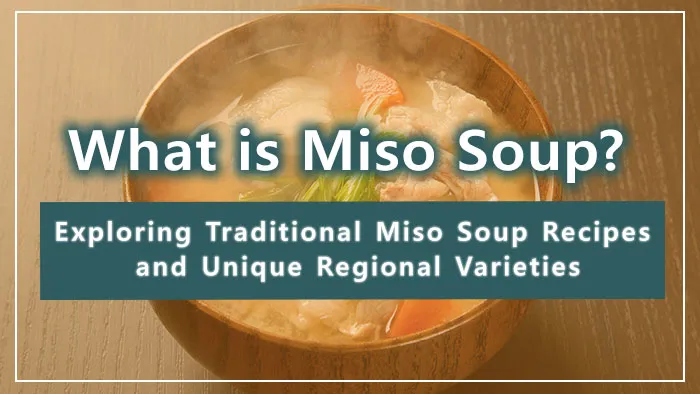
Miso soup is one of the most familiar dishes on Japanese dining tables. Many people may think of classic miso soup with tofu and wakame, but in reality, the types of miso, how dashi is prepared, and the ingredients used vary greatly depending on region and lifestyle.
This article organizes the basic definition and history of miso soup, types of miso, and nutritional characteristics, then introduces basic recipes that are easy to make at home. Furthermore, we feature distinctive miso soups passed down in various parts of Japan, including Hokkaido, Niigata, Kagawa, and Miyazaki. Through miso soup, let’s understand the depth of Japanese food culture and regional characteristics.

1. What is Miso Soup

引用:unsplash.com
Miso soup is a traditional Japanese soup dish made by dissolving miso in dashi broth and adding ingredients such as tofu, wakame, and vegetables.
Japanese food culture has a concept called “ichijū-issai” (one soup, one dish), and miso soup, alongside rice, has supported daily meals. Miso is a seasoning made primarily from soybeans and fermented with koji mold, and its color and flavor change depending on differences in rice koji or barley koji. Dashi broth uses kombu, katsuobushi (bonito flakes), dried shiitake mushrooms, and other ingredients to bring out the umami of the ingredients.
The types of miso and combinations of ingredients differ by region and household, and miso soup is beloved as an approachable soup deeply connected to Japanese daily life.
1-1. History of Miso Soup
The origins of miso are believed to lie in the ancient Chinese fermented seasoning called “hishio,” which is thought to have been transmitted to Japan via the Korean Peninsula. In Japan, unique improvements were made, and the current miso using soybeans, koji, and salt was developed.
During the Kamakura period, “ichijū-issai” became established as samurai meals, and miso soup played an important role as a daily nutritional source. At that time, miso soup was a dish where grainy miso was eaten as is, but as the technique of dissolving miso spread, miso soup developed as a soup dish.
From the Muromachi period onward, it became established in common people’s meals, and during the Edo period, the culture of preparing miso in each household also spread. Through its long history, miso soup has become deeply rooted in Japanese life.
1-2. Main Types of Miso
Miso used in miso soup is broadly classified into three types based on the type of koji.
Rice miso is made by adding rice koji to soybeans and is the most widely used throughout Japan. It features a good balance of sweetness and umami, and pairs well with a wide range of ingredients such as tofu and vegetables. Barley miso is miso made by adding barley koji to soybeans, and is popular mainly in Kyushu, Shikoku, and the Chūgoku region. It is characterized by a fragrant aroma and a slightly sweet flavor. Soybean miso uses only soybeans as its raw material and is mainly produced in the Chūkyō region. It features a dark color and rich flavor, with Hatcho miso as a representative example.
These misos reflect regional characteristics and give miso soup its distinctive flavors.
1-3. Nutrition in Miso Soup
Miso soup is a dish that contains nutrition easily incorporated into daily meals by combining miso, dashi, and ingredients. Soybeans, the main ingredient of miso, contain protein and dietary fiber. By adding vegetables, seaweed, and tofu as ingredients, vitamins and minerals are also easily supplemented.
Miso soup that utilizes the umami of dashi provides a sense of satisfaction and is beloved on Japanese dining tables as a dish that balances the overall meal.
2. Miso Soup Recipe

Here, we introduce a basic miso soup with tofu and wakame that is easy for international tourists to make. With few ingredients and simple cooking steps, it is suitable for those making Japanese home cooking for the first time. The key to finishing it deliciously is utilizing the umami of dashi and the flavor of miso.
【Ingredients】
- Water
- Dashi (kombu and katsuobushi, or dashi powder)
- Miso (white miso or blended miso)
- Tofu (silken tofu or firm tofu, cut into cubes)
- Dried wakame
- Naganegi (green onion, thinly sliced)
| 1 | Prepare the dashi |
|---|---|
| Put water in a pot and make dashi using kombu or dashi powder. If using dashi powder, simply dissolve the indicated amount in water and heat. Since dashi forms the flavor base of miso soup, prepare it with attention to aroma. | |
| 2 | Add ingredients |
| Once the dashi is warm, add tofu and wakame rehydrated in water. It’s important to add tofu gently so it doesn’t crumble. Heat over medium heat for 1-2 minutes to cook the ingredients. | |
| 3 | Dissolve the miso |
| Lower the heat and add miso while dissolving it with a ladle or small bowl. After adding miso, do not let it boil; turn off the heat once the aroma rises. Add green onion to finish. | |
Miso should always be added last, as heating it too much weakens its flavor. Adding more ingredients increases heartiness, and the umami of vegetables makes it easier to reduce salt content.You can arrange household versions of miso soup using onions, mushrooms, daikon radish, and other ingredients.
3. Traditional Miso Soups from Across Japan

Japanese miso soup doesn’t taste the same everywhere across the country. Due to differences in climate, natural environment, and readily available ingredients, unique miso soups have been nurtured in each region. Some utilize the umami of seafood, others feature mountain delicacies, and some are packed with ingenuity to overcome heat—all reflecting the local way of life.
Here, we introduce representative miso soups passed down across Japan.
3-1. Teppōjiru (Hokkaido)
Teppōjiru is crab miso soup that has beenbeloved in the eastern regions of Hokkaido, particularly in the Nemuro area. It has long been eaten as a fisherman’s dish, and is said to have gotten its name because the motion of poking crab legs with chopsticks to extract the meat resembles loading bullets into a gun.
Particularly famous is teppōjiru made with Hanasaki crab harvested in Nemuro.Hanasaki crab is caught from summer to early autumn and is characterized by its rich umami. Using a simple cooking method of simmering crab in kombu dashi, seasoning with miso, and adding tofu and naganegi, the crab broth is fully savored.
Today, it is enjoyed as home cooking year-round using frozen crab or other types of crab.
3-2. Takenoko-jiru (Niigata Prefecture)
Takenoko-jiru is a regional miso soup eaten in early summer in the Jōetsu region of Niigata Prefecture. The main ingredient is the young shoots of Chishima bamboo grass called “hime takenoko,” which has a short season from late May to early July and is known as a rare mountain vegetable.
The characteristic of this miso soup is adding canned mackerel along with bamboo shoots. This spread as an ingenuity to incorporate fish umami even in areas far from the sea. In the Jōetsu region, hearty takenoko-jiru with added potatoes, carrots, onions, and finished with egg is commonly seen. During the season, it is repeatedly made in households and is beloved as a taste that signals the arrival of early summer.
3-3. Ebi Miso Soup (Kagawa Prefecture)
Ebi miso soup is a regional dish passed down around Mitoyoshi City in Kagawa Prefecture. Using small shrimp caught in the Seto Inland Sea, it has been beloved as miso soup that utilizes the abundant bounty of the sea.
This dish has deep connections with the autumn “Doburoku Festival” held at Uga Shrine. One of the dishes served with doburoku after a Shinto ritual giving thanks for bountiful harvests is ebi miso soup. By grinding shrimp using rice water and simmering slowly with white miso, the sweetness and umami of the shrimp dissolve into a rich flavor.
Passed down as festival food, it conveys regional faith and food culture to the present day.
3-4. Hiyajiru (Miyazaki Prefecture)
Hiyajiru is a summer regional dish representing Miyazaki Prefecture, where cold soup made with miso is poured over rice and eaten.Originally, it is said to have been born from the ingenuity of people doing agricultural work during hot periods to quickly supplement nutrition.
The basic method is to combine grilled fish meat with miso and ground sesame, thin with dashi, chill it, and pour it over hot barley rice. By adding condiments such as cucumber, myōga, and green shiso, it becomes refreshingly light to eat. There are also methods made with dried sardines instead of fish, with flavors differing by household. It is a miso dish packed with wisdom, born from Miyazaki’s harsh heat.
Conclusion
Miso soup is a dish symbolizing Japanese food culture, made by combining miso, dashi, and familiar ingredients. Looking back at its history, it spread from samurai meals to common household cooking and developed into diverse forms adapted to regional climates and ingredients. Differences in miso such as rice miso, barley miso, and soybean miso give miso soup its distinctive flavors and create regional character.
Additionally, regional dishes such as teppōjiru, takenoko-jiru, ebi miso soup, and hiyajiru convey the local lifestyle and wisdom to the present day. Once you grasp the basic preparation method, wide-ranging arrangements are possible simply by changing ingredients and miso. In your daily meals, try experiencing the culture of various parts of Japan through miso soup.
*This article is based on information available as of January 2026