









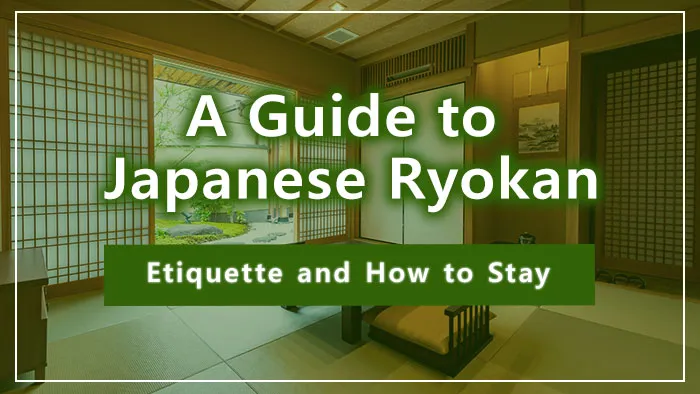
A ryokan is a traditional Japanese inn where guests can experience the country’s cultural heritage and the spirit of omotenashi — the Japanese philosophy of wholehearted hospitality. Through tatami rooms, futon bedding, yukata robes, onsen baths, and seasonal cuisine, a ryokan offers a style of stay entirely different from a hotel. In recent years, an increasing number of ryokan have introduced modern amenities to make the experience more accessible to international visitors.
This article provides a clear overview of what to expect at a Japanese ryokan, including room features, the flow of a typical stay, and etiquette to keep in mind. Read on to build a foundation of knowledge that will help you feel at ease and fully enjoy your ryokan experience.

1. What Is a Japanese Ryokan?
A ryokan is a traditional Japanese lodging that allows guests to immerse themselves in Japanese culture. You can relax in tatami rooms, sleep on futon bedding laid directly on the floor, wear a yukata robe, and enjoy meals and onsen baths. Unlike a hotel, a ryokan offers a comprehensive stay experience that encompasses not just accommodation, but also dining and personalized hospitality.
Many ryokan are located in scenic tourist areas or hot spring resorts, making it easy to connect with Japan’s natural beauty and the changing seasons. For international visitors, staying at a ryokan can be a truly valuable opportunity to understand Japanese daily life and culture.
Here is an overview of what Japanese ryokan are all about.
1-1. Types of Ryokan
Japanese ryokan can be broadly divided into two categories: onsen ryokan (hot spring inns) and urban ryokan (city-based ryokan).
An onsen ryokan is a lodging that makes use of natural hot spring waters, and is commonly found in mountainous areas or coastal hot spring resort towns. Guests can enjoy soaking in outdoor open-air baths (rotenburo) or large communal baths (daiyokujo) surrounded by scenic natural views.
Urban ryokan, on the other hand, are located in city centers and offer convenient access for sightseeing or business travel. In recent years, a growing number of modern ryokan blend traditional Japanese aesthetics with Western-style amenities such as beds and contemporary furnishings.
1-2. Room Layout
The standard ryokan guest room features tatami-mat flooring, which is characteristic of traditional Japanese living. A low table sits in the center of the room, and guests remove their shoes before entering — a custom unique to Japanese domestic life.
For sleeping, guests use futon — thin, floor-level mattresses placed directly on the tatami. During the day, futon are typically stored in a closet (oshi-ire), and in the evening a member of staff will lay them out for you.
Rooms may also feature a tokonoma — a decorative alcove used to display artwork or flower arrangements — as well as shoji (paper-paneled sliding doors) and fusuma (opaque sliding partition doors).Many ryokan today also offer wa-yo-shitsu, rooms that combine a tatami area with a Western-style bed, making them comfortable for international guests as well.
1-3. Amenities
Ryokan guest rooms come equipped with the basic amenities needed for a comfortable stay. Common items include a yukata robe, bath towel, hand towel, toothbrush, and slippers. Many rooms also feature a television, refrigerator, and in-room safe.
Some ryokan have a private bathroom and vanity within the room, though more traditional establishments may use shared facilities. Disposable toiletries such as toothbrushes are generally yours to take home, but yukata robes and towels are for use within the inn only.
1-4. Pricing
Ryokan rates are typically calculated per person rather than per room. Because they generally include dinner, breakfast, use of the onsen, and personalized service, the price may seem higher than a hotel at first glance.
Average prices range from around 8,000 to 30,000 yen per person for one night with two meals, though rates vary considerably depending on the size of the room, the quality of the meals, and whether a private outdoor bath is included.
As an example of an urban ryokan, ONSEN RYOKAN YUEN SHINJUKU in Shinjuku is a contemporary establishment featuring an open-air bath supplied with hot spring water transported from Hakone. For a more traditional hot spring experience that combines cultural immersion with sightseeing, Kyoto Arashiyama Onsen Kadensho offers private baths and kaiseki multi-course cuisine. With so many different ryokan to choose from, you are sure to find one that suits your preferences.
2. Ryokan Etiquette
Following basic etiquette during your stay at a Japanese ryokan is important for ensuring a comfortable experience for both yourself and those around you.
First, always remove your shoes before entering your room, and avoid wearing slippers on the tatami floor. Since tatami can be easily damaged, carry heavy luggage rather than dragging it across the mats. The tokonoma (decorative alcove) is a space meant to be appreciated for its aesthetic display, so please refrain from stepping into it or placing belongings there.
You are welcome to move around the inn in your yukata and slippers, though wearing them outside the building is generally not permitted — check with the inn in advance to confirm their policy. Please walk quietly in the corridors and be considerate of other guests.
Futon is typically laid out by staff in the evening, and tidying it slightly after use makes a good impression. Meals may be served either in your room or in a dedicated dining area, so follow the guidance of the inn’s staff.
3. How to Stay at a Japanese Ryokan
Understanding the customs and flow of a ryokan stay — which differ from a typical hotel stay — will help you feel at ease throughout your visit. Knowing the process from check-in to check-out allows you to focus on enjoying Japanese culture without any confusion.
Below is a step-by-step guide to the typical ryokan experience for international visitors.
3-1. Making a Reservation
Most ryokan can be found and booked through online reservation platforms, and a growing number of establishments accept reservations in English. However, some traditional ryokan only accept bookings by phone or through their official website, so it is best to confirm early.
When booking, the most common plan includes dinner and breakfast (one night, two meals). Because meals require preparation in advance, changes after arrival are often not possible. If you have any food allergies or dietary restrictions, be sure to inform the ryokan at the time of booking.
Weekends and public holidays tend to fill up quickly, so if your schedule is flexible, booking on a weekday will generally give you a better chance of securing a room.
3-2. Checking In
Ryokan check-in times are relatively flexible, but if you plan to have dinner at the inn, it is advisable to arrive by around 6:00 PM.
Upon arrival, a member of staff will greet you at the entrance and walk you through the facilities, meal times, and bathing procedures. Many ryokan provide English-language materials or have English-speaking staff available, so there is no need to worry.
Staff may escort you to your room, or you may be directed to make your way there independently. One notable difference from a hotel is that you will be asked to remove your shoes at the entrance or another designated area — simply follow the staff’s instructions.
3-3. Entering Your Room and Putting on a Yukata
Once inside your room, please remove your shoes and slippers before stepping onto the tatami. The room typically features a low table, floor cushions (zabuton), and a prepared tray of green tea and wagashi (traditional Japanese confectionery) — a welcoming touch that allows you to settle in and unwind after your journey.
A yukata robe will be provided in the closet, and can be worn during your bath, at mealtimes, and while moving around the inn. To put on a yukata correctly, wrap the left side of the robe against your body first, then fold the right side over the top, and secure it with the obi sash. While rooms with beds (wa-yo-shitsu) are increasingly common, in a traditional tatami room (washitsu) a member of staff will lay out your futon in the evening.
3-4. Using the Onsen or Baths
Most ryokan have large communal baths (daiyokujo) or onsen facilities, with separate areas for men and women. Before entering the bath, undress in the changing room and wash your body thoroughly at one of the shower stations before getting into the bathtub. Basic bathing supplies such as shampoo and body wash are provided.
Some ryokan also offer private baths (kashikiriburo) for families or couples, as well as rooms with their own private open-air baths. Please observe Japanese bathing etiquette — use the onsen calmly and quietly, and keep towels out of the bathtub.
3-5. Enjoying Dinner and Breakfast
Dining is one of the great highlights of staying at a ryokan.For dinner, guests can enjoy kaiseki — an elaborate multi-course meal featuring seasonal, locally sourced ingredients. Dishes are typically served in the following order: appetizers, sashimi (sliced raw fish), hot dishes, grilled items, rice, miso soup, and dessert.
Breakfast is generally a traditional Japanese meal consisting of rice, grilled fish, miso soup, and various side dishes, though an increasing number of ryokan also offer Western-style options such as bread and coffee. Meals may be served in your room or in a designated dining area, so follow the guidance of the staff.
3-6. Checking Out
Checking out requires no special preparation on your part.Simply leave the futon and bedding as they are, check that you haven’t forgotten any belongings, and settle your bill at the front desk.
Many ryokan also offer a shuttle service to the nearest train station. If you plan to use this, confirm the schedule and make a reservation by the evening before your departure. Some ryokan will also hold your luggage after check-out so you can continue exploring the surrounding area at your leisure.
Conclusion
A Japanese ryokan is more than just a place to sleep — it is a special destination where you can experience the rhythms of Japanese daily life and the beauty of the four seasons. Understanding the basics of how to use your room, bathe, and navigate mealtimes will help you get the most out of your stay.
Being mindful of those around you — keeping noise to a minimum and treating the tatami with care — is also an important part of the ryokan experience. Checking the reservation process and the flow of your stay in advance will ensure that even first-time visitors feel completely at ease. We hope you enjoy every moment of warm omotenashi hospitality and cultural discovery that only a ryokan can offer.
*This article is based on information available as of March 2026.