







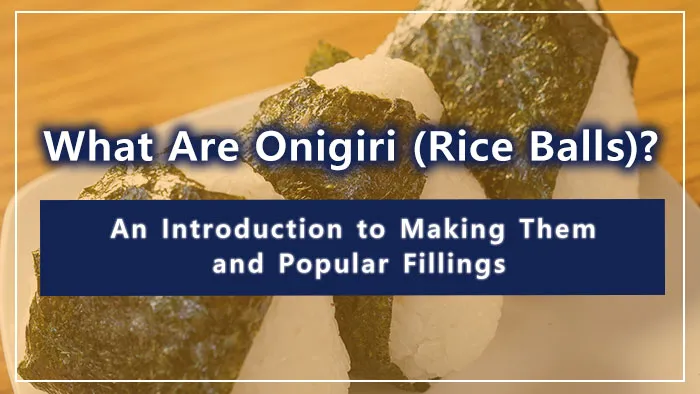
Onigiri is a familiar dish that represents Japanese food culture and has been enjoyed in various settings from homes to outings. While simply made by sprinkling salt on plain white rice, adding fillings, and shaping by hand, its great appeal lies in how it has evolved into diverse forms depending on regional characteristics and historical background.
This article provides a clear explanation of the basic meaning and history of onigiri, clarifies its differences from sushi, and introduces everything from standard to regionally distinctive fillings, as well as basic preparation methods for home cooking. International visitors to Japan should find this helpful for understanding Japanese food culture.

1. What Are Onigiri?

引用:pixabay.com
Onigiri is a traditional rice dish originating from Japan, made by sprinkling salt on cooked white rice and shaping it by hand. It’s common to include fillings inside and wrap the outside with nori seaweed, and it’s also called “nigirimeshi” or “omusubi.”
While there are various theories about why triangular shapes are common, the prevailing explanation is that they were anciently shaped to resemble mountains as offerings to deities. Because they require almost no cooking utensils and can be eaten with one hand, they have long been cherished as bento or portable food for outings.
Today, onigiri is sold in diverse varieties not only as home cooking but also at specialty shops and convenience stores, and is widely recognized by international visitors as a familiar food symbolizing Japanese culture.
1-1. History of Onigiri
While the exact origins of onigiri are unclear, “carbonized rice clumps” discovered at Yayoi period archaeological sites are considered the prototype. Nara period documents contain references to ” nigirii,” and during the Heian period, ” tonjiki”—hardened steamed glutinous rice—was served at the imperial court and ceremonial occasions. Later, from the Kamakura period through the Warring States period, onigiri filled with umeboshi were valued as military provisions for samurai.
During the Edo period, onigiri spread among common people and became established as a staple portable food and bento item. In modern times, with the proliferation of convenience stores from the 1970s onward, onigiri has become beloved as an everyday food both domestically and internationally.
1-2. Differences Between Onigiri and Sushi
While both onigiri and sushi are Japanese dishes using rice, there are clear differences in their roles and preparation methods. Sushi has evolved as a dish that uses vinegared rice seasoned with vinegar, sugar, and salt, combined with fresh seafood and other ingredients to enjoy both taste and visual appeal.
In contrast, onigiri uses white rice or lightly salted rice, and typically employs pre-cooked ingredients as fillings. It’s characterized by emphasizing preservation and portability, with the ease of eating by hand. Understanding this difference helps one appreciate how Japanese food culture has evolved according to purpose and occasion.
2. Popular Onigiri Fillings

引用:unsplash.com
One of onigiri’s charms is the rich variety of fillings. In Japan, everything from traditional fillings chosen for preservation and flavor compatibility to those with strong regional characteristics and modern arrangements is widely enjoyed.
Here we introduce representative and popular onigiri fillings that international visitors should definitely know about. Please use this as a reference for choosing onigiri while experiencing Japanese food culture and regional characteristics.
2-1. Umeboshi
Umeboshi is the most classic filling that has been beloved in onigiri since ancient times. It’s a preserved food made by pickling plums in salt and drying them in the sun, with a strong sour and salty taste that pairs well with white rice. It has long been valued as a filling that’s easy to eat even when appetite is low. Additionally, the salt and acidity help prevent the rice from spoiling, making it ideal for onigiri as portable food.
Today, in addition to traditional sour umeboshi, there are abundant varieties including sweet honey plum and crunchy textured kari-kari ume.
2-2. Konbu
Konbu onigiri uses sweetly simmered konbu tsukudani or shio-konbu as filling. The umami components in konbu enhance the sweetness of the rice, spreading deep flavors with each bite. While not flashy, it provides high satisfaction even in small amounts and is a filling that enjoys enduring popularity in Japan. Chopped konbu makes it easier to eat and is enjoyed by people of all ages from children to adults.
The somehow nostalgic flavor can be said to symbolize homestyle Japanese onigiri.
2-3. Katsuobushi
“Okaka,” which uses katsuobushi, is a simple onigiri with soy sauce-seasoned katsuobushi as filling. The aroma and umami of freshly shaved katsuobushi, combined with rice, makes the quality of the ingredients stand out. Because it’s easy to make at home, it has been beloved since ancient times.
Recently, arrangements adding a small amount of mayonnaise for richness or combining it with cheese are also seen. The great appeal of katsuobushi onigiri lies in the deep flavor you can enjoy despite its simplicity.
2-4. Sake
Salmon is familiar on Japanese dining tables and is highly popular as an onigiri filling.It’s common to flake fragrant grilled salmon and remove the bones before using. The moderate saltiness and fatty umami pair well with white rice and are satisfying to eat. The vibrant color also makes for a satisfying onigiri.
At home, grilled salmon is used, or processed products like salmon flakes can be utilized for easy preparation, which is also part of the appeal. This is a recommended filling for those trying Japanese onigiri for the first time.
2-5. Mentaiko
Mentaiko is Alaska pollock roe marinated in a seasoning liquid containing chili peppers. It’s characterized by a slightly spicy kick and popping texture, with excellent compatibility with white rice. Compared to “tarako,” which has milder spiciness, it offers a more stimulating flavor.
When including it in onigiri, it’s sometimes used raw, but grilling it first increases its fragrance. It’s especially popular with those who like spicy flavors and is a filling that lets you experience distinctly Japanese taste.
2-6. Tuna Mayonnaise
Tuna mayonnaise is a relatively new staple filling made by mixing tuna with mayonnaise. The mayonnaise gently envelops the fish’s umami, and it’s supported by a wide range of generations from children to adults.
It’s highly popular in Japanese convenience store onigiri and is an accessible flavor for international visitors trying onigiri for the first time. Using drained tuna makes it light and easy to eat. It can be said to be a filling that reflects Japan’s unique evolution, fusing Japanese and Western elements.
2-7. Chicken Soboro
Chicken soboro is a filling made from ground chicken seasoned sweet and savory, also enjoyed in bento and rice bowls. Because it’s finely crumbled, it’s easy to eat whether mixed into rice or wrapped inside. It doesn’t harden even when cooled and is suitable for carrying, making it ideal for onigiri.
Adding ginger provides a refreshing aftertaste and stimulates appetite. With its gentle flavor, it’s a filling that conveys the character of Japanese home cooking.
2-8. Shrimp Tempura (Tenmusu)
Onigiri with shrimp tempura filling is called “tenmusu” and is particularly known in the Chubu region. The combination of crispy fried shrimp tempura and white rice is satisfying to eat with high fulfillment. The dipping sauce or salt flavor that soaks into the tempura batter pairs well with the rice.
It’s visually impressive and popular as an onigiri with a special feel. This filling is often arranged throughout Japan and served as a local specialty at tourist destinations.
2-9. Spam and Tamagoyaki
Onigiri using spam and tamagoyaki is a standard filling in Okinawa.The salty spam and gently sweet tamagoyaki pair well with white rice and are filling. The style of placing ingredients on top of the rice is common, with a distinctive appearance. Because it’s substantial, it’s chosen when one wants a proper meal.
This is a filling with strong regional characteristics even within Japan, with the appeal of experiencing the food culture of different areas.
3. How Do You Make Onigiri?

Onigiri can be easily made by anyone once you understand the basic steps.
First, prepare freshly cooked Japanese rice. Warm rice brings out the umami of the rice and makes it easier to hold together. Lightly moisten your hands with water and spread a small amount of salt on your palms. Salt not only adds flavor but also enhances preservation.
Next, take a rice bowl’s worth of rice in your hand, make an indentation in the center, and add your preferred filling. Cover the filling with rice and gently shape it into a triangle, circle, barrel shape, or other preferred form without applying too much pressure.
Finally, wrap with nori seaweed to add ease of handling and aroma, and it’s complete. The key to maintaining a fluffy texture is not pressing too firmly.
Conclusion
Onigiri is a uniquely Japanese dish that has evolved diversely depending on fillings, shapes, and eating occasions while based on the simple combination of white rice and salt. With a long history dating back to the Yayoi period, it has accompanied people’s lives through each era, from samurai portable food to common people’s bento and modern convenience store products.
In addition to traditional fillings like umeboshi and salmon, the fact that tuna mayonnaise and regionally distinctive tenmusu and spam onigiri are enjoyed reveals the flexibility of Japanese food culture. Since anyone can enjoy their preferred onigiri once they understand the basic preparation method, it’s also appealing as home cooking. Learning about onigiri is a step toward understanding Japanese food culture and lifestyle.
*This article is based on information available as of December 2025.