What to Do in Hida-Takayama? A Guide to the Special Performance Commemorating the 60th Anniversary of the Kusakabe Folk Art Museum
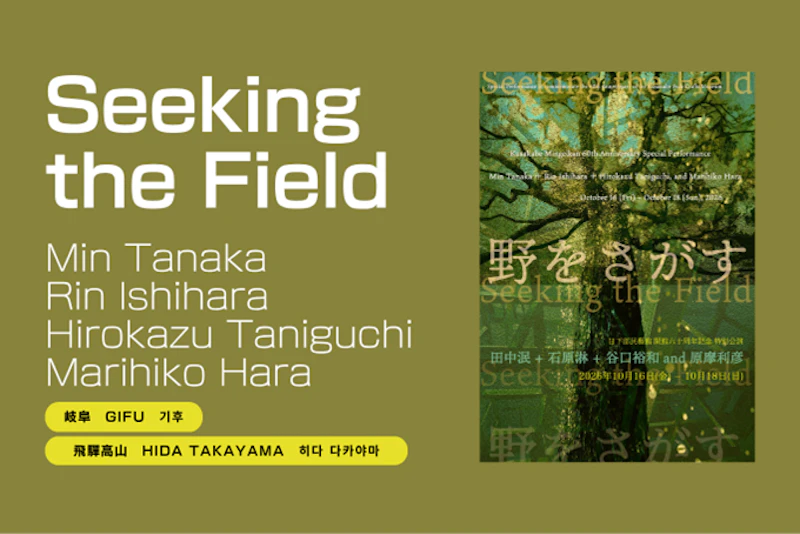


Located in the northern part of Gifu Prefecture, Hida-Takayama is a popular destination where the atmosphere of the Edo period (1603–1868) lives on to this day. There is no shortage of things to do in this town: strolling through "Sanmachi," a historic district lined with lattice-fronted merchant houses; visiting morning markets that rank among Japan's three most celebrated; and savoring local specialties such as Hida beef and Takayama ramen.
Of particular note is the Kusakabe Folk Craft Museum, designated as a National Important Cultural Property of Japan. A special performance is also planned for October 2026 to commemorate the museum's 60th anniversary, making it an even more compelling reason to visit. This article covers the classic ways to spend your time in Hida-Takayama, how to make the most of the Kusakabe Folk Craft Museum, and how to get there from Tokyo.
Table of Contents
1. What Kind of Place Is Hida-Takayama?
2. Classic Ways to Spend Your Time in Hida-Takayama
2-1. Walking the Historic Old Town
2-2. Enjoying the Morning Markets
2-3. Visiting Takayama Jinya and the Festival Floats Exhibition Hall
2-4. Experiencing Traditional Farmhouses at Hida Folk Village
2-5. Savoring Hida Beef, Takayama Ramen, and Local Sake
3. A Must-See in Hida-Takayama: How to Enjoy the Kusakabe Folk Craft Museum
3-1. Special Performance "Seeking the Field" – 60th Anniversary Commemoration (October 16–18, 2026)
4. How to Get from Tokyo to Hida-Takayama
Summary
1. What Kind of Place Is Hida-Takayama?
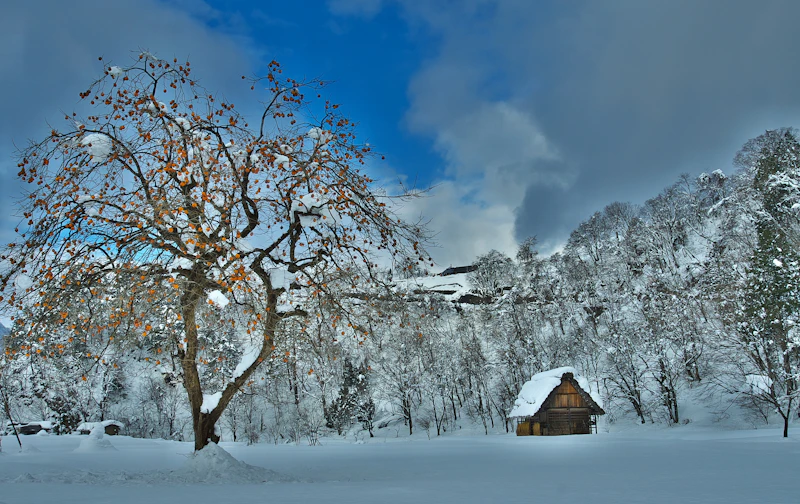
Hida-Takayama is a mountain town nestled in the northern part of Gifu Prefecture, surrounded by beautiful peaks on all sides. Its historic streets, which retain the character of the Edo period(1603–1868), have been lovingly preserved, with lattice-fronted merchant houses and sake breweries lining both sides of the road.
The Hida region has long prospered as a land of high-quality timber and skilled craftsmen, and was also a domain governed directly by the Edo Shogunate. Each spring and autumn, the town hosts the Takayama Festival, one of Japan's most celebrated festivals, during which magnificent ceremonial floats parade through the streets. Morning markets open daily and offer locally grown vegetables and folk crafts. Local specialties such as Hida beef and Takayama ramen are also popular draws.
With its quiet, serene atmosphere, Hida-Takayama is the perfect destination for those who want to savor the distinctly Japanese character of a traditional townscape at a leisurely pace.
2. Classic Ways to Spend Your Time in Hida-Takayama
Hida-Takayama offers five experiences not to be missed. From strolling the historic old town and browsing morning markets to exploring historic sites and tasting local cuisine, here are the quintessential ways to enjoy this unique town.
2-1. Walking the Historic Old Town
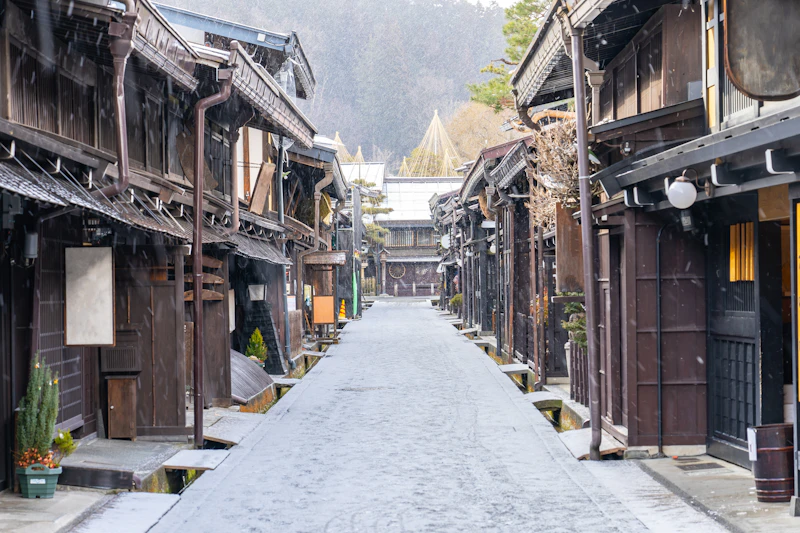
The highlight of sightseeing in Takayama is undoubtedly the historic old town district known as "Sanmachi." Wooden buildings constructed during the Edo period line both sides of the street, with lattice-fronted merchant houses and sake breweries preserved just as they were centuries ago.
Buildings with large cedar balls (sugidama) hanging from their eaves are a sign of a sake brewery. At several breweries, you can sample a variety of local sake for a small fee. The district is also home to shops selling crafts and souvenirs, as well as cafés serving traditional Japanese sweets, making it a pleasure simply to wander at your own pace. Early morning, when crowds are thin, is an especially tranquil time to visit.
2-2. Enjoying the Morning Markets
In Takayama, morning markets run from early in the day until around noon. There are two locations: the "Miyagawa Morning Market" along the Miyagawa River, and the "Jinya-mae Morning Market" in front of Takayama Jinya. Stalls are piled with locally grown vegetables, fruit, pickles, flowers, and handmade folk crafts.
One of the joys of visiting is seeing how the offerings change with the seasons: wild mountain vegetables in spring, Hida peaches in summer, freshly harvested rice and apples in autumn, and pickled vegetables in winter. Strike up a conversation with the vendors and they will happily share their favorite ways to enjoy what they are selling.
2-3. Visiting Takayama Jinya and the Festival Floats Exhibition Hall
Takayama Jinya served as the regional government office — a daikan (magistrate's) and gundai (district administrator's) office — during the Edo period. It is the only place in Japan where the main buildings of such an office have survived intact from the Edo period. Inside, visitors can learn about the history of how the Tokugawa Shogunate governed the Hida region directly.
Admission is ¥500 per person, with free entry for high school students and younger. A visit takes around 30 minutes. From the entrance hall through to the Oshirasu (a formal courtyard used for official hearings) and the rice storehouse, you can easily explore the daily life and workings of an Edo-period government office.
At the northern end of the old town district, you will also find the Takayama Festival Floats Exhibition Hall. Located next to Sakurayama Hachimangu Shrine, the hall currently displays four of the ceremonial floats actually used in the autumn Takayama Festival. The Takayama Festival is counted among Japan's three greatest festivals, held in spring in April and in autumn in October. The elaborate decorations on the floats trace their origins to around the 18th century and have been carefully maintained and restored over many generations. It is a rare opportunity to appreciate up close the extraordinary craftsmanship of Takayama's artisans.
2-4. Experiencing Traditional Farmhouses at Hida Folk Village
Hida Folk Village (Hida no Sato) is an open-air museum featuring traditional farmhouses relocated from across the Hida region. Its collection includes structures built in the distinctive gassho-zukuri style — a form of architecture characterized by steep thatched roofs designed to shed heavy snow — offering visitors a vivid sense of life in the mountain villages of old. The museum also offers hands-on experiences such as braided cord-making, pottery, and painting beckoning cat (maneki-neko) figurines. Opening hours are 8:30 a.m. to 5:00 p.m., and the museum is open year-round. Admission is ¥700 for adults and ¥200 for elementary and junior high school students, making it a great spot for families.
2-5. Savoring Hida Beef, Takayama Ramen, and Local Sake
No trip to Hida-Takayama would be complete without sampling the local cuisine.
Hida beef is a premium wagyu (Japanese beef) raised in the region's rich natural environment. It can be enjoyed as nigiri sushi, and street food featuring Hida beef is also popular for eating while strolling through the old town. Takayama ramen is a simple, satisfying bowl of thin, wavy noodles in a soy sauce-based broth, topped with chashu pork, bamboo shoots, and green onions.
Local sake is another highlight not to be overlooked in Hida-Takayama. Despite being a small town, it is home to seven sake breweries. Pairing sake with local dishes such as pickled vegetable steak (tsukemono steak — a regional specialty of thick-cut pickled vegetables grilled on a hot iron plate) makes the experience even richer.
3. A Must-See in Hida-Takayama: How to Enjoy the Kusakabe Folk Craft Museum
The Kusakabe Folk Craft Museum (Kusakabe Heritage House) is a traditional townhouse built in 1879 (Meiji 12) by Kawajiri Jiisuke, a master carpenter of the Hida region. Rooted in the architectural traditions of the Edo period while incorporating new elements of the modern age, it has been designated a National Important Cultural Property of Japan.
Step inside and you will be greeted by a soaring open atrium and a single beam of red pine stretching approximately 13 meters — a breathtaking sight. The deep, heavy eaves, typical of a heavy-snowfall region, are another highlight. Powerful and imposing in its construction, this building is widely regarded as one of the finest examples of traditional Japanese residential architecture.
The museum's interior displays folk crafts including Shibukusa-yaki pottery (a style of ceramics originating in the Hida region), as well as family heirlooms such as a Buddhist altar and a traditional bridal kimono passed down through generations. A shop is also on-site, where you can purchase handmade folk crafts sourced from across Japan. Admission is ¥1,000 for adults, ¥500 for high school students, and ¥300 for elementary and junior high school students. The museum is approximately a 17-minute walk from JR Takayama Station.
3-1. Special Performance "Seeking the Field" – 60th Anniversary Commemoration (October 16–18, 2026)
The Kusakabe Folk Craft Museum will host a special performance titled "Seeking the Field" from October 16 to 18, 2026, commemorating the 60th anniversary of both the museum's opening and the designation of the Kusakabe Residence as a National Important Cultural Property.
The performance is conceived and directed by internationally acclaimed dancer Min Tanaka. Joining him are Rin Ishihara, Tanaka’s only disciple; Hirokazu Taniguchi, a dancer from Takayama; internationally active composer Marihiko Hara; and lighting designer Yukiko Yoshimoto. These five artists, each of whom has forged a distinctive path in their respective field, will come together at the Kusakabe Folk Crafts Museum.
Rather than reproducing an existing work in a conventional theater, the performance will take shape in response to the Kusakabe House’s vast open atrium, the memories of everyday life accumulated within it, the shifting light and reverberations of sound, and the distinctive character of Takayama itself. Together, these elements will give rise to a performance that could exist only in this place and at this moment. Audiences will witness a once-only manifestation of life by performers whose actions can never be repeated.
How will Min Tanaka, a dancer whose life and career have consistently defied convention, transform the familiar setting of the Important Cultural Property Kusakabe House? We invite you to experience a performance that will stimulate the senses.
Tickets in Japan is selling tickets for this performance. We warmly invite you to experience this rare and extraordinary event in Hida-Takayama and immerse yourself fully in Japanese culture.
https://www.ticketsinjapan.com/events/culture_seeking-the-field/
4. How to Get from Tokyo to Hida-Takayama
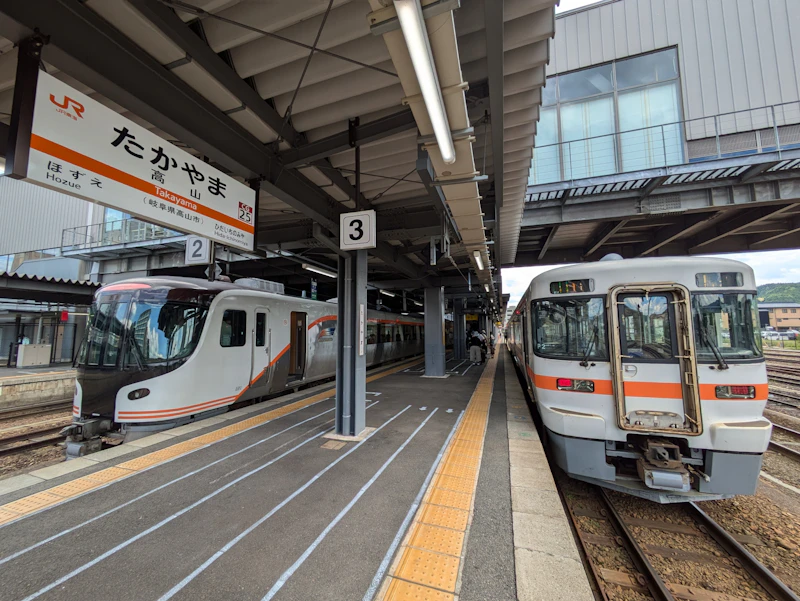
There are two main ways to travel from Tokyo to Hida-Takayama: by train or by highway bus.
The most commonly used route involves transferring from the Tokaido Shinkansen to a limited express train. Take the Tokaido Shinkansen from Tokyo to Nagoya, then transfer to the JR Limited Express Hida. The journey takes approximately four hours and costs around ¥15,000 one way. The leg from Nagoya to Takayama treats travelers to stunning scenery along a river valley.
For those looking to arrive a little faster, another option is to take the Hokuriku Shinkansen to Toyama and transfer to the Limited Express "Hida." This route also takes approximately four hours.
If you are looking to keep costs down, the highway bus is a great option. Direct, no-transfer buses run from Shinjuku to Takayama. The journey takes around five hours and 45 minutes and costs approximately ¥8,000 to ¥9,500. Choose whichever mode of transport best suits your travel budget and schedule.
Summary
Hida-Takayama is a town so packed with things to do — strolling the historic streets, browsing the morning markets, exploring historic sites, and enjoying local cuisine — that a single day is simply not enough. The Kusakabe Folk Craft Museum, with its striking exposed beams and soaring atrium, stands out as a masterpiece of architecture that continues to convey the traditions and craftsmanship of the Hida region. From October 16 to 18, 2026, the special performance "Seeking the Field" will be held to celebrate the museum's 60th anniversary. Tickets are limited, so if you are planning a trip around the performance, early booking is strongly recommended.
From Tokyo, the journey takes around four hours by transferring from the Shinkansen to the Limited Express Hida, or you can opt for a direct highway bus if you prefer a more budget-friendly option. Come and discover Hida-Takayama, a town that reveals a different face with every season.
※This article is based on information available as of July 2026.