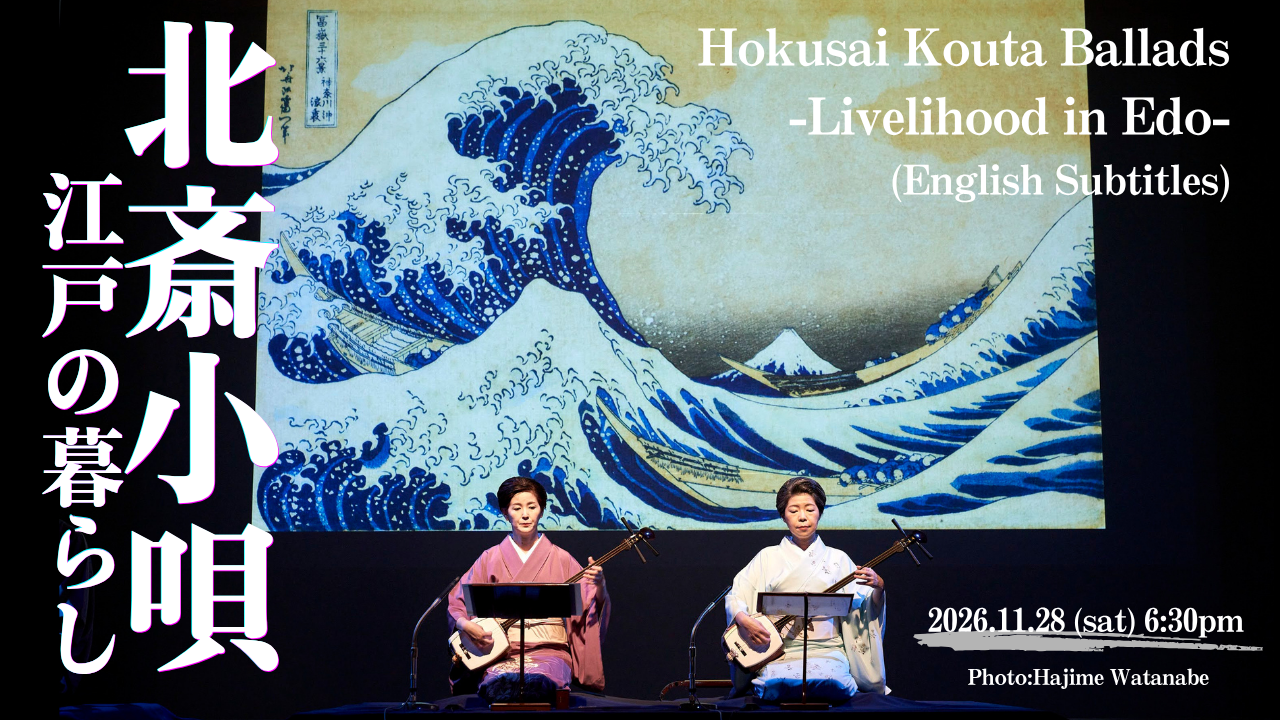
Hokusai Kouta What Was Life Like in Edo? Exploring the Edo-Tokyo Museum and Ryogoku
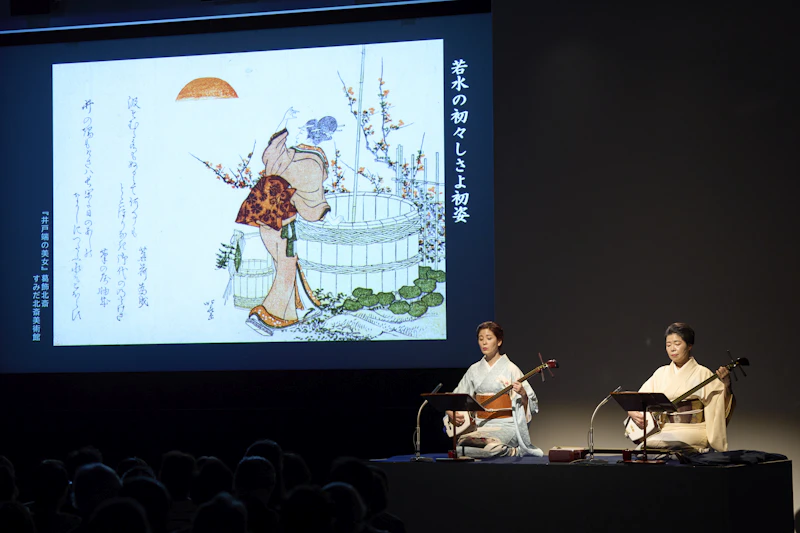
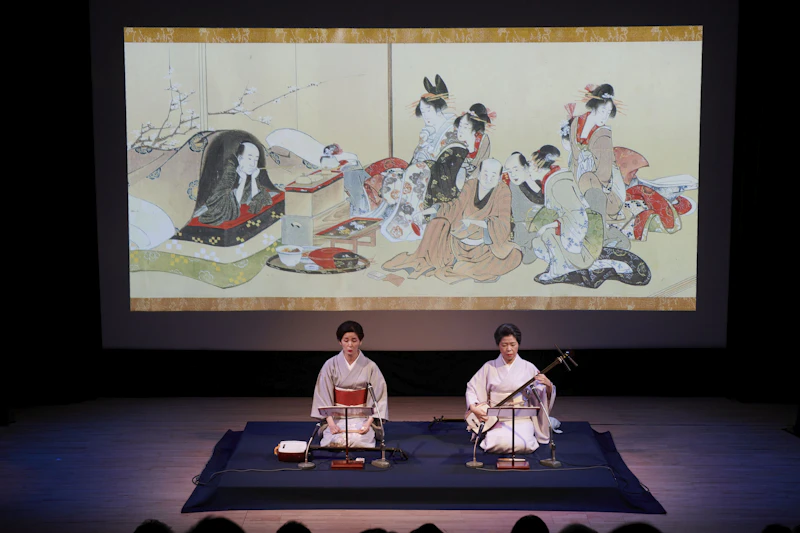
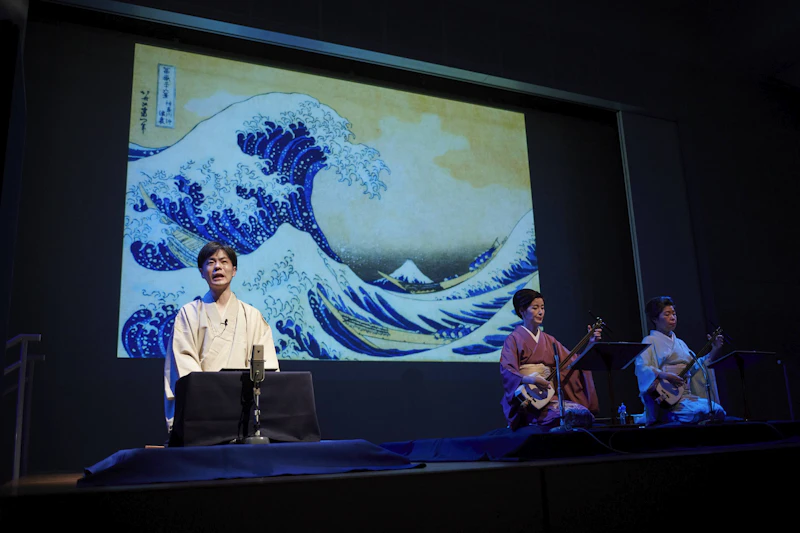


Experience the everyday life of Edo through the ukiyo-e woodblock prints of Katsushika Hokusai, kouta (traditional short songs), and the art of rakugo storytelling in Hokusai Kouta: Life in Edo. If you're visiting Ryogoku, why not make the most of your trip by combining the performance with the exhibitions at the Edo-Tokyo Museum and a stroll through the surrounding neighborhood? Viewing the exhibitions beforehand will help bring the common people's culture of Edo, as depicted in the performance, to life. Checking the performance times and nearby facilities in advance will also help your day run smoothly.
This article covers the highlights of the performance, the exhibitions at the Edo-Tokyo Museum, access information, and dining options to enjoy in Ryogoku.
Tickets for Hokusai Kouta: Life in Edo are available here
https://www.ticketsinjapan.com/en/events/culture_hokusai_kouta2026/
Table of Contents
1. Highlights of Hokusai Kouta: Life in Edo
1-1. Enjoy Hokusai's ukiyo-e woodblock prints alongside live kouta music
1-2. Follow the lives of Edo's common people guided by a rakugo storyteller
1-3. The evening show is performed in English with subtitles
2. What makes the Edo-Tokyo Museum's exhibitions worth seeing
2-1. Experience the streets of Edo with full-scale replicas of Nihonbashi Bridge and the Nakamuraza Theater
2-2. Learn about everyday life in Edo through a model of a nagaya tenement house
2-3. Deepen your understanding of the exhibits with multilingual audio guides
3. Getting to the Edo-Tokyo Museum
3-1. Walking from Ryogoku Station
3-2. Taking the train from Tokyo Station or the airports
4. Dining in Ryogoku before or after the performance
4-1. Enjoy chanko nabe (sumo wrestlers' hot pot) for a meal that captures the spirit of Ryogoku, the sumo district
4-2. Try soba, sushi, and monjayaki at Ryogoku Edo NOREN
Summary
1. Highlights of Hokusai Kouta: Life in Edo
Hokusai Kouta: Life in Edo is a stage performance that combines Katsushika Hokusai's ukiyo-e woodblock prints, live kouta music, and the storytelling art of a rakugo performer to portray the everyday lives and spirit of the common people of Edo. Details of the performance are as follows.
Performance Date | Saturday, November 28, 2026 |
|---|---|
Venue | Edo-Tokyo Museum, Small Hall |
Matinee | Starts at 3:00 PM |
Evening Show | Starts at 6:30 PM ※English-language performance |
Doors Open | 30 minutes before each performance |
Running Time | Approximately 1 hour 30 minutes |
Tickets | 4,000 yen (advance purchase, unreserved seating, tax included) |
Tickets for Hokusai Kouta: Life in Edo are available here
https://www.ticketsinjapan.com/en/events/culture_hokusai_kouta2026/
1-1. Enjoy Hokusai's ukiyo-e woodblock prints alongside live kouta music
During the performance, ukiyo-e woodblock prints by Katsushika Hokusai and other artists are projected on a large screen, accompanied by live kouta music. The scenery and subjects in the artwork are woven together with the music, creating an experience that immerses you in the atmosphere of Edo through both sight and sound. Kouta are short, shamisen-accompanied vocal pieces (typically one to three minutes long) that emerged from hauta (ballad songs) in the late Edo period and often depict the seasons, nature, and the nuances of romantic relationships. They are typically performed by a vocalist and a shamisen player, with the shamisen plucked using the fingernails rather than a plectrum. For international audiences, seeing the prints alongside the music makes it easier to connect with and appreciate Japanese traditional music.
1-2. Follow the lives of Edo's common people guided by a rakugo storyteller
Rakugo performer Yanagiya Ryokuta serves as guide, leading the audience through the streets of Edo while providing commentary on the kouta and ukiyo-e. The theme of this performance is to shine a light on the nameless ordinary people depicted in Hokusai's landscape prints, tracing their daily lives, livelihoods, and full range of human emotions. The kouta are performed by Senshi Mieka and Kouta Kosamiki of Akekure Kouta, with hayashi ensemble music by the Fukuhara Chizuru-renjū adding further depth to the scenes. The layering of ukiyo-e, kouta, storytelling, and the sounds of the drum and flute creates a performance that brings you close to the pulse of everyday life in Edo.
1-3. The evening show is performed in English with subtitles
The evening show is presented as an English-language performance, making it accessible to foreign visitors and residents in Japan. Starting at 6:30 PM, the performance features the kouta sung in Japanese while subtitles displaying free translations of the lyrics are shown on screen. Because kouta pack rich imagery of the seasons, human emotion, and the subtleties of romantic relationships into very few words, their meaning can be difficult to grasp for those unfamiliar with Japanese. The subtitles allow audiences to follow the content while enjoying Hokusai's ukiyo-e prints, the rakugo performer's storytelling, and the live shamisen music together.
2. What makes the Edo-Tokyo Museum's exhibitions worth seeing
The Edo-Tokyo Museum is a museum that uses full-scale models and historical materials to introduce approximately 400 years of history, culture, and daily life, spanning from the Edo period to present-day Tokyo. Many of its exhibitions pair well with Hokusai Kouta: Life in Edo.
Opening Hours | 9:30 AM–5:30 PM; Saturdays until 7:30 PM |
|---|---|
Last Admission | 30 minutes before closing |
Permanent Exhibition Admission | 800 yen (general admission) |
Online Purchase | Available via Webket |
On-Site Purchase | Available at the ticket counter on the 1st floor |
The museum is open until 7:30 PM only on Saturdays, and since the evening performance begins at 6:30 PM, visiting the permanent exhibitions after the show will not be possible. As the permanent exhibition hall covers approximately 9,000 m², those planning to explore the exhibitions should arrive well before the performance to allow enough time.
(Source: Edo-Tokyo Museum, "Opening Hours" / https://www.edo-tokyo-museum.or.jp/information/hours/)
(Source: Edo-Tokyo Museum, "Admission & Tickets" / https://www.edo-tokyo-museum.or.jp/information/guide/)
2-1. Experience the streets of Edo with full-scale replicas of Nihonbashi Bridge and the Nakamuraza Theater
As you enter the permanent exhibition hall, the first thing to catch your eye is a large replica of Nihonbashi Bridge, which stood at the heart of Edo. Based on renovation records from 1806 and 1829, the exhibition reproduces the northern half of the original bridge—which spanned approximately 51 meters in total—at full scale. The Nakamuraza, one of Edo's most celebrated kabuki theaters, is also reproduced at full scale, with the front facade of the building reconstructed in detail.
Following the museum's renovation in 2026, a walkway was added inside the Nakamuraza model, allowing visitors to step inside and explore the interior rather than simply viewing the exterior. By crossing Nihonbashi Bridge and walking through the interior of the Nakamuraza, you can experience the scale and atmosphere of Edo's streets and entertainment culture firsthand.
2-2. Learn about everyday life in Edo through a model of a nagaya tenement house
In the Edo zone, you can see a full-scale model of a munewari nagaya—a style of tenement house where a single building was divided into multiple dwellings for common people. The display recreates the earthen-floored kitchen area that also served as an entryway, the cooking stove, water jars, and storage arrangements. Viewed alongside materials related to food, clothing, and shelter, the exhibition gives you a concrete sense of how people made the most of their limited living spaces in that era.
Hokusai Kouta: Life in Edo is a performance that shines a spotlight on the lives of ordinary people depicted in Hokusai's landscape prints. Viewing the nagaya and town exhibits before the performance will make it much easier to picture the kinds of environments in which the people appearing in the kouta and ukiyo-e actually lived.
2-3. Deepen your understanding of the exhibits with multilingual audio guides
After its renovation, the Edo-Tokyo Museum introduced a system that allows visitors to scan QR codes at exhibits using their own smartphones or devices to access multilingual audio guides. The guides are available in 13 languages, replacing the previous system of dedicated rental devices with a new approach that lets visitors access commentary directly from their own devices.
Even visitors unfamiliar with Japanese can use the audio commentary to supplement their experience, gaining context about the historical background and the significance of exhibits that may be difficult to grasp from the models and materials alone. Combined with the English-language evening performance of Hokusai Kouta: Life in Edo, this makes it easier to build a rich and in-depth understanding of Edo culture through both the exhibitions and the stage.
3. Getting to the Edo-Tokyo Museum
The Edo-Tokyo Museum is within walking distance of Ryogoku Station, served by both the JR Sobu Line and the Toei Oedo Line, making it easy to reach by train. Below you will find directions for walking from Ryogoku Station, as well as for traveling by train from Tokyo Station, Shinjuku Station, and the airports.
3-1. Walking from Ryogoku Station
From Ryogoku Station on the JR Sobu Line, the museum is a 3-minute walk from the West Exit and a 7-minute walk from the East Exit. If you use Ryogoku Station (Edo-Tokyo Museum Mae) on the Toei Oedo Line, it is just a 1-minute walk from exits A3 or A4. Note that the JR Ryogoku Station and the Toei Oedo Line Ryogoku Station are not in the same location, so be sure to check which exit to use depending on the line you take. If you are meeting someone, it is a good idea to agree in advance whether to meet at the JR side or the Toei subway side.
3-2. Taking the train from Tokyo Station or the airports
From Tokyo Station, take the JR Yamanote Line to Akihabara Station and transfer to the JR Sobu Line, reaching Ryogoku Station in approximately 16 minutes. From Shinjuku Station, the JR Sobu Line runs directly to Ryogoku Station in approximately 22 minutes with no transfer required. The journey takes approximately 55 minutes from Haneda Airport and approximately 90 minutes from Narita Airport. Travel times may vary depending on transfers and waiting times, so please allow plenty of time. As doors open 30 minutes before the performance of Hokusai Kouta: Life in Edo, those planning to visit the exhibitions are encouraged to arrive even earlier.
4. Dining in Ryogoku before or after the performance
Ryogoku is known as the "home of sumo," with Ryogoku Kokugikan (the national sumo arena) and numerous sumo stables in the area. The neighborhood is home to a variety of restaurants serving chanko nabe—the hearty hot pot dish rooted in sumo culture—as well as soba noodles, sushi, and monjayaki (Tokyo-style savory pancakes). Here are some dining options conveniently located for before or after the performance.
4-1. Enjoy chanko nabe for a meal that captures the spirit of Ryogoku, the sumo district
Chanko nabe is a hot pot dish simmered with a combination of meat, seafood, and vegetables, and has long been a staple meal in sumo stables, valued for helping wrestlers build their bodies. As the home of sumo, Ryogoku has many restaurants specializing in chanko cuisine, offering a taste of the neighborhood's distinctive food culture.
One such restaurant is Chanko Kirishima Ryogoku Edo NOREN-ten, located inside Ryogoku Edo NOREN at the West Exit of JR Ryogoku Station. The restaurant serves chanko nabe made with a chicken and pork bone broth, combined with seafood, meat, fish paste balls, and vegetables. It is open from 11:00 AM to 10:00 PM, with last orders at 9:00 PM, and has a midday break on weekdays.
4-2. Try soba, sushi, and monjayaki at Ryogoku Edo NOREN
Ryogoku Edo NOREN is a dining complex housed in the former station building of JR Ryogoku Station. The interior is designed to evoke the atmosphere of an Edo-period townhouse and features a full-scale sumo ring, allowing you to enjoy your meal surrounded by the spirit of Edo.
Inside, you can enjoy soba at Nihonbashi Yabu-Kyū and monjayaki (a Tokyo specialty of savory pancakes cooked on an iron griddle) at Tsukishima Monja Moheji, among other options. With a variety of Tokyo-style dishes all available in one place, it makes for a convenient and enjoyable dining stop before or after the performance.
Summary
Hokusai Kouta: Life in Edo offers an engaging way to experience the everyday lives and culture of Edo's common people through Hokusai's ukiyo-e prints, kouta music, and the storytelling art of rakugo. The venue, the Edo-Tokyo Museum, features exhibitions including Nihonbashi Bridge, the Nakamuraza theater, and a nagaya tenement house, all of which will enrich your appreciation of the performance if viewed beforehand. The museum is also conveniently accessible from Ryogoku Station, and the surrounding area offers plenty of dining options such as chanko nabe, soba, sushi, and monjayaki. On the day of the performance, allow yourself plenty of time to take in the exhibitions and enjoy a meal, and make the most of your Edo culture experience in Ryogoku.
※This article is based on information available as of October 2026.