What Is a Goshuin? How to Get One and Where to Collect Them (Shrines & Temples)
.jpg?w=800&fm=webp)
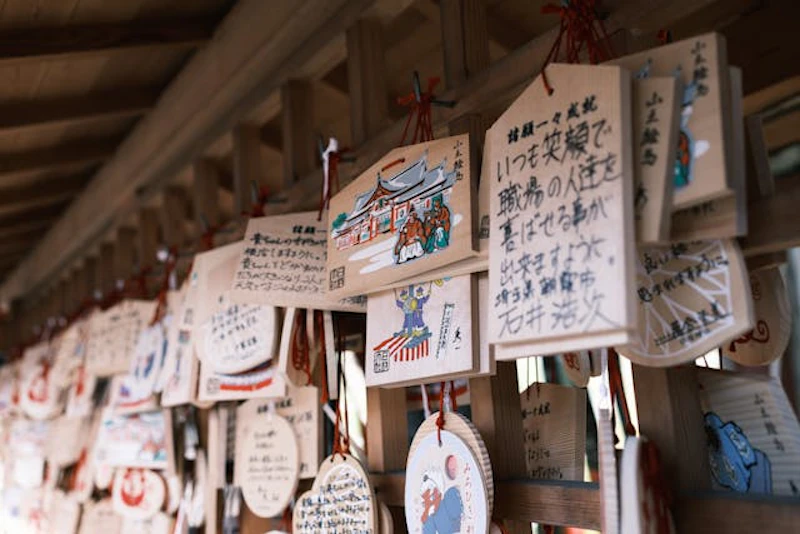


Goshuin are special records featuring calligraphy and red seals that you can receive when visiting shrines and temples, cherished by many as proof of worship. The goshuin collected in goshuin-cho (stamp books) possess art-like beauty and a unique presence, providing travel records and spiritual satisfaction.
This article provides clear explanations of the meaning and appeal of goshuin, as well as the proper procedures for receiving them. This is a must-read for beginners who want to start collecting goshuin or those who lack confidence in proper etiquette.
Table of Contents
1. What are Goshuin?
1-1. Reasons for collecting Goshuin
2. How to receive Goshuin
2-1. Obtaining a Goshuin-cho
2-2. Visiting shrines and temples for worship
2-3. Receiving Goshuin at the shrine or temple office
2-4. Paying the offering fee and expressing gratitude
3. Popular Japanese shrines and temples where you can receive Goshuin
3-1. Ise Grand Shrine
3-2. Meiji Shrine (Meiji Jingu)
3-3. Kiyomizu-dera Temple
3-4. Enryaku-ji Temple
Summary
1. What are Goshuin?
(Source: Jinja Honcho Official Website "Origins of Goshuin—Sutra Copying Dedication to Shrines and Temples")
Goshuin are calligraphy and red seals granted as proof of worship at shrines and temples. Goshuin feature the names of shrines and temples, worship dates, names of enshrined deities and Buddhas, and prayer words written in beautiful calligraphy, stamped with vermillion seals.
The origins of goshuin lie in the nokyo-in (sutra copying stamps) received when dedicating shakyo (hand-copied sutras) at Buddhist temples, and they have now become widely seen at shrines as well. Goshuin are not mere stamps, but "spiritually powerful proof" of forming connections with deities and Buddhas, to be received with humility and gratitude.
1-1. Reasons for collecting Goshuin
While reasons for collecting goshuin vary from person to person, what they share in common is spiritual value and artistic appeal.
Goshuin are unique works of art with no two alike, featuring powerful and beautiful contrasts of ink and vermillion, different brushwork styles, and special seasonal designs. Each time you flip through a goshuin-cho filled with goshuin, memories and feelings from visited temples and shrines come flooding back, making them extremely valuable as travel records.
Recently, they have gained popularity among overseas travelers as well, with "goshuin stamps" attracting attention as souvenirs symbolizing Japanese culture.
2. How to receive Goshuin
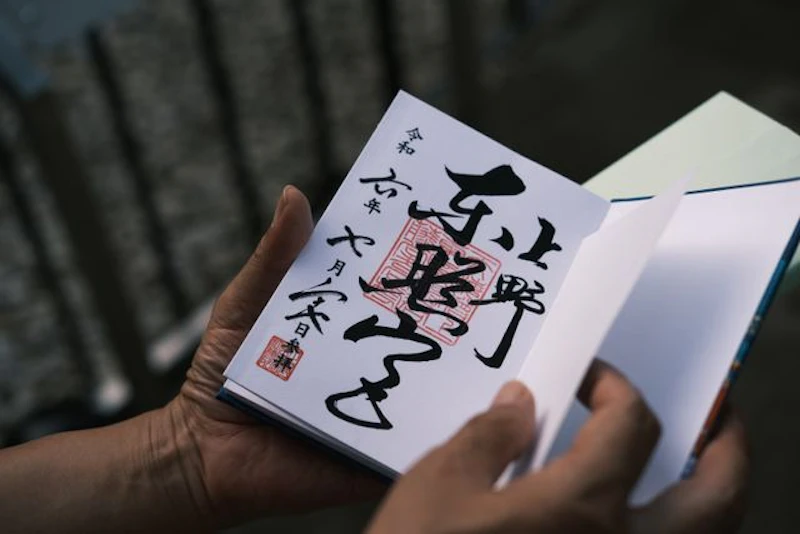
Receiving goshuin through proper procedures is an important act of showing respect to deities and Buddhas, so it's essential to know the steps and etiquette to avoid being disrespectful. Here, we explain the preparation, process, and precautions for receiving goshuin in a way that's easy for beginners to understand.
2-1. Obtaining a Goshuin-cho
To receive goshuin, you need a dedicated "goshuin-cho" (stamp book). The goshuin-cho is a record book of worship, meant to carefully preserve connections with deities and Buddhas. Recently, cute goshuin-cho with high design appeal and original books from shrines and temples have gained popularity.
Goshuin-cho can be purchased at temple and shrine offering offices, online shopping, souvenir shops along approach paths, and major stationery stores. For beginners, it's recommended to first prepare a favorite book through online shopping, then add locally-issued goshuin-cho during subsequent pilgrimage travels. Note that regular notebooks or ordinary paper are often not accepted, so be sure to prepare a dedicated goshuin-cho.
2-2. Visiting shrines and temples for worship
Since goshuin are "proof of worship," it's proper etiquette to complete worship at the shrine or temple before receiving them. During worship, observe basic protocols such as bowing when passing through torii gates, purifying hands at the purification fountain, and paying respects at the main hall or main building.
Also, not all temples and shrines offer goshuin, so it's reassuring to check in advance on official websites or social media for availability and offering hours. At crowded temples and shrines, there may be guidance saying "Please leave your goshuin-cho before worship," so follow such instructions when given. It's important to approach worship with an attitude that values connections with deities and Buddhas.
2-3. Receiving Goshuin at the shrine or temple office
After completing worship, head to the goshuin offering office, which is the "shamusho (shrine office)" or "jimusho or nokyo-sho (temple office)" at temples. Most facilities have reception hours from 9 AM to 4 PM or around 5 PM. Visiting outside these hours is disrespectful, so it's important to act with plenty of time to spare.
At reception, politely ask "May I receive a goshuin?" Remove the cover from your goshuin-cho for easy writing, open to the page where you'd like it written, and hand it over. Since goshuin are handwritten one by one, wait quietly with respect for the calligrapher. Photography is generally prohibited, but if you absolutely want to record it, be sure to ask permission first.
2-4. Paying the offering fee and expressing gratitude
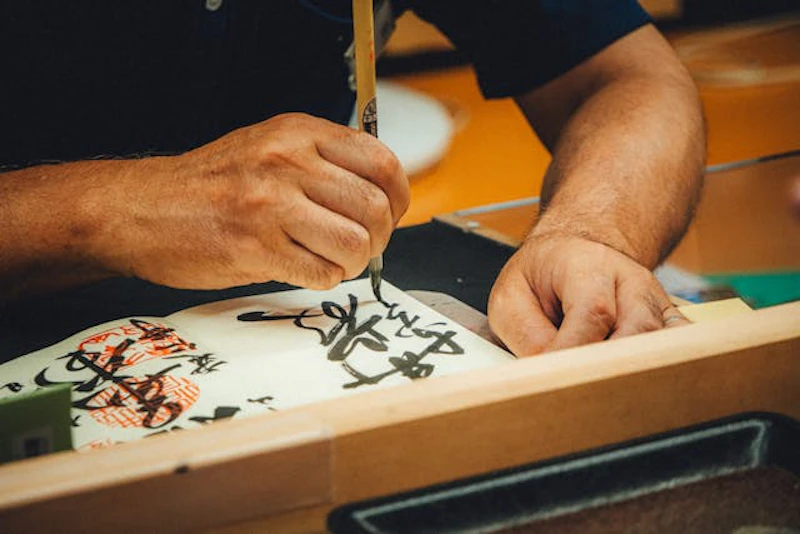
After receiving your goshuin, offer hatsuho-ryo (at shrines) or shinofu-ryo (at temples). The typical amount is around 300-500 yen, though special goshuin or those spanning two pages may cost 600-1000 yen.
If no amount is displayed, politely ask "How much should I offer for the hatsuho-ryo?" When told "Whatever you feel is appropriate," around 500 yen is a safe guideline. Since received goshuin are considered sacred embodiments of deities and Buddhas, receive them carefully with both hands and properly convey your gratitude by saying "Thank you very much."
3. Popular Japanese shrines and temples where you can receive Goshuin
最澄様の月命日を迎えました。新緑が美しくなる中、御廟浄土院にて伝教講が行われ、論義法要が修されました。
— 延暦寺【公式】 (@enryakuji_hiei) May 4, 2025
来月は、最澄様の御命日となり、長講会が執り行われます。#比叡山 #延暦寺 #伝教大師 #最澄 #法要 #論義 #月命日 #浄土院 pic.twitter.com/yChEoeLU5B
Throughout Japan, there are many famous shrines and temples where you can receive goshuin. Each shrine and temple, deeply connected to history, faith, and nature, offers distinctive goshuin that are popular as travel mementos and spiritual memories.
Here we introduce representative shrines and temples that are particularly famous for their goshuin and enjoy support from tourists and worshippers.
3-1. Ise Jingu(Ise Shrine)
Ise Jingu(Ise Shrine) consists of the Naiku (Inner Shrine) enshrining Amaterasu Omikami, considered the ancestral deity of all Japanese people, and the Geku (Outer Shrine) enshrining Toyouke no Omikami, the deity of food, clothing, and shelter, centered around a total of 125 shrines. Due to its long history and high prestige, it's also called "the spiritual homeland of Japan," attracting many worshippers from across the nation.
Goshuin can be received at the offering offices of each shrine. For example, at the Naiku, apply at the "Kagura-den offering office" with your goshuin-cho after completing worship. Offering hours vary by season, but generally reception is from 6 AM until evening, with extended hours until 7 PM during summer (May-August).
The goshuin of Ise Grand Shrine features a very simple format with only seals and dates, without elaborate decoration. However, within this simplicity dwells sanctity, remaining in the heart as a weighty impression. When visiting Ise Grand Shrine, worship with a pure heart and receive the goshuin with respect.
3-2. Meiji Shrine (Meiji Jingu)
Meiji Shrine, located in Shibuya Ward, Tokyo, is a shrine dedicated to Emperor Meiji and Empress Shoken, established in 1920. It boasts the highest number of New Year's visitors in Japan and, despite being in the city center, offers the charm of a serene space surrounded by vast forest.
Goshuin are offered at the stamp office opposite the Kagura-den after main hall worship, but they cannot write in brought goshuin-cho. Either receive pre-written goshuin or purchase a dedicated goshuin-cho with goshuin already inscribed.
The goshuin features the "Koki" (Imperial era) year designation and seals combining imperial and national emblems, conveying a sense of high prestige.
3-3. Kiyomizu-dera Temple
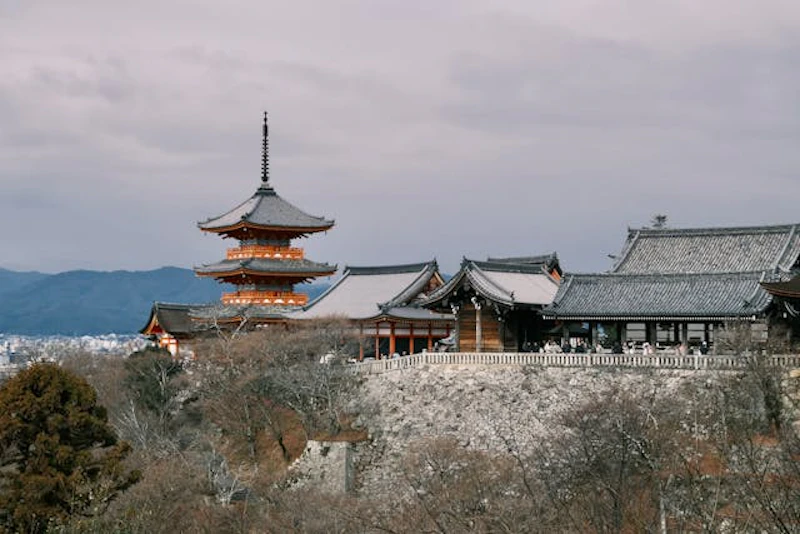
Kiyomizu-dera, a famous temple representing Kyoto, serves as a temple for multiple pilgrimage circuits including the "Saigoku 33 Kannon Pilgrimage," "Rakuyo 33 Kannon Pilgrimage," and "Honen Shonin 25 Sacred Sites," and is known for offering many goshuin. The most representative is the "Main Hall (Saigoku)" goshuin, with others like "Amida Nyorai (Honen)" and "Fudo Myoo" also being popular.
The ability to collect multiple goshuin at once by visiting various halls is a unique charm of Kiyomizu-dera. During peak seasons like autumn foliage, it gets crowded, so visit early. Why not enjoy a fulfilling goshuin pilgrimage along with the magnificent temple buildings?
3-4. Enryaku-ji Temple
Enryaku-ji Temple, with the entire Mount Hiei as its grounds, is the head temple of the Tendai sect located in Otsu City, Shiga Prefecture, founded by Saicho in 788 (Enryaku 7). Called the "Mother Mountain of Japanese Buddhism" for its influence on many sects, it boasts over 1,200 years of history.
Enryaku-ji is divided into three areas: "Toto" (East Pagoda), "Saito" (West Pagoda), and "Yokawa," each with central temple buildings where goshuin are offered. In the representative Toto area, goshuin can be received at the stamp office near the Daikodo (Great Lecture Hall).
The grounds are vast, and you can collect goshuin along with quiet time while touring temple buildings scattered throughout the nature-rich mountains. By touring this sacred site where faith and history are deeply rooted and collecting goshuin, each goshuin will become memorable proof of pilgrimage.
Summary
Goshuin are not mere stamps, but one of the important faith cultures expressing respect and gratitude toward deities and Buddhas. The beautifully written ink characters and seals serve as proof of worship while also becoming precious records that color experiences and memories of each place. By receiving them through proper procedures and handling them carefully, their value increases even more.
At famous sites like Ise Grand Shrine, Meiji Shrine, Kiyomizu-dera, and Enryaku-ji, distinctive goshuin are offered, making them popular as travel enjoyment as well. Even first-time goshuin recipients can enjoy goshuin pilgrimage with confidence by acquiring proper knowledge and etiquette.
※This article was created based on information as of June 2026
Tickets related to this article
-
Chiba Wed,Jul 22,2026 at 6:00pm

Chiba Lotte Marines Baseball Tickets 2026
-
Saitama Wed,Jul 22,2026 at 6:00pm

Saitama SEIBU Lions Baseball Tickets 2026
-
Kyoto Thu,Jul 23,2026 at 7:00pm
DRUM TAO THEATER KYOTO
-
Aichi Fri,Jul 24,2026 at 6:30pm

DRUM TAO SUPER LIVE 2026
-
Hokkaido Sat,Jul 25,2026 at 2:00pm

Hokkaido Nippon-Ham Fighters Baseball Tickets 2026
-
Hokkaido Sat,Jul 25,2026 at 2:00pm

ES CON FIELD Admission Ticket 2026
-
Miyagi Fri,Jul 31,2026 at 6:00pm

Tohoku Rakuten Golden Eagles Baseball Tickets 2026
-
Ishikawa Sat,Aug 22,2026 at 11:00am

YAMATO Japan Tour 2026
-
Tokyo Wed,Sep 16,2026 at 5:00pm
Traditional Japanese Music ZAKURO SHOW
-
Tokyo 1-Day Ticket

Small Worlds Miniature Museum