What Makes Japanese Professional Baseball So Exciting! A Special Feature on Everything from Schedule Basics to Fan Cheering Styles
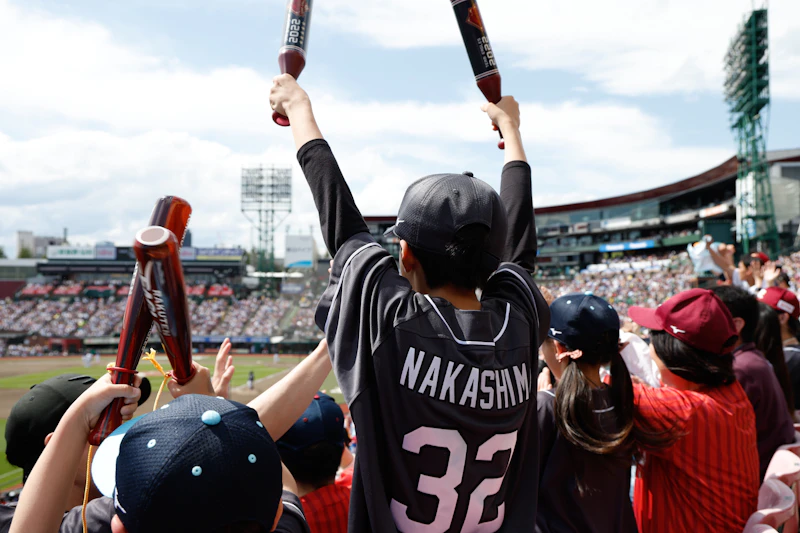


Japanese professional baseball is organized by Nippon Professional Baseball (NPB), consisting of two leagues: the JERA Central League (Central League) and the PERSOL Pacific League (Pacific League). All 12 teams belong to NPB, with six teams competing in each league. The differences between the leagues and information about each team are covered in detail in the article below.
https://www.ticketsinjapan.com/en/articles/introduction_baseball_npb/
This article, current as of 2026, covers the annual schedule of games played by NPB top teams, and how to join in the cheering if you attend a Japanese professional baseball game.
Table of Contents
1. A Year in Japanese Professional Baseball (NPB)
1-1. The Regular Season Runs from Late March to Late September Each Year
1-2. The Climax Series and Japan Series (Postseason) Take Place in October
2. Japanese Cheering Culture and the Cheering Style of Pacific League Teams
2-1. Japanese Cheering Culture and the Outfield Cheering Sections
2-2. The Basics of Cheering: 'Calls' and 'Fight Songs'
2-3. Individual Player Songs and Chance Themes
2-4. Boosting the Team with the Club Anthem During the Lucky Seventh
2-5. Cheering Characteristics of Pacific League Teams
Summary
1. A Year in Japanese Professional Baseball (NPB)
1-1. The Regular Season Runs from Late March to Late September Each Year
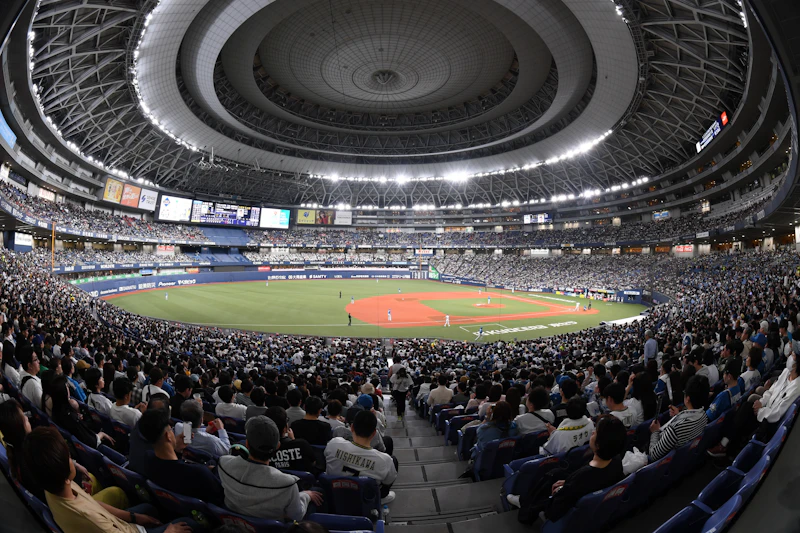
In NPB, each team plays 143 official games, with standings determined by winning percentage. Pre-season exhibition games (non-official games) are held from mid-February through March, and the official season opens in late March. After opening day, league play continues for approximately two months, followed by the roughly three-week Interleague series between Central and Pacific League teams, held between May and June.
Outside of the regular season, two All-Star Game matches are held in late July, bringing together popular players from each league. The games are played between representatives of the Central League and the Pacific League. Once the All-Star Games are over, the crucial summer stretch begins. Teams fight not only for the championship, but also for a top-three finish (Class A), which earns them a spot in the postseason — making that race increasingly intense.
1-2. The Climax Series and Japan Series (Postseason) Take Place in October
The postseason, which determines Japan's champion team, consists of two series. First, the top three teams from both the Central and Pacific Leagues compete in the Climax Series, and the winners then face each other in the Japan Series.
The Climax Series, held around mid-October, is a tournament among three teams. The First Stage is held at the home stadium of the second-place team, where the second- and third-place teams face off. The team that wins two games first — in a maximum of three games — advances to the next stage.
The winner of the First Stage advances to the Final Stage, where they face the first-place team at that team's home stadium. The team that wins four games first — in a maximum of six games — wins the Climax Series and advances to the Japan Series. The first-place team receives a one-game advantage, giving the regular season champion a head start.
Once the Climax Series winner is decided, the Japan Series is held around late October. The team that wins four games first — in a maximum of seven games — is crowned the Japan Series champion and becomes Japan's top team for that year.
For detailed schedules, check the official websites of NPB and each team. The following year's schedule is announced after the Japan Series ends, during the off-season.
NPB: https://npb.jp/
2. Japanese Cheering Culture and the Cheering Style of Pacific League Teams
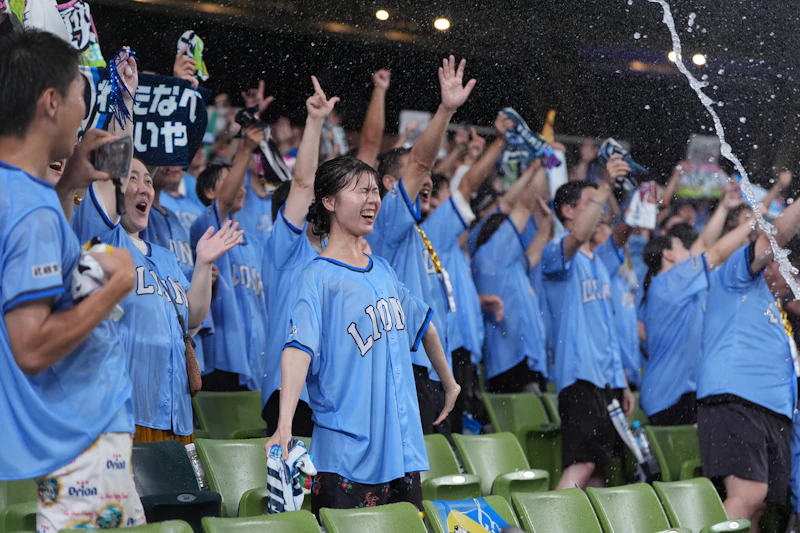
One of the defining aspects of Japanese professional baseball is its unique cheering culture. While the tradition of fans cheering as one from the stands can also be found in South Korea and Taiwan, the sound of trumpets and drums ringing out from the outfield is a cheering style unique to Japan.
2-1. Japanese Cheering Culture and the Outfield Cheering Sections
At all 12 NPB teams, fan-led independent cheering groups lead the cheering with the authorization of their respective teams. While some teams take a more club-led approach, in most cases both home and visiting fans cheer independently and organically. Only groups that have received prior authorization are permitted to play brass instruments such as trumpets and taiko drums.
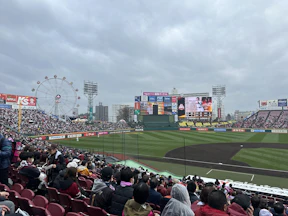
In the outfield stands, fans stand up to cheer when their team is at bat. Of course, cheering from a seated position in the infield is also perfectly fine. If you want to experience the full atmosphere of Japanese professional baseball cheering, infield seats close to the outfield are recommended. Note that outfield cheering sections are clearly divided between home and visiting team fans in certain areas, and bringing the opposing team's uniforms or merchandise into the wrong section may be prohibited, so be sure to check in advance.
2-2. The Basics of Cheering: 'Calls' and 'Fight Songs'
.jpg?w=800&fm=webp)
Cheering is generally divided into two types: 'calls' and 'fight songs.' During calls, fans repeat short phrases and the player's name in rhythm with the drums. Some examples of common short phrases are listed below. Particularly short words may be repeated twice.
■ Examples of Calls
・Cheering for the batter
Japanese pronunciation: Kattobase (Kasse) '[Player's name]'
Meaning: Hit the ball and send it flying
・Go! Go! Let's Go! '[Player's name]'
・Cheering for the next batter after the previous batter reaches base
Japanese pronunciation: Tsuzuke Tsuzuke '[Player's name]'
Meaning: Follow him
・When a runner is in scoring position
Japanese pronunciation: Timely Timely '[Player's name]'
Meaning: Hit the clutch hit (RBI hit)
・Cheering for a home run hitter
Japanese pronunciation: Right (Left) e Buchikome Homerun
Meaning: Send the ball to the right (left) field stands
・When a fast runner gets on base
Japanese pronunciation: Hashire Hashire '[Player's name]'
Meaning: Steal a base
・For players from Spanish-speaking countries and others
Vamos! Vamos! '[Player's name]'
Meaning: Go for it
2-3. Individual Player Songs and Chance Themes
Fight songs are sung by everyone together to the accompaniment of brass instruments and other music. Each song repeats a single phrase, and teams have dozens of songs prepared, including individual player songs, scoring themes, and chance themes.
Individual player songs are fight songs created specifically for each player, with lyrics that reflect something about the player or express the feelings of the fans. Many teams also have a standard general-use song for players who do not yet have their own individual song.
Chance themes are fight songs played during scoring opportunities, and teams switch between several different chance themes depending on the situation in the game. In addition, there are specific musical phrases played when a player gets on base, advances a base, or scores a run — some of which are shared across teams, while others differ from team to team.
2-4. Boosting the Team with the Club Anthem During the Lucky Seventh
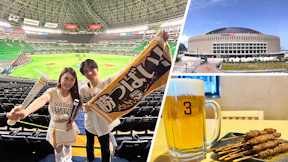
In the late stages of the game, the seventh-inning offensive is known as the "Lucky Seventh," during which the batting team's club anthem or official fight song plays throughout the stadium. Fans hold up towels and other cheering merchandise featuring their favorite players and rally behind the team for victory.
Some stadiums permit the use of jet balloons (long, thin inflatable balloons). Inflating jet balloons during the Lucky Seventh and releasing them all at once at the end of the song has become one of the beloved cheering traditions.
2-5. Cheering Characteristics of Pacific League Teams
Hokkaido Nippon-Ham Fighters
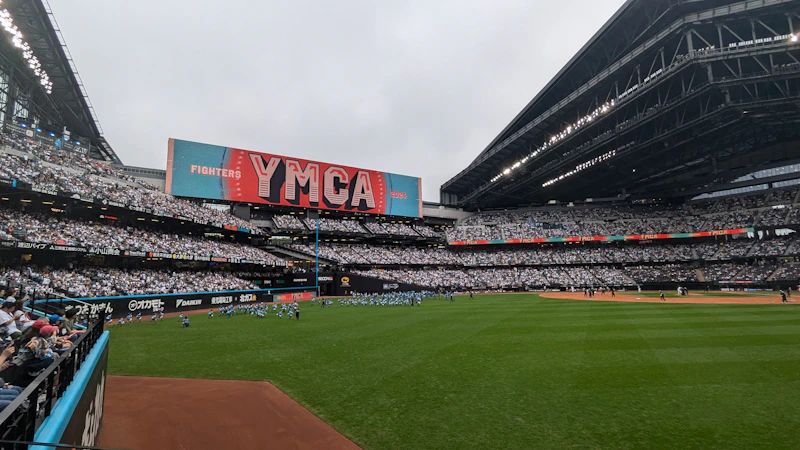
The Hokkaido Nippon-Ham Fighters are known for their bright, lively fight songs with cheerful melodies. They also have chance themes based on Hokkaido-themed songs such as "Kita no Kuni Kara" ("From the Land of the North," a beloved Japanese TV drama theme associated with Hokkaido) and "Dschinghis Khan" (a well-known disco song popular in Japan, performed as a Hokkaido reference due to the region's famous Genghis Khan-style grilled lamb dish).
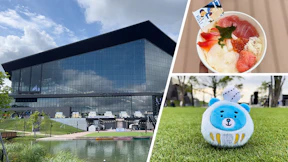
At their home stadium, ES CON Field HOKKAIDO, numerous between-inning events are held where fans can join in the fun together, most notably the "Kitsune Dance" (Fox Dance) — a dance performed to "The Fox" by Norwegian duo Ylvis. Dancing along with the official performers, the "Fighters Girls," is guaranteed to be a great time. Also be sure to check out the fox ear headbands and tail accessories available at the stadium.
Cheering merchandise is also well stocked. "Shakemaru," a character born from the wish that players will return home (to home plate) just like salmon returning to their river, is an item fans can wave or hold up while cheering. Also, when "SWING TIME" appears on the scoreboard, it's the signal to swing your towel in support. A dedicated "Swing Towel" is also available for purchase.
Tohoku Rakuten Golden Eagles
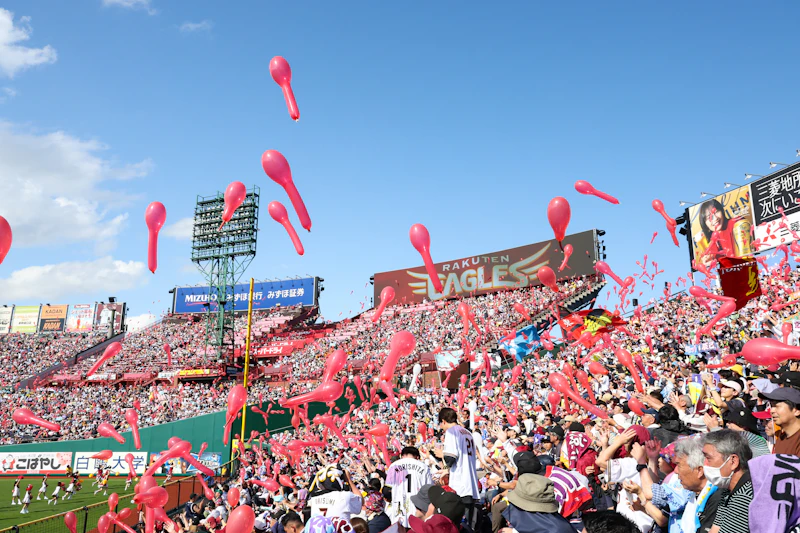
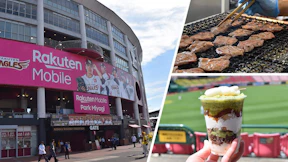
The Tohoku Rakuten Golden Eagles have many fight songs that are catchy and hard to get out of your head after just one listen. There is a dedicated fight song for the first inning that gets the energy going right from the start of the team's at-bat. At home games, the official cheer squad, the "Tohoku Golden Angels," along with the team mascots, also appear in the outfield stands, cheering as one with the whole team.
The "My Hero Towel," available in each player's individual colors, is a staple cheering item for Eagles fans. At the home stadium, Rakuten Mobile Saikyo Park Miyagi, sales events are sometimes held, including discounts on the starting pitcher's towel on game day. Some chance themes involve waving or spinning the towel, so picking one up to bring to the game is highly recommended.
Releasing jet balloons during the Lucky Seventh and after victories is another classic way to enjoy the game. Pumps for inflating the jet balloons are sold as a set with the balloons.
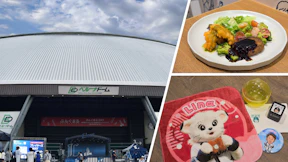
Saitama Seibu Lions
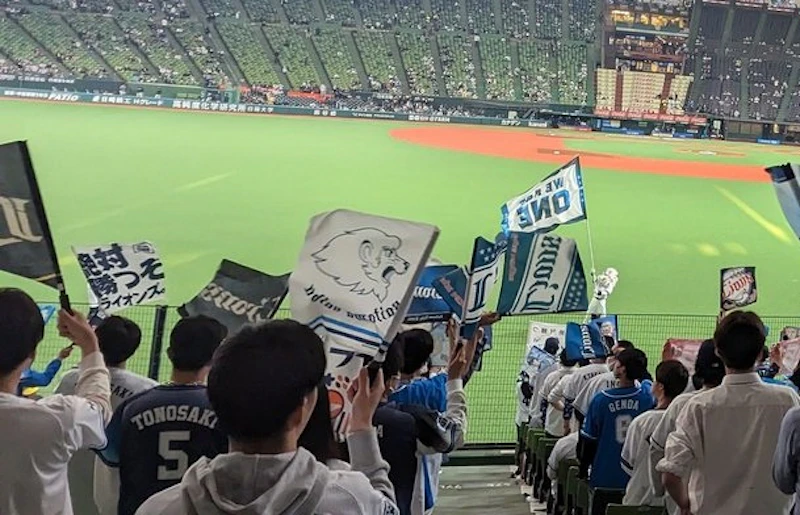
The defining feature of Saitama Seibu Lions cheering is the use of flags. At their home stadium, Belluna Dome, flags wave simultaneously from the outfield all the way to the infield. "Chance Theme 4," sung in alternating male and female voices, is also beloved as a so-called "magic song" known for turning the tide of a game. Keep an eye out for it during late-game scoring opportunities.
A new item becoming a fan favorite among Lions supporters is the "Big Chain Necklace" — a large gold chain featuring the team's mascot character, Leo, as the pendant, guaranteed to turn heads. A light-up version of the Big Chain Necklace is also available, designed to glow in sync with in-game entertainment alongside glow sticks. Releasing jet balloons during the Lucky Seventh is also highly recommended.
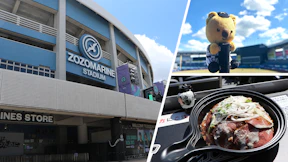
Chiba Lotte Marines
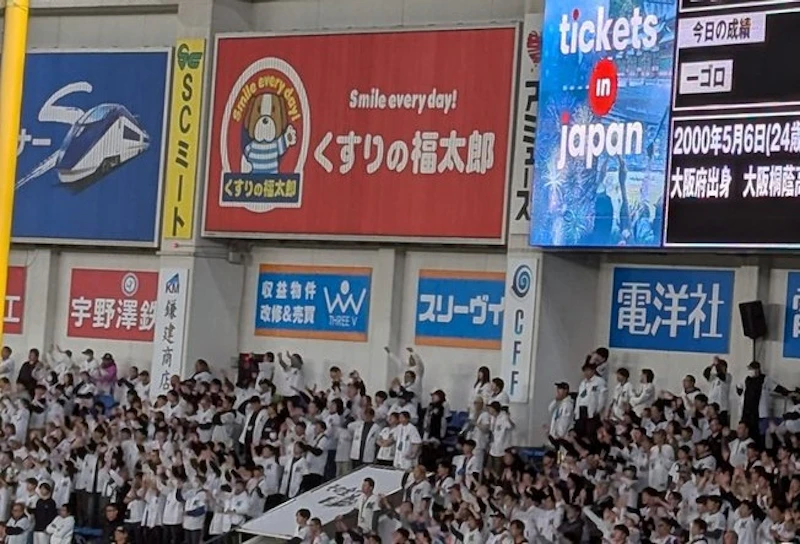
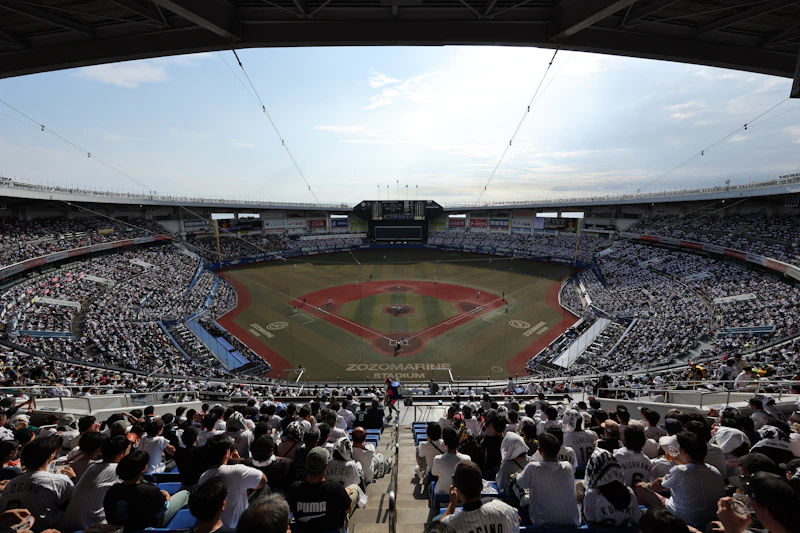
The Chiba Lotte Marines are known for their distinctive style of cheering, where outfield fans wear matching uniforms identical to those of the players and deliver synchronized calls and clapping that creates an intimidating atmosphere for the opposition. The team's long-standing tradition is a simple style using only voices and hand claps — no bats or megaphones.
The Marines' home uniform has traditionally featured pinstripes, with black pinstripes on a white background giving a sharp, refined look. There are also special events where the team wears the dark, primarily black away uniform or the ALTERNATE third uniform at home. The summer event uniform for "BLACK SUMMER WEEK," which makes full use of the team's black club color, is also a fan favorite every year.
Orix Buffaloes
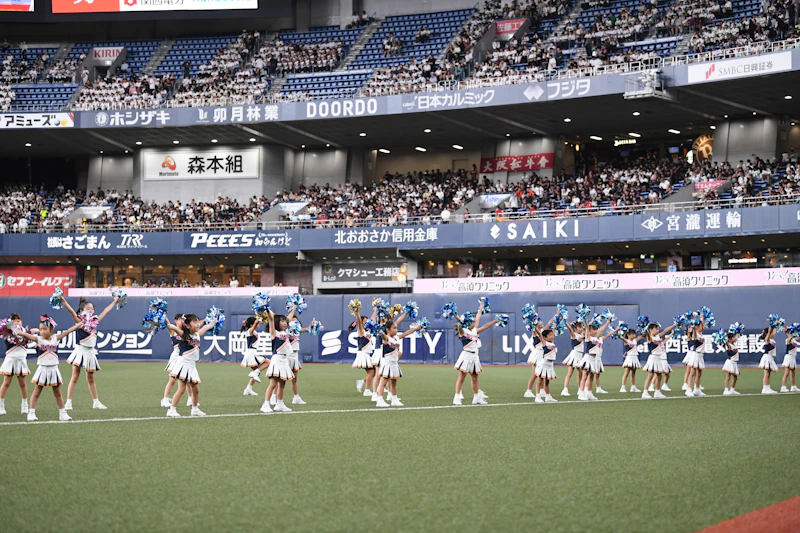
The Orix Buffaloes' cheering is characterized by fierce, powerful melodies and strong lyrics. The chance theme known as "Towel" has fans in both the outfield and infield dancing together with their towels. The choreography is simple and easy to pick up right away.
Another distinctive cheering item is the "Harisen" — a fan made by folding paper accordion-style, traditionally used as a comedic prop in Japanese Manzai (a form of stand-up comedy performed by a duo). At games, fans use it like a clapper, hitting it together as a substitute for hand clapping. Harisen are sometimes distributed at the gates, but can also be purchased at the merchandise shop.
Fukuoka SoftBank Hawks
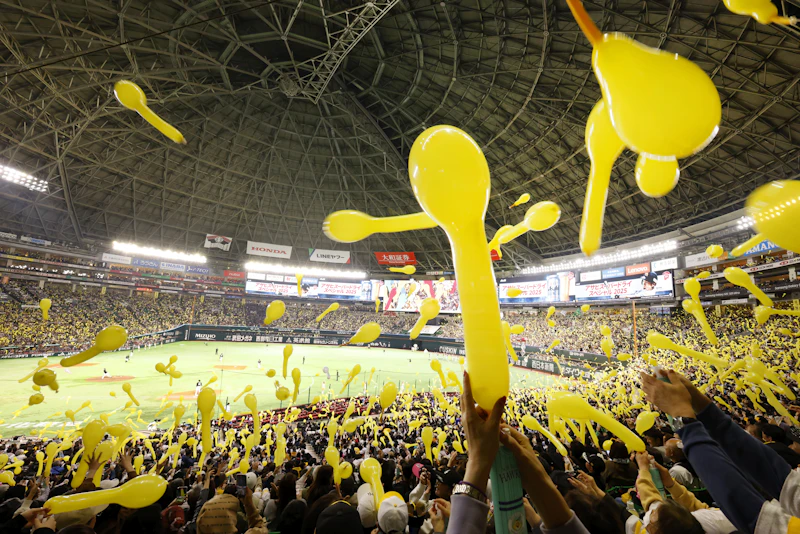
The signature cheering item of the Fukuoka SoftBank Hawks is the "Twin Megaphone" — a set of two small plastic bats. The chance themes are easy to follow and get into even for first-timers, so feel free to join in by banging your megaphone along with everyone else. The Fukuoka SoftBank Hawks are also one of the few remaining teams that still have individual fight songs for their pitchers, which are performed before they take the mound — well worth paying attention to.
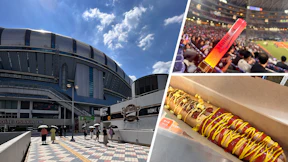
At their home stadium, Mizuho PayPay Dome Fukuoka, jet balloons can be released during the Lucky Seventh. Despite being an indoor dome stadium, fireworks are also used in post-victory celebrations, and various in-game events keep the excitement going throughout. The "Magical Penlight" syncs with in-game entertainment, letting fans feel like they are part of the show itself.
Summary
As introduced throughout this article, the cheering culture of Japanese professional baseball is largely created by the fans themselves. When you visit a Japanese baseball stadium, be sure to immerse yourself in that culture and join in the fun.