Enjoying Autumn in Kyoto | Peak Fall Foliage Season, Must-See Spots, Autumn Flavors & Kyoto by Night
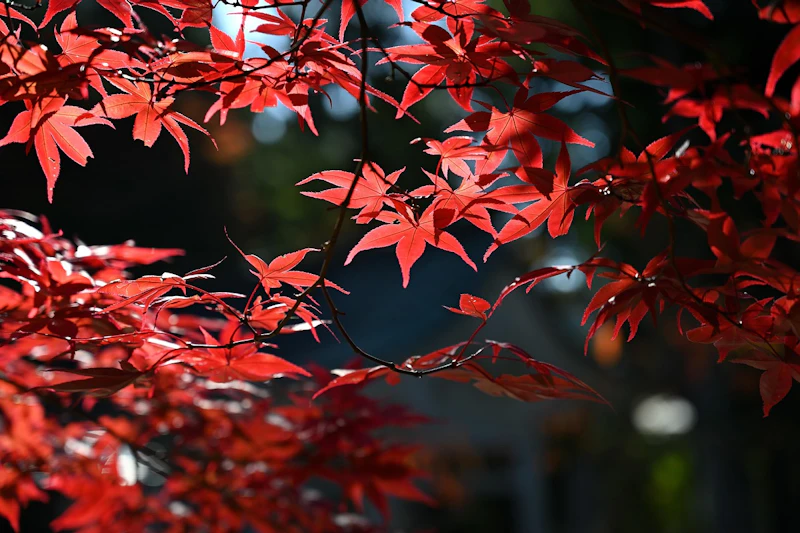


Autumn in Kyoto is best experienced from mid-November to early December, when the fall foliage reaches its peak. The autumn colors spread across a wide area of the city, making it possible to enjoy the scenery in many different locations.
This article covers when to see Kyoto's autumn foliage, four must-visit spots known for their fall colors, seasonal foods to enjoy in Kyoto during autumn, and ways to spend your evening after dark. Use this guide to help plan your perfect autumn day in Kyoto.
Table of Contents
1. When Is the Best Time to See Autumn Foliage in Kyoto?
2. Where Are the Best Spots for Autumn Foliage in Kyoto?
2-1. Tofuku-ji Temple
2-2. Arashiyama
2-3. Kiyomizu-dera Temple
2-4. Shinnyo-do Temple
3. Seasonal Foods to Enjoy in Autumn Kyoto
4. Ways to Enjoy Autumn Evenings in Kyoto
4-1. DRUM TAO THEATER KYOTO
4-2. Autumn Foliage Light-Up Events at Temples and Shrines
Summary
1. When Is the Best Time to See Autumn Foliage in Kyoto?
Autumn foliage in Kyoto typically reaches its peak between mid-November and early December. At Tofuku-ji Temple, Arashiyama, Kiyomizu-dera Temple, and Shinnyo-do Temple, peak color usually falls between mid- and late November. At Tetsugaku-no-Michi (the Philosopher's Path) and Kyoto Gyoen National Garden, the season extends into early December. In contrast, Takao and Ohara in northern Kyoto tend to color a few days earlier than the city center, around mid-November. Since the timing shifts depending on that year's temperatures and sunlight, it is important to check for the latest updates before your visit.
In general, booking accommodation in Kyoto during the last week of November allows you to visit multiple popular spots in the city center in a single stay. Be sure to check the latest foliage conditions both before you leave home and again just before heading out to each location.
2. Where Are the Best Spots for Autumn Foliage in Kyoto?
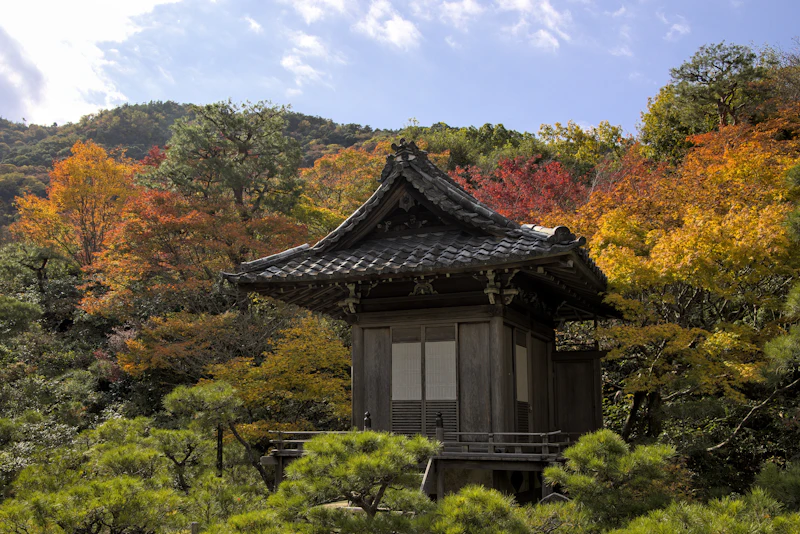
For autumn foliage in Kyoto, these four spots are essential: Tofuku-ji Temple, Arashiyama, Kiyomizu-dera Temple, and Shinnyo-do Temple. Even within Kyoto, each location offers a completely different way to experience the fall colors. Below, we introduce the highlights and visitor information for each spot in turn.
2-1. Tofuku-ji Temple
At Tofuku-ji Temple, you can look out over a valley blanketed in autumn foliage from Tsuten-kyo Bridge. Tsuten-kyo Bridge connects the Hojo (Abbot's Hall) and Kaisan-do(Founder's Hall), spanning a ravine known as Sengyokukan. The autumn viewing period runs from November 14 to December 6. During this time, Tsuten-kyo Bridge and Kaisan-do are open from 8:30 a.m. to 4:00 p.m., with admission priced at ¥1,000 for adults and ¥500 for children.
The temple grounds become extremely crowded during the special autumn opening, and Tofuku-ji Temple may ask visitors to refrain from taking photos on Tsuten-kyo Bridge and Gaun-kyo Bridge. If you prefer to enjoy the foliage in a more relaxed atmosphere, visiting right after the gates open is highly recommended. As the autumn viewing dates and hours change each year, be sure to check the official website before your visit.
2-2. Arashiyama
In Arashiyama, you can enjoy the area around Togetsukyo Bridge and the garden of Tenryu-ji Temple. Mountains rise behind Togetsukyo Bridge, and the entire hillside transforms with color from mid- to late November. Tenryu-ji Temple is a UNESCO World Heritage Site, with Sogenchi Garden at its heart. The garden is open from 8:30 a.m. to 5:00 p.m., with admission of ¥500 for visitors in high school and above.
Tenryu-ji Temple will offer a special early morning garden visit starting at 7:30 a.m. from November 14 to November 30, 2026. Visitor numbers are lower in the morning, so those who want to enjoy the garden in peace should take advantage of this early morning session.
2-3. Kiyomizu-dera Temple
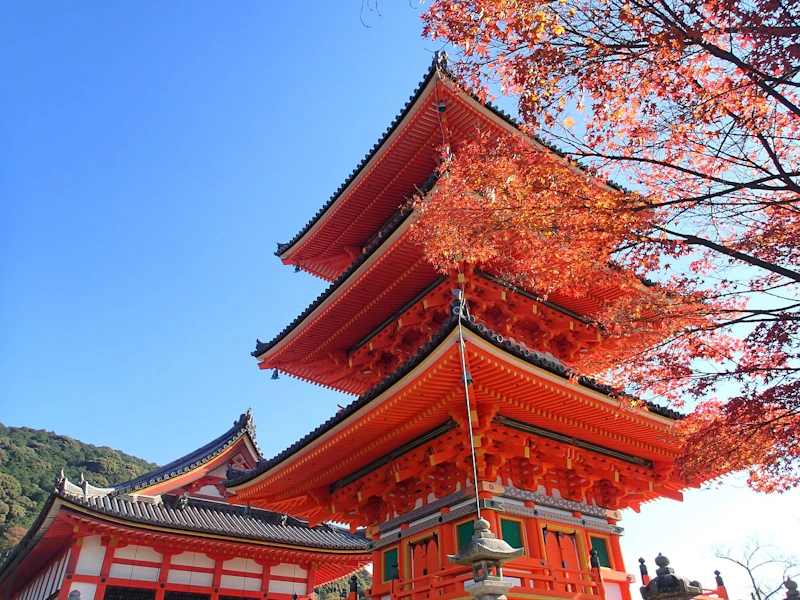
At Kiyomizu-dera Temple, you can take in sweeping views of both the Kyoto cityscape and the autumn foliage at once from the main hall's famous wooden stage. The temple precinct contains structures designated as National Treasures and Important Cultural Properties. The autumn foliage at Kiyomizu-dera Temple typically peaks between mid-November and early December.
Kiyomizu-dera Temple will hold a special autumn nighttime viewing from November 21 to November 30, 2026, with the gates closing at 9:30 p.m. Admission ends at 9:00 p.m., so if you plan to visit late in the evening, make sure to leave with plenty of time to spare. During the same period, the Joju-in Garden will also be open for a special viewing. Since the scenery changes completely between day and night, visiting twice at different times of day is also a worthwhile plan.
2-4. Shinnyo-do Temple
At Shinnyo-do Temple, you can admire the autumn colors of the maple trees alongside a three-story pagoda in a peaceful, unhurried setting. The temple's official name is Shinshogokurakuji Temple, and it stands in a residential neighborhood within walking distance of Ginkaku-ji Temple (the Silver Pavilion) and Tetsugaku-no-Michi (the Philosopher's Path). The foliage typically peaks between mid-November and early December. The temple is open from 9:00 a.m. to 4:00 p.m., with the last admission at 3:45 p.m.
During the autumn foliage season, admission is ¥500 for the grounds plus ¥500 for the interior, for adults. Admission is free for junior high school students and younger. The temple is less crowded than more famous sites, making it an ideal choice for those who want to view the foliage in a quiet atmosphere. Note that Shinnyo-do Temple requests that visitors refrain from calling by phone to ask about peak foliage timing, so please check the official website for detailed visiting information.
3. Seasonal Foods to Enjoy in Autumn Kyoto
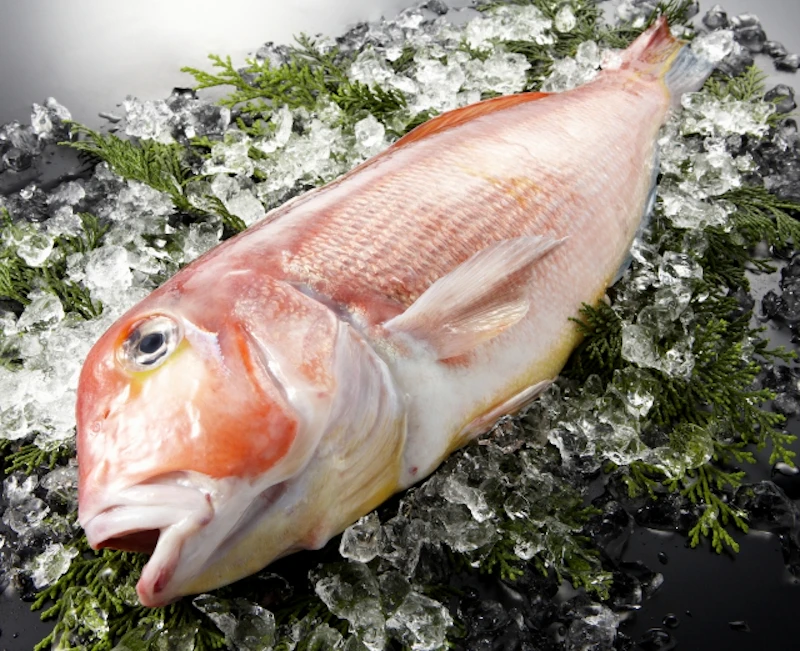
Four ingredients come into season during Kyoto's autumn: guji (tilefish), matsutake mushrooms, Tamba chestnuts, and persimmons. These four are staple autumn ingredients used by Kyoto cuisine (Kyo-ryori) restaurants in grilled dishes, soup courses, and desserts. At Nishiki Market, chestnuts and persimmons appear at stalls throughout the autumn season.
・Guji (Amadai / Tilefish) Guji is the Kyoto term for amadai, a type of tilefish. From autumn through winter, the flesh of guji firms up and its natural sweetness deepens. Matsukasa-yaki — a preparation in which the fish is grilled with its scales still attached so they fan out like the scales of a pine cone — is a dish that showcases the skill of Kyoto cuisine chefs. It is often served as the grilled course in a traditional multi-course kaiseki meal. ・Matsutake Mushrooms Matsutake mushrooms are the defining ingredient of autumn's aroma. Kyoto cuisine restaurants may serve them as dobin-mushi — a dish in which the mushrooms and other ingredients are steamed inside a small teapot-style earthenware vessel, allowing diners to savor both the fragrant broth and the ingredients — or as grilled matsutake. As a luxury ingredient, prices vary considerably from restaurant to restaurant. ・Tamba Chestnuts Tamba chestnuts is a collective term for chestnuts grown in the Tamba region of central Kyoto Prefecture. It is not the name of a specific variety. Kyoto Prefecture has designated 31 items as Kyoto Brand Agricultural Products — a certification that includes well-known local produce such as mizuna greens and Kyoto bamboo shoots — and Tamba chestnuts are among them. They are available at market from early September to mid-October, and can be enjoyed in dishes such as chestnut rice (kuri-gohan) or simmered in sweet syrup (kanro-ni). ・Persimmons (Kaki) Persimmons are the fruit that rounds off an autumn meal. Kyoto cuisine restaurants serve them as a dessert course (mizugashi), and also use them as an ingredient in shira-ae — a dish in which ingredients are dressed in a creamy tofu-based sauce. The combination of sweet persimmon and the lightly seasoned, savory dressing makes it a perfect ending to a meal. |
4. Ways to Enjoy Autumn Evenings in Kyoto
Autumn evenings in Kyoto can be enjoyed in two main ways: watching a traditional Japanese taiko drum performance at a theater, or seeing the autumn foliage illuminated at temples and shrines. Sunset comes early in autumn, so below we introduce one indoor option and one outdoor option.
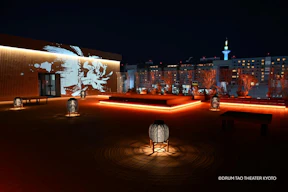
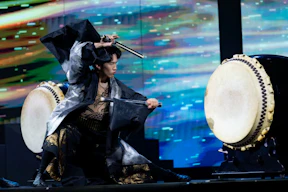
4-1. DRUM TAO THEATER KYOTO
DRUM TAO THEATER KYOTO is a dedicated venue where you can watch a live Japanese taiko drum performance right in front of Kyoto Station. The theater is located on the 9th floor of Avanti Building, just a one-minute walk from the Hachijo Exit of JR Kyoto Station. The exit and the theater are connected via an underground passage, so you can reach the venue without getting wet even on a rainy day.
Performances are held in two sessions per day (※), with the first show HIBIKI starting at 7:00 p.m. and the second show YUME starting at 9:00 p.m. Each performance runs approximately 40 minutes. The theater is closed on Tuesdays and Wednesdays. All seats are reserved, and one complimentary drink is included. Ticket prices are ¥10,000 for a Standard Seat and ¥15,000 for a Premium Seat. Children under 6 years of age are not admitted.
※ In October and November, additional performances — including some Wednesday shows and 5:00 p.m. sessions — are added to the schedule, meaning more shows are available during this period so that more guests can enjoy the experience. Please refer to the website for the full performance schedule.
https://www.ticketsinjapan.com/events/culture_drumtao-kyoto/
Performances are conducted primarily in English, and English-speaking staff are on hand. Doors open 45 minutes before the show, and drinks and light snacks are available at the in-house bar. The theater is approximately 30 minutes from Kiyomizu-dera Temple by bus, and about 20 minutes from Arashiyama by the JR San'in Main Line. Tickets go on sale two months before the performance month, so early booking is recommended.
4-2. Autumn Foliage Light-Up Events at Temples and Shrines
Autumn foliage light-up events are held in the evenings at temples including Kiyomizu-dera Temple, Eikan-do Temple, To-ji Temple, and Kodai-ji Temple. Kiyomizu-dera Temple will hold a special autumn nighttime viewing from November 21 to November 30, 2026, closing at 9:30 p.m. The light-up period typically runs from mid-November to mid-December. Dates and admission fees vary by temple.
As the exact dates change from year to year, be sure to check the official website of each temple before your visit. Also note that evening admission may be priced separately from daytime admission.
Summary
Autumn foliage in Kyoto typically peaks between mid-November and early December. At Tofuku-ji Temple, Arashiyama, Kiyomizu-dera Temple, and Shinnyo-do Temple, you can experience the fall colors in four completely different settings — a valley, a riverside, a city panorama, and a quiet neighborhood. For dining, make the most of the season by trying guji tilefish, matsutake mushrooms, Tamba chestnuts, and persimmons.
After dark, there are taiko drum performances and foliage light-up events to enjoy. Through Tickets in Japan, you can book tickets for DRUM TAO THEATER KYOTO performances as well as a range of other experiences in Kyoto. We hope this guide helps you plan a wonderful autumn trip to Kyoto.
※ This article was created based on information available as of August 2026.