DRUM TAO THEATER KYOTO Opens April 9, 2026! Explaining the Theater's Features and Highlights of Two Productions (1/2)
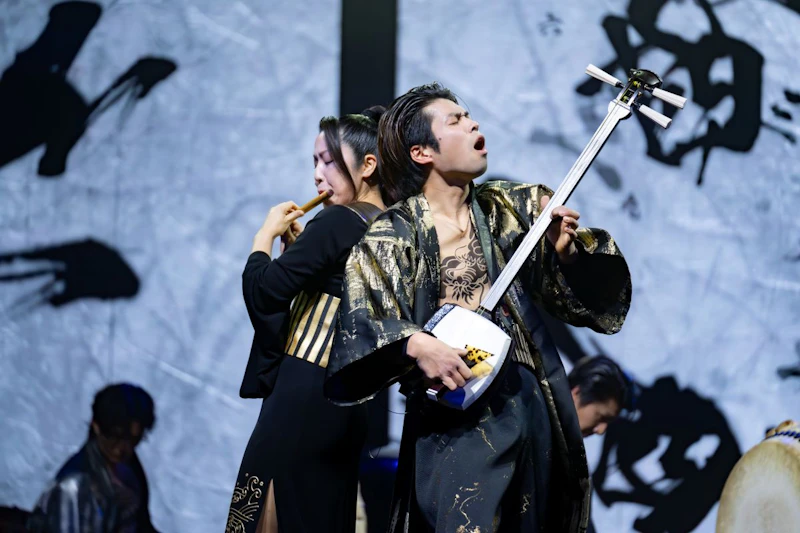
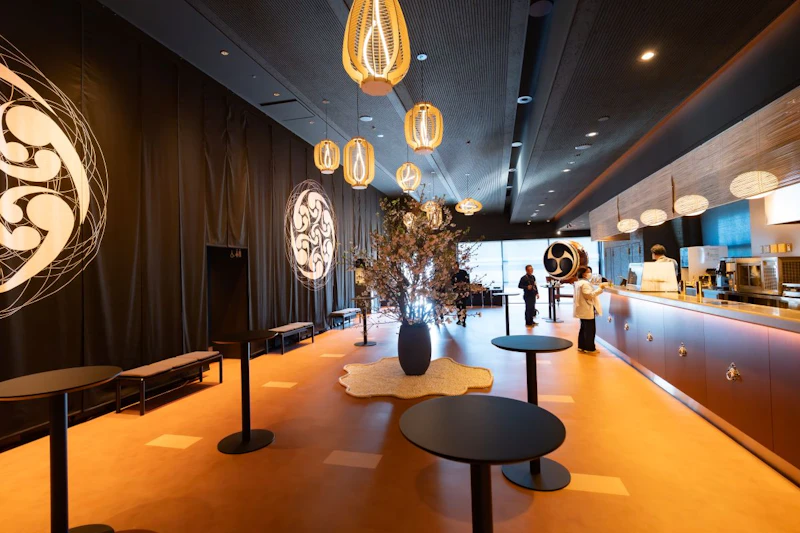


For those seeking authentic Japanese nighttime entertainment near Kyoto Station, DRUM TAO THEATER KYOTO is a noteworthy new destination. This permanent theater opened on April 9, 2026, on the 9th floor of Kyoto Avanti, featuring performances that combine wadaiko (Japanese drums) with shinobue (bamboo flute), shamisen (three-stringed instrument), koto (Japanese harp), lighting, costumes, and physical expression.
This article introduces what DRUM TAO THEATER KYOTO is all about, explores the characteristics and highlights of the two Kyoto-exclusive productions "Hibiki -HIBIKI-" and "Yume -YUME-," shares the writer's impressions after viewing the performances, and covers a talk session between DRUM TAO representative Fujitaka Ikuo and designer Koshino Junko. If you're looking for a memorable experience to conclude your Kyoto sightseeing, be sure to check this out.
Table of Contents
1. What is DRUM TAO THEATER KYOTO?
1-1. About DRUM TAO
2. Performances at DRUM TAO THEATER KYOTO
2-1. Hibiki -HIBIKI-
2-2. Yume -YUME-
2-3. Writer's Impressions After Viewing the Performances
3. The Vision Behind DRUM TAO THEATER KYOTO: Thoughts from Representative Fujitaka Ikuo and Designer Koshino Junko
3-1. Original Productions Exclusive to Kyoto
3-2. Performances Emphasizing Kyoto's Cultural Characteristics of "Depth, Space, and Ma (Pause)"
3-3. The Reason for Deliberately Choosing a Small Theater Close to the Audience
3-4. The Culmination of 14 Years of Technical Collaboration Between Fujitaka and Koshino
3-5. Year-Round Permanent "Non-Verbal" Productions
3-6. DRUM TAO's Platform for "Culture to be Globally Transmitted from Kyoto"
Summary
1. What is DRUM TAO THEATER KYOTO?
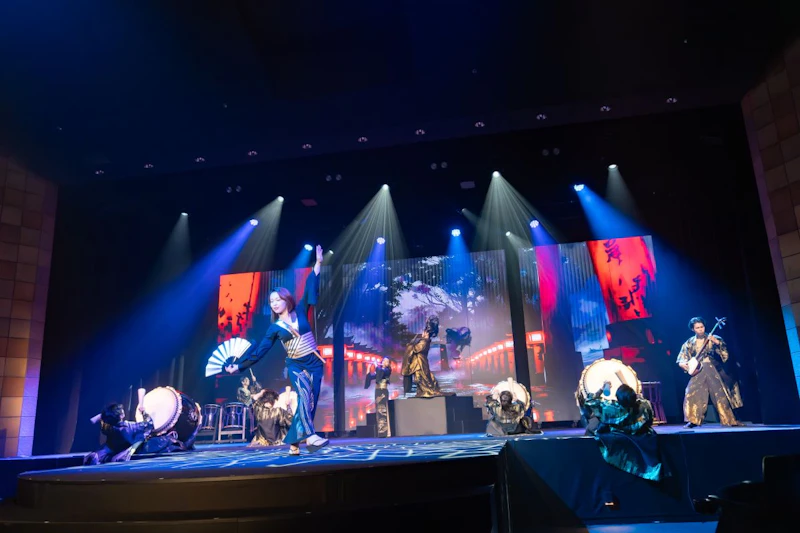
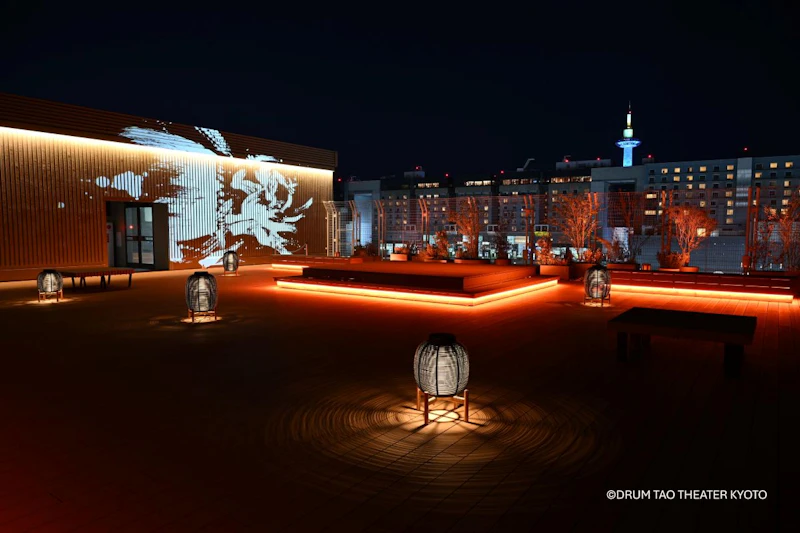
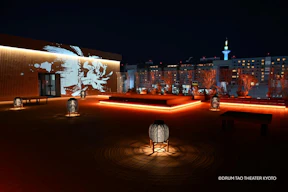
DRUM TAO THEATER KYOTO is the permanent dedicated theater of the wadaiko performance group DRUM TAO, which opened on April 9, 2026, on the 9th floor of the commercial building "Kyoto Avanti" near Kyoto Station's Hachijo Exit.
The venue is located on the Hachijo Exit side of Kyoto Station, making it easily accessible whether you arrive by Shinkansen or after exploring the city. You can visit Kiyomizu-dera and Fushimi Inari Taisha during the day, then experience Japanese sounds and physical expression at the theater in the evening.
By combining wadaiko-centered performances with traditional Japanese instruments like shinobue, shamisen, and koto, along with lighting, costumes, and physical expression, they create "non-verbal entertainment." There's no need to follow Japanese explanations, allowing foreign tourists to enjoy the same experience as Japanese visitors.
For those who want to experience more than just sightseeing in Kyoto's evening hours, this theater offers a truly worthwhile visit.
1-1. About DRUM TAO
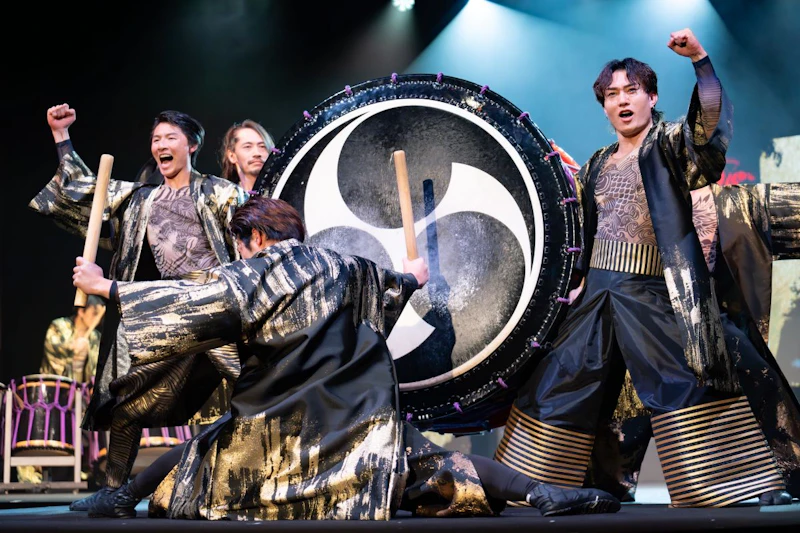
DRUM TAO is a performance group that combines wadaiko with traditional Japanese instruments and contemporary stage expression. Formed in 1993, they have created performances that showcase not only powerful drumbeats but also shinobue, shamisen, koto, physical expression, lighting, and costumes as an integrated whole. Unlike traditional performing arts that are quietly observed, they have developed as an entertainment group that strongly appeals to both visual and auditory senses.
They have performed in 500 cities across 31 countries, with a cumulative audience of 10 million people. Their 2016 New York Off-Broadway performances sold out completely, earning high acclaim not only domestically in Japan but also internationally.
DRUM TAO THEATER KYOTO represents DRUM TAO's first permanent performance in Kyoto, after creating different productions at their home base outdoor theater in Aso-Kuju National Park and theaters worldwide.
2. Performances at DRUM TAO THEATER KYOTO
DRUM TAO THEATER KYOTO presents two original performances that can only be experienced in Kyoto.
Section | Performance Title | Doors Open | Curtain |
|---|---|---|---|
Part 1 | Hibiki -HIBIKI- | 18:15 | 19:00 |
Part 2 | Yume -YUME- | 20:15 | 21:00 |
Part 1 begins at 19:00 and Part 2 at 21:00, with regular closures on Tuesdays and Wednesdays (irregular closures may apply).
Part 1 "Hibiki -HIBIKI-" centers on interactive performances that families and friends can enjoy together. In contrast, Part 2 "Yume -YUME-" features more lyrical content primarily targeting couples and married couples.
2-1. Hibiki -HIBIKI-
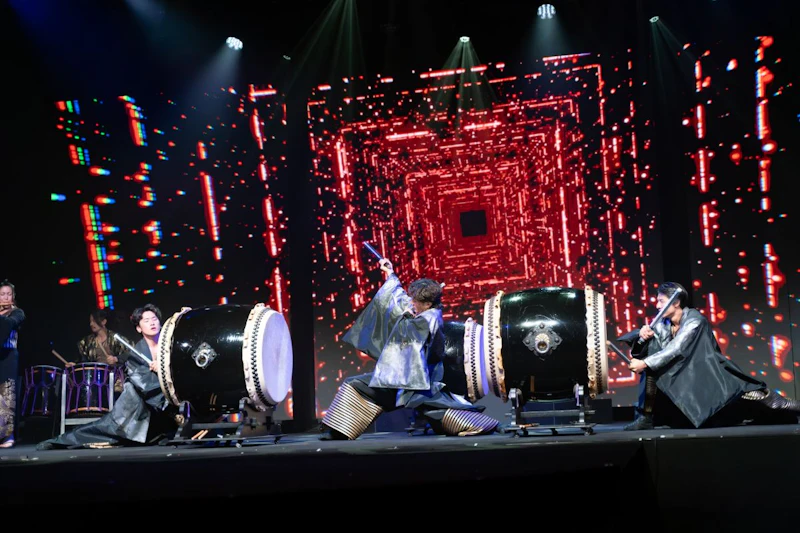
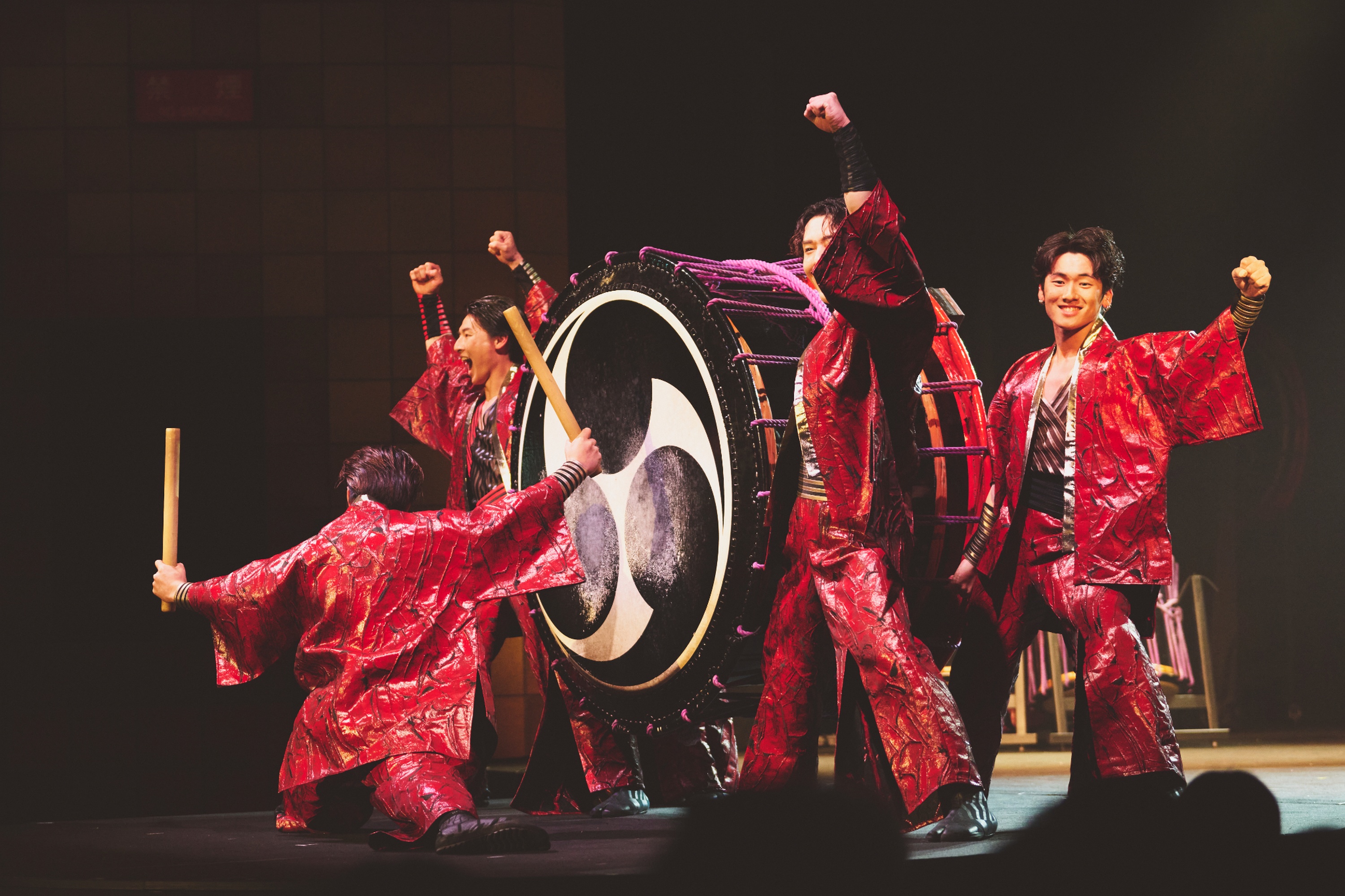
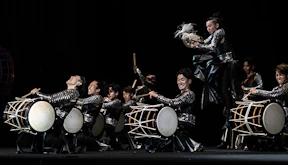
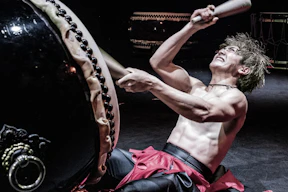
If you want to get excited with family or friends during your Kyoto trip, "Hibiki -HIBIKI-" is the right choice. It's a high-energy performance that unites the entire venue, with the exhilarating atmosphere of a matsuri (festival). While feeling the vibrations of wadaiko throughout your body, it's perfect for those wanting to elevate their mood during their travel evening. It's also an accessible choice for those who want to experience Japanese culture from a different angle after quietly visiting Kyoto's famous sites.
There are opportunities to touch wadaiko in areas close to the stage, creating memories that go beyond just watching. For family trips with children, while sitting and just watching might bore children, "Hibiki -HIBIKI-" includes wadaiko experiences, making it compatible for those who want to feel Japanese rhythms with their own hands.
2-2. Yume -YUME-
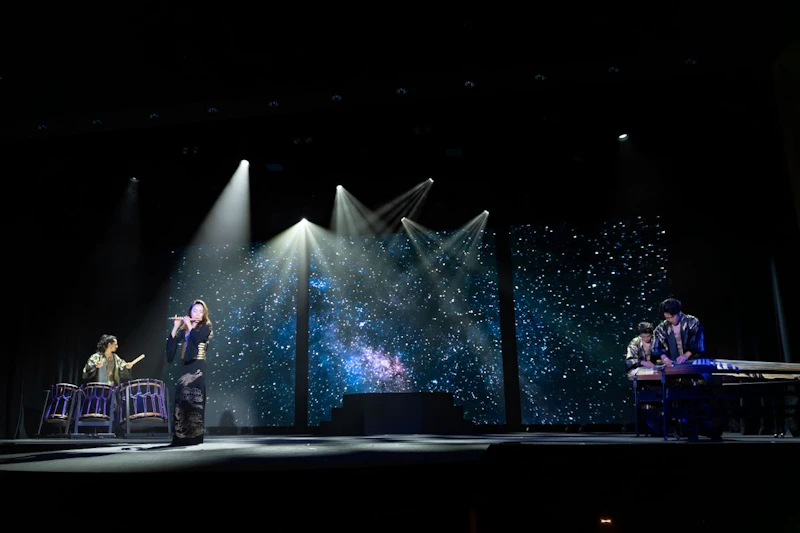
If you want to savor a serene Kyoto evening, "Yume -YUME-" is a perfect match. This evening performance begins at 21:00, with a composition that emphasizes lingering impressions and beauty over liveliness.
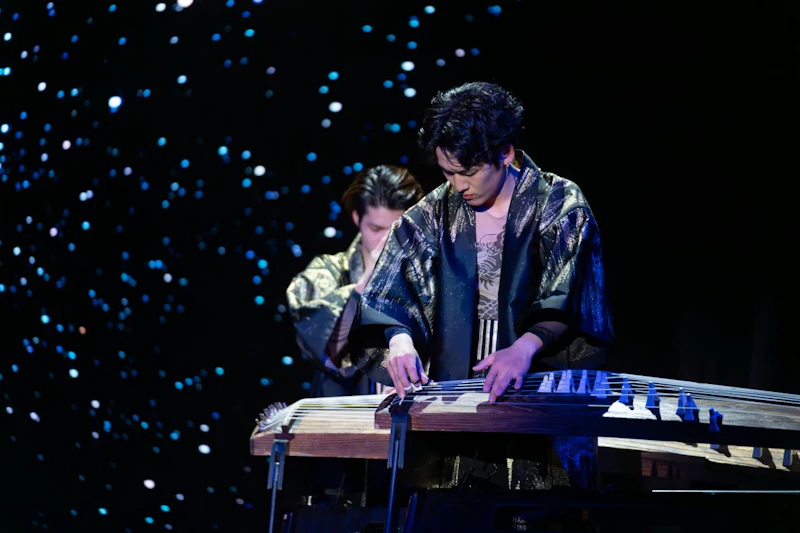
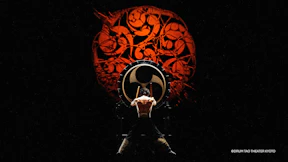
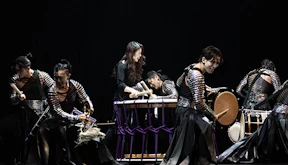
The appeal of YUME lies in its layered harmony, combining the powerful beats of wadaiko with traditional Japanese instruments like shinobue, koto, and shamisen. With well-balanced performances of stillness and movement, you can also appreciate the delicacy that Japanese performing arts possess.
The emotionally stirring romantic performances create travel memories that cannot be captured in photographs. It's suitable for those seeking quiet inspiration or wanting to savor the subtle differences in the tones of traditional Japanese instruments.
2-3. Writer's Impressions After Viewing the Performances
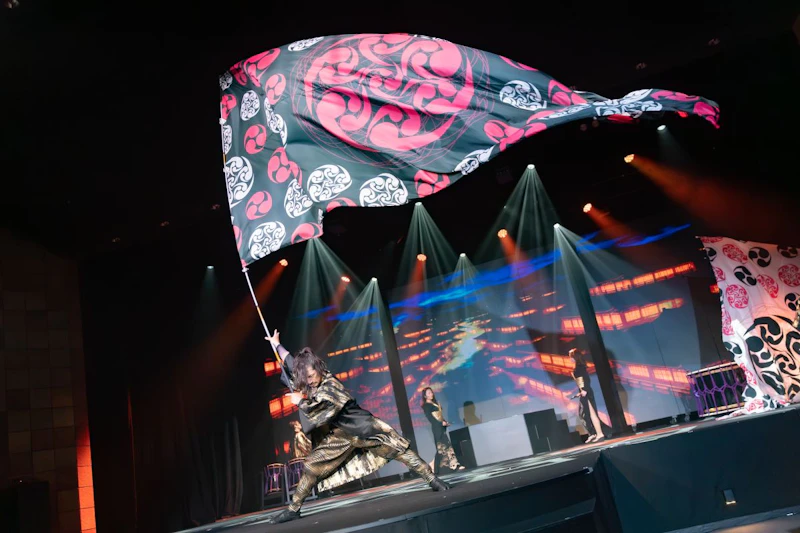
The article's author viewed digest versions of each performance just before the shows. First, the impression was that the sound quality was overwhelmingly sophisticated. The stage is extremely close, with powerful wadaiko performances happening right before your eyes. However, the sound maintains surprising depth, creating an experience that shakes your body like distant thunder.
Also, unlike larger performance venues in the past, DRUM TAO THEATER KYOTO features completely live sound from wadaiko without amplification. Perhaps because of this, while the impact is strong, there's no harsh noise that pierces the ears, creating a pleasant sensation that can be absorbed by the entire body.
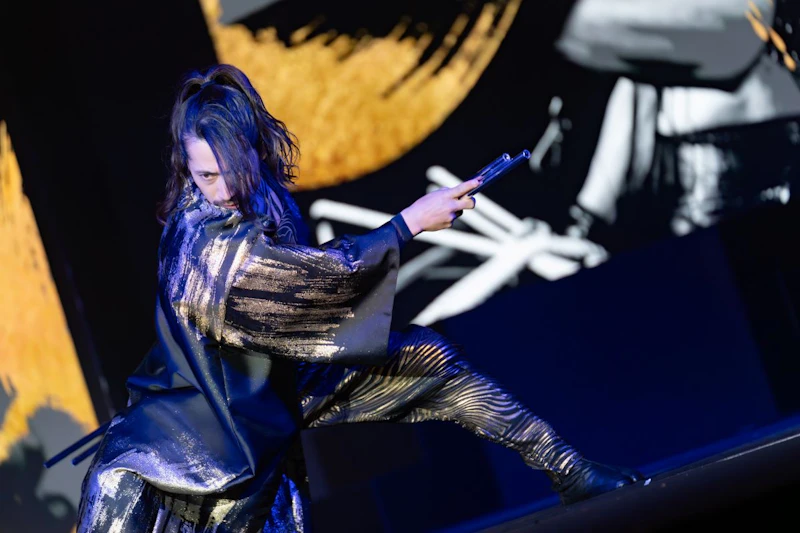
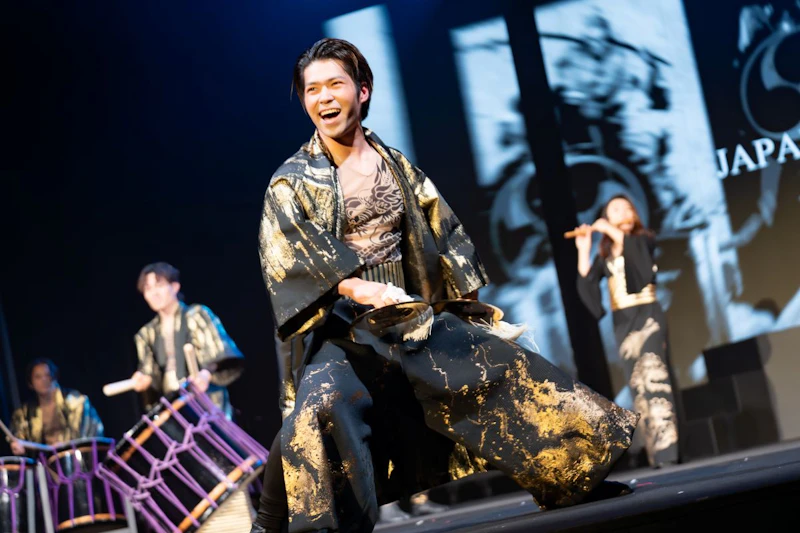
Although DRUM TAO THEATER KYOTO is a small theater with 270 seats, the combination of visuals and sound made the stage appear significantly larger than it actually is. The performances using nodachi (note: great sword-like Japanese swords as long as a person's height) and two metal rods resembling yari (spears), as well as performances with large flags waving dramatically, had a scale that made you forget the theater's size. During scenes where performers approached the audience from the stage, I felt drawn into the experience myself.
On the other hand, the combination of stillness and movement was also masterful, with attractive balance rather than just overwhelming power, such as quiet koto performances following powerful large drum performances. The variation kept audiences engaged without fatigue, with thoughtful devices to continuously draw viewers into the stage. The performance of a female performer in oiran-style costume dancing gracefully also left a strong impression.
It was a dense performance where sound impact and visual beauty emerged simultaneously.
3. The Vision Behind DRUM TAO THEATER KYOTO: Thoughts from Representative Fujitaka Ikuo and Designer Koshino Junko
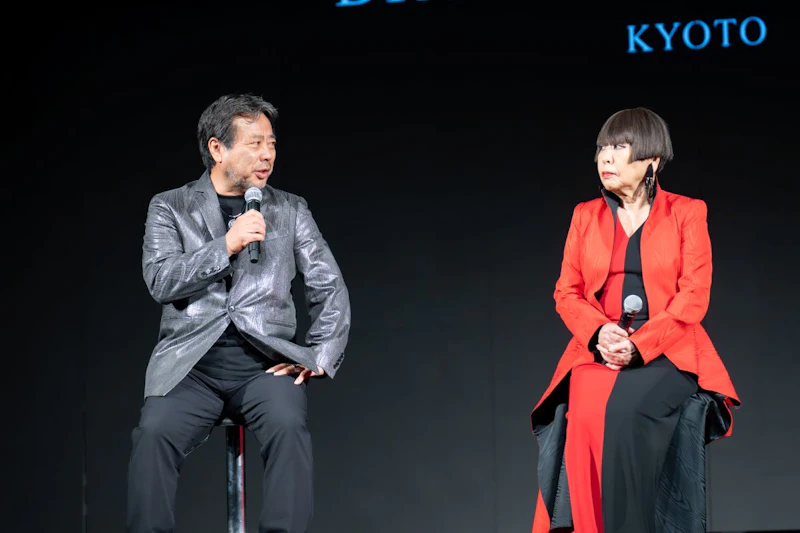
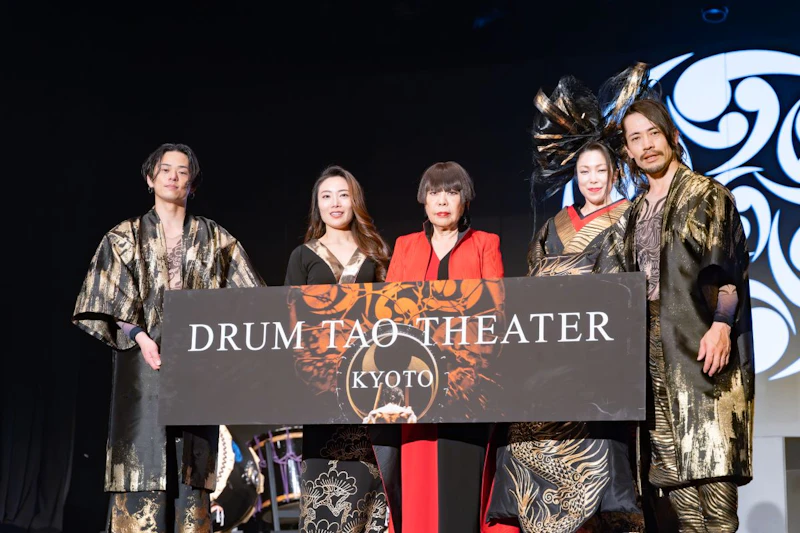
DRUM TAO THEATER KYOTO has been carefully refined in sound, costumes, and the use of spatial negative space, with thoughtful devices to create a high-quality experience befitting Kyoto's evenings. This is the product of the passion of DRUM TAO representative Fujitaka Ikuo and fashion designer Koshino Junko, who has been designing DRUM TAO's costumes for 14 years.
Below, we convey the thoughts embedded in DRUM TAO THEATER KYOTO by reconstructing the content of the pre-performance talk session and Q&A between Fujitaka Ikuo and Koshino Junko.
3-1. Original Productions Exclusive to Kyoto
DRUM TAO is based in “TAO no Sato,” located within Aso Kuju National Park. About a 10-minute drive from TAO no Sato is “TAO no Oka,” an open-air theater situated at a scenic viewpoint overlooking the Kuju Highlands, deep in nature and far from any airport. In stark contrast to this remote setting stands DRUM TAO THEATER KYOTO, located in a much more accessible area. Focusing on the differences between Aso and Kyoto, Mr. Fujitaka has launched two original programs that can only be seen at this location.
Regarding TAO no Oka, Koshino reflects: "You don't need stage sets. The (Aso) landscape itself is already a dynamic, authentic set." Fujitaka also mentioned that this spectacular scenery has supported TAO's appeal.
On the other hand, Kyoto is a tourist destination where the depth and refinement of Japanese culture breathe within the city. Fujitaka mentioned being surprised by the number of foreign tourists visiting Kyoto, especially Western travelers coming specifically for Japanese culture. Imagining the visitors, he created two distinct productions.
The 19:00 "Hibiki -HIBIKI-" is a matsuri-like stage that families can enjoy, with scenes where audiences can come on stage to experience drumming, fully embracing a lively evening experience. Meanwhile, the 21:00 "Yume -YUME-" was composed with strong ballad elements so couples could share emotional moments. These original productions exclusive to this theater were born from the question of what kind of people would spend what kind of evenings in the city of Kyoto.
3-2. Performances Emphasizing Kyoto's Cultural Characteristics of "Depth, Space, and Ma (Pause)"
When asked how Kyoto's character was reflected in the performances, Fujitaka honestly answered: "It was extremely difficult." Fujitaka felt that "simply flashy performances wouldn't reach Kyoto's aesthetic sensibilities." What he focused on was Kyoto's culture of "valuing blank spaces and ma (pauses)."
For Fujitaka, Kyoto felt like a place where time flows more slowly and leisurely than other regions. To transfer this sensation to the stage, he focused on creating mysterious depth where you can't tell where sounds are coming from. He incorporated surprising openings in both Hibiki and Yume, using direction that shakes the audience's sense of direction itself.
Kyoto's character also appears in instrument selection. When considering Kyoto culture, melodic instruments like shinobue and koto naturally came to mind, Fujitaka explained. Rather than pushing through with just the power of wadaiko, layering the tones of traditional Japanese instruments like shinobue and koto creates delicate nuances on stage.
3-3. The Reason for Deliberately Choosing a Small Theater Close to the Audience
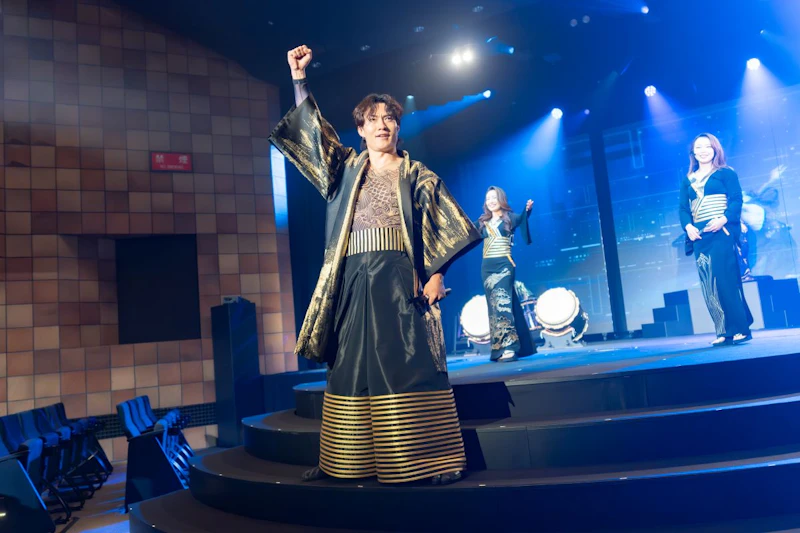
Particularly impressive in the talk was the topic of "why this scale of theater." DRUM TAO performs nearly 1,000 shows worldwide annually, typically in venues averaging 1,000 to 2,000 people, Fujitaka mentioned. Despite operating at such scale, DRUM TAO deliberately chose a compact theater with close audience proximity in Kyoto.
The reason is clear: to deliver wadaiko performances in live sound.
Fujitaka's words "There aren't many theaters where you can perform in live sound" conveyed that being able to deliver the original vibrations of wadaiko directly to the audience is a great joy for performers as well.
Fujitaka describes the closeness to the stage as "like watching in an ozashiki (traditional Japanese room)." Unlike stages viewed from afar in large halls, this venue allows performers' movements, breathing, and drum vibrations to be felt up close. Fujitaka believes this experience will leave strong impressions not only on adults but also children. He goes so far as to say "If children see this, they'll never forget it for life," deliberately choosing a small theater close to audiences to deliver such vivid performance experiences.
3-4. The Culmination of 14 Years of Technical Collaboration Between Fujitaka and Koshino
The story of meeting Koshino was a moment when the venue's atmosphere softened. Originally, Koshino had preconceptions about wadaiko, thinking "fundoshi (loincloth) and bare-chested, that kind of thing, right?" she laughingly recalled. Though not initially enthusiastic, her impression changed completely the moment she saw DRUM TAO's performance in Akasaka.
"If these people changed their costumes, something amazing would happen. It could be Broadway, or definitely succeed in Las Vegas too." Koshino's intuition marked the beginning of their 14-year collaboration. Fujitaka also revealed that being told "the costumes aren't good" led to requesting costumes from her.
Over 14 years, Koshino has created over 2,000 costumes. Fujitaka mentioned that all of them are still usable today, marveling at their enduring strength. Koshino herself was impressed by members saying "wearing the costumes flips a switch."
This relationship became even more pronounced in the Kyoto performances. Koshino explained choosing "chic gold" rather than flashy gold as a color representing Kyoto's elegance, history, and solemnity. She used Nishijin-ori fabric and created original pieces.
The Kyoto performances include performances in oiran-motif costumes, and regarding the oiran costumes, she declares "I think they're more luxurious than real oiran," conveying her thorough pursuit of splendor befitting Kyoto's stage.
3-5. Year-Round Permanent "Non-Verbal" Productions
When discussion turned to the significance of opening a permanent theater in Kyoto's evenings, Fujitaka explained that the 19:00 and 21:00 performance times also have clear intentions. While late-time performances are still uncommon in Japan, looking globally, the flow of enjoying shows after dinner followed by drinks and conversation is quite natural. Fujitaka says "It would be wonderful if we could establish a night entertainment culture in Kyoto as well." The concept of enjoying ancient capital tourist sites during the day and TAO performances at night has the potential to greatly expand how visiting tourists spend their evenings.
DRUM TAO THEATER KYOTO's performances are fundamentally non-verbal, conveying emotions through sound, physical expression, costumes, light, and space. Being enjoyable without understanding Japanese provides foreign tourists visiting Kyoto with an experience opportunity without language barriers.
Fujitaka's words "While Maruyama Park has magnificent cherry blossoms, they scatter in an instant. DRUM TAO THEATER KYOTO performances can be seen every night, with changes added to each performance" convey his intention to create value unique to permanent theaters where people can visit repeatedly, separate from tourism's momentary impressions.
3-6. DRUM TAO's Platform for "Culture to be Globally Transmitted from Kyoto"
Based on his experience of traveling the world for over 20 years and attracting audiences of 10 million people, Fujitaka stated his desire to now transmit from Kyoto to the world. His words "I want to make this a place where people think they can see new Japanese culture by coming to Kyoto" convey his desire not to end this theater as merely a performance venue.
Koshino also mentioned that Kyoto is a place where both viewers and visitors seek high-quality things, which is why this work is perfect for Kyoto. Responding to her words, Fujitaka said in the Q&A: "We've just started and it's still rough around the edges, but from now on it will keep changing and become an amazing stage."
Because DRUM TAO THEATER KYOTO is a permanent theater, there will surely be new discoveries no matter how many times you visit. For those who repeatedly visit Kyoto, this theater will undoubtedly become a reason for return visits.
Summary
DRUM TAO THEATER KYOTO is a permanent theater near Kyoto Station's Hachijo Exit where you can experience authentic wadaiko performances. The ability to choose productions based on your travel purpose is also appealing: "Hibiki -HIBIKI-" if you want to enjoy excitement with family or friends, or "Yume -YUME-" if you want to spend a lingering Kyoto evening. The impact unique to live sound, the intimacy possible in a small 270-seat theater, and the immersive experience where visuals and sound unite are definitely worth experiencing at the venue.
The latter half of the article introduces DRUM TAO THEATER KYOTO's facilities, pricing, and access information.
※This article was created based on information as of April 2026
.PNG?w=288&fm=webp)