A Guide to Japan's Fireworks and Major Fireworks Festivals | How to Enjoy Fireworks Festivals
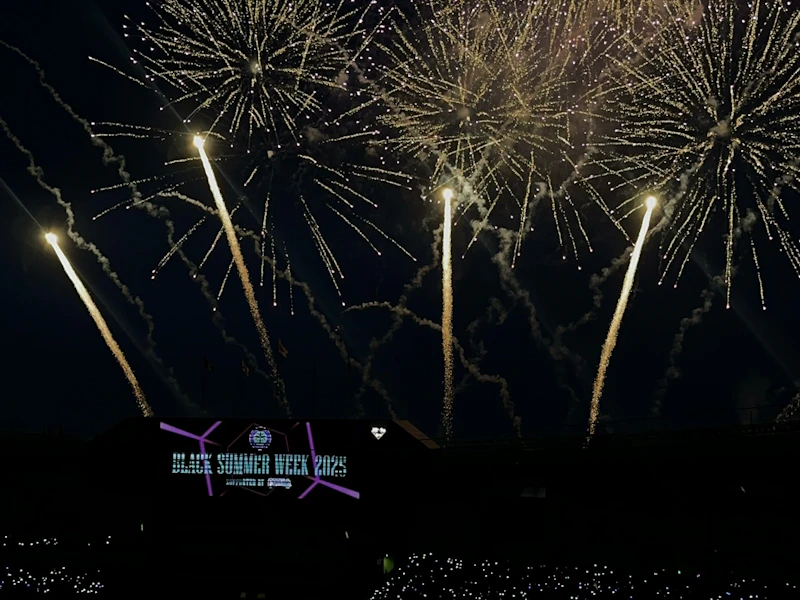
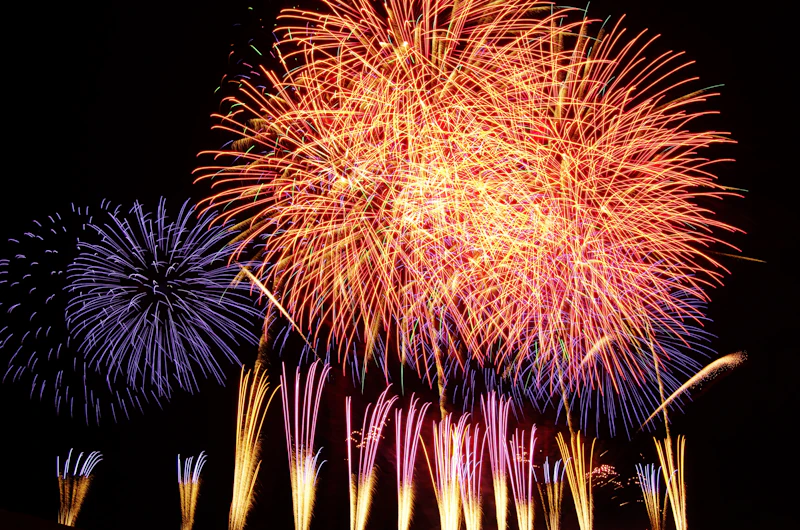
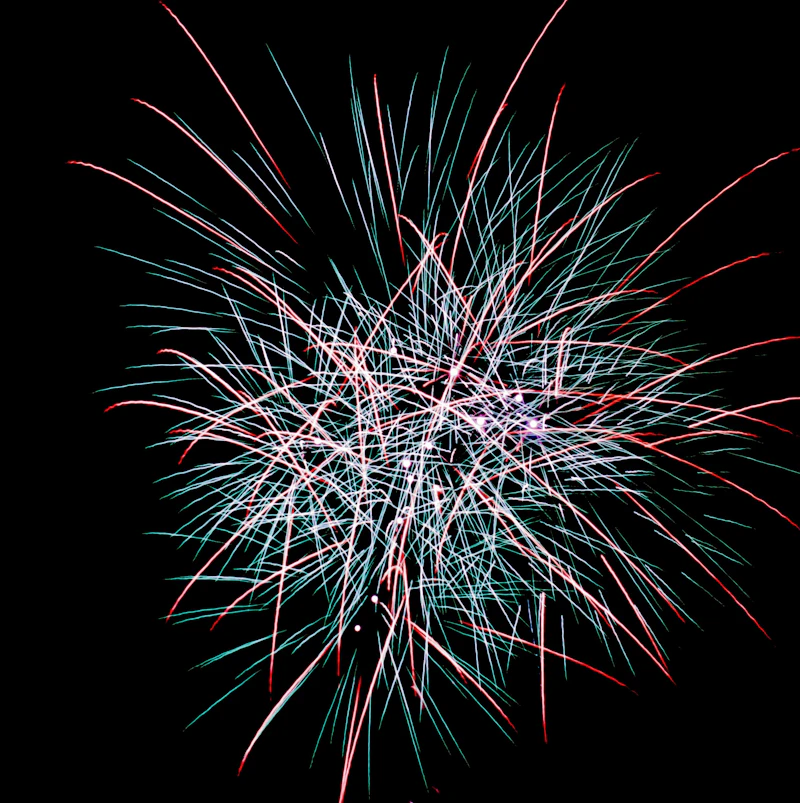
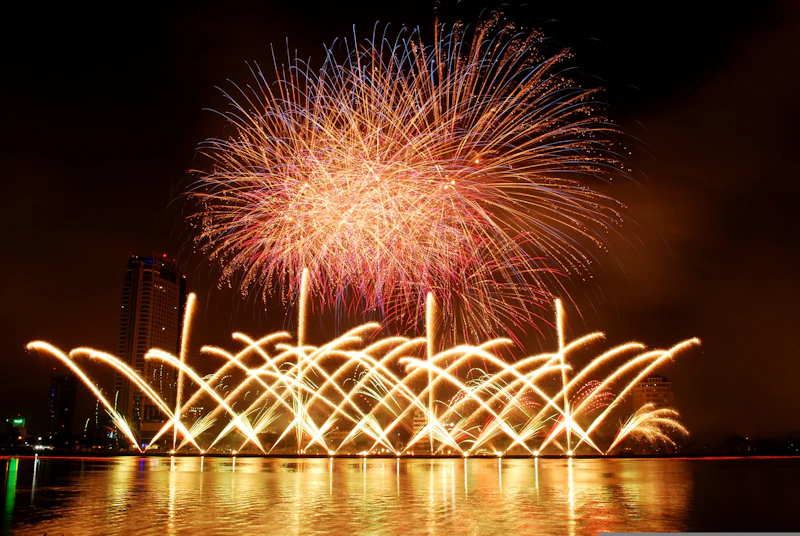


When it comes to symbols of Japanese summer, "fireworks festivals" are quintessential. In professional baseball's Pacific League, the Chiba Lotte Marines' "ZOZO Marine Stadium" and the Orix Buffaloes' "Hotto Motto Field Kobe" are ideal venues for fireworks as they are open-air stadiums without domes or roofs. However, since fireworks displays at each stadium occur only a few times per year, it might be worth checking out local fireworks festivals throughout Japan, which are deeply connected to regional history and community spirit. Particularly, festivals like the Sumida River Fireworks Festival and the Omagari National Fireworks Competition are among many nationwide events that boast long histories and exceptional technical skills, captivating large audiences every year.
This article provides an easy-to-understand introduction to the origins and types of Japanese fireworks, the appeal of representative festivals, and tips for fully enjoying fireworks festivals, making it accessible even for first-time visitors.
Table of Contents
1. What are Japanese Fireworks (Hanabi)?
1-1. History of Japanese Fireworks
1-2. Types of Japanese Fireworks
1-3. Baseball Stadiums Where Fireworks Can Be Viewed
2. How Are Japanese Fireworks Made?
2-1. Gunpowder Composition and Star Formation
2-2. Star Arrangement and Firework Shell Assembly
2-3. Shell Wrapping for Reinforcement and Drying
2-4. Finishing and Completion
3. Representative Japanese Fireworks Festivals
3-1. Sumida River Fireworks Festival (Tokyo)
3-2. Omagari National Fireworks Competition (Akita Prefecture)
3-3. Nagaoka Festival Grand Fireworks Display (Niigata Prefecture)
3-4. Tsuchiura National Fireworks Competition (Ibaraki Prefecture)
3-5. Tenjin Festival Dedication Fireworks (Osaka Prefecture)
3-6. Toyohashi Gion Festival (Aichi Prefecture)
4. The Continuing Evolution of Japanese Fireworks
4-1. Computer-Controlled Fireworks Launch Evolution
4-2. Fireworks Technology Creating New Colors and Movements
4-3. Environmentally Conscious Fireworks Production Initiatives
5. How to Enjoy Japanese Fireworks Festivals
Summary
1. What are Japanese Fireworks (Hanabi)?
Japanese fireworks are beloved by many as a summer tradition. The beauty and power that illuminate the night sky represent one of Japan's traditional cultures where unique technology and aesthetic sensibilities have culminated. Beyond mere entertainment, they are deeply connected to regional festivals and historical events, maintaining a close relationship with Japanese spiritual culture.
1-1. History of Japanese Fireworks
The origins of fireworks in Japan date back to the Edo period. After the introduction of gunpowder, while its use as weaponry advanced, the technology for launching fireworks for entertainment and warding off evil spirits was also established.
Particularly in Kyoho 18 (1733), fireworks were launched along the Sumida River to pray for the elimination of epidemics, which became the prototype for fireworks festivals as popular entertainment. Subsequently, manufacturing techniques were refined by craftsmen throughout the country, adding diverse expressions in color and form.
From the Meiji era onward, with advances in science and technology, the safety and presentation aspects of fireworks improved significantly. Today, large-scale fireworks festivals are held throughout the country, and Japanese fireworks technology is highly regarded internationally.
1-2. Types of Japanese Fireworks
Japanese fireworks are broadly classified into the following three types based on their structure and blooming patterns.
・Warimono (Split-type) ・Han-warimono (Half-split type) ・Poka-mono (Trick-type) |
Fireworks are not merely decorations for the sky but are inherited as traditional art that reflects Japanese aesthetic sensibilities, seasonal awareness, and regional culture.
1-3. Baseball Stadiums Where Fireworks Can Be Viewed
In Japan's professional baseball Pacific League, the Chiba Lotte Marines' "ZOZO Marine Stadium" and the Orix Buffaloes' "Hotto Motto Field Kobe" are optimal venues for enjoying fireworks as open-air stadiums without domes or roofs.
However, fireworks displays at each stadium are limited to only a few times per year. For accurate fireworks schedules, please check each team's official website.
Additionally, throughout Japan, many fireworks festivals are held as part of regional festivals, not just at stadiums. Since Japanese fireworks are deeply connected to regional history and community culture, we recommend enjoying local fireworks festivals as well.
2. How Are Japanese Fireworks Made?
Instagramでも宣伝しているのですが、模擬玉を受注生産で販売しています。
— 山﨑煙火製造所 (@yamazaki_enka) September 18, 2020
少しでも興味があったり、質問などあればリプやDMでお答えしますので気兼ねなくご連絡ください! pic.twitter.com/2OxSRrkqVN
Japanese fireworks are created through the advanced skills of craftsmen and meticulous work over long periods. The beautiful fireworks that spread large and round in the night sky are not completed simply by stuffing gunpowder and launching them. Everything from color development to blooming patterns and symmetrical shapes is achieved through calculated processes. Understanding the manufacturing process will make your fireworks festival viewing experience deeper and more memorable.
Here, we explain the traditional Japanese fireworks manufacturing process step by step.
2-1. Gunpowder Composition and Star Formation
Fireworks production begins with the composition of gunpowder that serves as the source of colors and light. By carefully adjusting and mixing oxidizers, flame colorants, and combustible materials, diverse colors like red, blue, and green are created. The completed gunpowder is formed into granules called "stars," which play a crucial role in determining the fireworks' brilliance and spread patterns.
The more uniformly the size and density of stars are arranged, the more beautifully the light spreads in circles when launched.
2-2. Star Arrangement and Firework Shell Assembly
The formed stars are evenly arranged along the inside of the firework shell. Breaking powder that generates explosive propulsion is packed in the center, with distances and angles between stars carefully adjusted. The higher the precision of arrangement, the more symmetrically and largely the launched fireworks open, creating ideal spherical shapes.
One reason Japanese fireworks are highly regarded worldwide is the existence of precise assembly processes. The power and symmetrical beauty felt during viewing are created through the accumulation of careful handwork by craftsmen.
2-3. Shell Wrapping for Reinforcement and Drying
After assembly, firework shells are strengthened by layering craft paper multiple times. This process is called "shell wrapping," and by repeating application and drying, it creates a sturdy structure that can withstand the great pressure of explosion. Since the thickness and layering method of paper create differences in how fireworks open, work proceeds with attention to even slight changes.
Uniformly reinforced firework shells spread large and round in the night sky when launched, making it easier to create stable beauty.
2-4. Finishing and Completion
Finally, fuses are attached and information such as size and type is marked on the shell surface, bringing the firework shell to completion. Completion can take anywhere from several weeks to several months, demonstrating that much time and advanced technique are invested in a single firework.
Fireworks created with such care brilliantly illuminate the night sky at summer festivals and fireworks festivals, leaving deep impressions in viewers' hearts. When you look up at fireworks knowing the manufacturing process, you can feel the craftsmen's thoughts embedded in each moment of brilliance and the depth of Japanese traditional culture more intimately.
3. Representative Japanese Fireworks Festivals
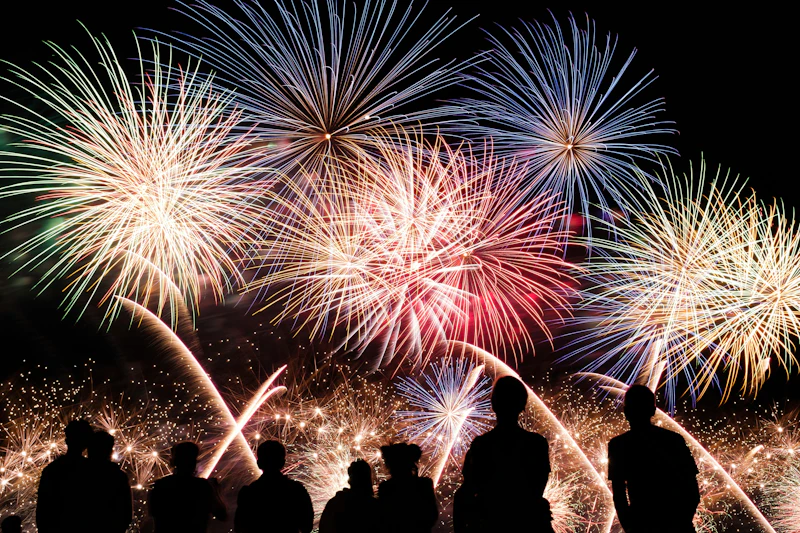
Fireworks festivals held throughout Japan in summer feature unique presentations based on regional characteristics and history. Among them, nationally known festivals receive high praise for their technical skills, scale, and viewing environments.
Here, we introduce several representative fireworks festivals where tradition and creativity merge, explaining their respective characteristics.
※Please note that schedules and launch contents may change annually, so if you plan to attend, please check official information in advance.
3-1. Sumida River Fireworks Festival (Tokyo)
The Sumida River Fireworks Festival is a traditional fireworks festival originating from the Edo period's "Ryogoku River Opening," representing a prestigious event in the Kanto region. In 1733, following a great famine and epidemic casualties, the shogunate held a Water God Festival for memorial services and epidemic elimination prayers, prompting restaurants around Ryogoku Bridge to launch fireworks, which is considered the beginning.
The first venue features competitions between fireworks companies, where works combining traditional techniques and skills successively illuminate the night sky. Viewing fireworks alongside historic streetscapes offers a uniquely Japanese experience that combines visual and cultural value.
2025 Event Date and Time | July 26 (Saturday) 19:00-20:30 |
|---|---|
Venue | First Venue: Downstream from Sakura Bridge to upstream from Kototoi Bridge Second Venue: Downstream from Komagata Bridge to upstream from Umaya Bridge |
Official Website |
3-2. Omagari National Fireworks Competition (Akita Prefecture)
The Omagari National Fireworks Competition is Japan's premier fireworks competition that attracts attention from both domestic and international audiences. Beginning in 1910 (Meiji 43) as entertainment for the Suwa Shrine festival called the "Ou Six Prefectures Fireworks Exhibition," it has over 100 years of history as a traditional event.
This competition's characteristic is that top fireworks masters selected from across the nation compete with works showcasing their technical excellence. In the competition divisions, the highest honor of Prime Minister's Award is presented along with numerous other awards, making it considered a gateway to success in the fireworks world.
On the day of the competition, approximately 18,000 fireworks are launched, and visitors can experience the competition of sound and light up close in an open venue with the Dewa Hills as backdrop. Special programs by previous year's Prime Minister's Award winners and organizer presentations are also major highlights.
2026 Event Date and Time | August 29 (Saturday) Daytime Fireworks Competition: from 17:10 Nighttime Fireworks Competition: from 19:00 |
|---|---|
Venue | "Omagari Fireworks" Park (Akita Prefecture Daisen City Omagari Omono River riverside) |
Official Website |
3-3. Nagaoka Festival Grand Fireworks Display (Niigata Prefecture)
The Nagaoka Festival Grand Fireworks Display is counted among Japan's Three Great Fireworks Festivals as a large-scale fireworks event. The festival's origins trace back to the Nagaoka Air Raid of August 1, 1945. The year following the air raid that claimed many lives, the "Nagaoka Recovery Festival" was held with prayers for memorial services and reconstruction, which became the origin of the current Nagaoka Festival.
From 1951 (Showa 26), it was officially renamed the "Nagaoka Festival" and has continued as an event with themes of memorial, reconstruction, and peace. The fireworks festival features approximately 20,000 fireworks launched from both banks of the Shinano River, including the "Sanshakudama" with large rings of about 650m diameter, the "Phoenix Recovery Prayer Fireworks" spanning about 2km in launch width, and starmine synchronized with music.
The light artistry drawn in Nagaoka's sky brings deep emotion to viewers' hearts.
2026 Event Date and Time | August 2 (Sunday) & 3 (Monday) from 19:20 |
|---|---|
Venue | Shinano River riverbed |
Official Website |
3-4. Tsuchiura National Fireworks Competition (Ibaraki Prefecture)
The Tsuchiura National Fireworks Competition is one of Japan's premier competitive fireworks festivals that began in 1925, where fireworks companies from across the nation compete in technical skills. Despite wartime interruption, it resumed in 1946 and is now held annually in November along the Sakura River. Being held during the autumn harvest season is also a characteristic of this festival.
The competition is divided into three categories: "Starmine Division," "10-inch Shell Division," and "Creative Fireworks Division," with starmine particularly competing for "Japan's best." The rapid-fire display of diverse fireworks creates a spectacular sight that captivates audiences. Winners receive the Minister of Economy, Trade and Industry Award, Small and Medium Enterprise Agency Director-General's Award, and Ibaraki Prefecture Governor's Award.
This festival, where advanced technology and creativity converge, serves as a prestigious stage for fireworks masters while enchanting many visitors as a major autumn event in Tsuchiura.
2026 Event Date and Time | TBA |
|---|---|
Venue | Sakura River riverside (near Gakuen Bridge) |
Official Website |
3-5. Tenjin Festival Dedication Fireworks (Osaka Prefecture)
(Source: Osaka Temmangu Shrine Official Website)
The Tenjin Festival Dedication Fireworks are launched as the finale of the traditional "Tenjin Festival" held in Osaka. The Tenjin Festival is counted among Japan's Three Great Festivals as a historic religious ceremony with over 1,000 years of history. On the final day, many fireworks are launched, creating a magical scene that simultaneously illuminates the Okawa River surface and night sky.
Performed alongside the "boat procession" with over 100 boats, the flickering lights of lanterns and bonfires on the water further enhance the fireworks' brilliance. Approximately 3,000 fireworks are launched, and despite being in an urban area, visitors can experience powerful presentations up close.
The dedication fireworks, which hold religious significance, contain prayers for good health and peaceful safety. The unique cultural value of this event, which fuses history, faith, and entertainment, should not be overlooked. It's a precious opportunity to experience Japanese festival culture while feeling Osaka's vibrant atmosphere.
2026 Event Date and Time | July 25 (Saturday) from 19:30 |
|---|---|
Venue | Osaka Prefecture Osaka City Kita Ward / Kawasaki Park & Sakuranomiya Park |
Official Website |
3-6. Toyohashi Gion Festival (Aichi Prefecture)
The Toyohashi Gion Festival is a historic event inherited as a festival of Yoshida Shrine and one of Aichi Prefecture's representative fireworks festivals. It features powerful and dynamic presentations centered on hand-held fireworks that originated in the Mikawa region. The sight of people holding tubes filled with gunpowder while shooting up columns of fire is full of impact and leaves strong impressions on viewers.
In the latter half of the festival, large-scale launched fireworks are displayed on the Toyo River riverbed, featuring colorful starmine and water fireworks. Using the wide riverside venue, presentations unfold across the entire field of vision, creating a competition of light.
Various programs including long starmine displays and fireworks competitions are prepared, ensuring enjoyment until the very end. As a fireworks festival where history and regional culture live on, it captivates many visitors.
2026 Event Date and Time | TBA |
|---|---|
Venue | Aichi Prefecture Toyohashi City / Yoshida Shrine grounds & Toyo River riverside |
Official Website |
4. The Continuing Evolution of Japanese Fireworks
🎆-------------------------🎆
— なにわ淀川花火大会 生中継【2026年は夏?秋?】 (@hanabi_tvo) October 18, 2025
なにわ淀川花火大会 生中継
🎆-------------------------🎆
ご覧いただきありがとうございました✨
秋🍂の花火はいかがでしたか🎇
途中雨が強くなった時間もありましたが
お楽しみいただけてたら嬉しいです✨#なにわ淀川花火大会 #淀川花火 pic.twitter.com/OxaopKYgh7
Japanese fireworks continue to evolve by incorporating modern science and digital technology while cherishing traditional techniques inherited over a long history. For tourists, Japanese fireworks are not merely entertainment but represent a cultural experience where one can feel Japanese aesthetic sensibilities and craftsmanship spirit.
Here, we introduce new presentation technologies adopted in Japanese fireworks festivals and the characteristics of continuously evolving fireworks production.
4-1. Computer-Controlled Fireworks Launch Evolution
In recent Japanese fireworks festivals, precise ignition systems using computer control are being gradually introduced. It has become possible to adjust launch timing according to music rhythms and presentation flow, enabling different expressive presentations than before. Time management, which was previously supported by craftsmen's experience and intuition, can now be controlled in fine increments in many situations.
Even when launching multiple fireworks simultaneously, precise synchronization makes it easier to achieve presentations that balance both power and beauty. Presentations where light and sound spreading across the night sky harmonize create stage-like realism, bringing fresh surprise and emotion to viewers. Furthermore, it has become easier to incorporate compositions reflecting regional characteristics and themes, making the individuality of each fireworks festival more prominent.
4-2. Fireworks Technology Creating New Colors and Movements
In the fireworks world, expressions of color and movement are also steadily evolving. By devising metal element compositions and gunpowder structures, soft color tones and time-delayed changing light presentations have become more achievable. New presentations that create a sense of movement, such as fireworks that appear to rotate or expressions where colors change like waves, have also emerged.
Furthermore, multi-layered fireworks that bloom continuously and three-dimensional expressions combining stars of different shapes have expanded visual enjoyment. Through such technological developments, fireworks have evolved as highly artistic entertainment, playing a role in conveying the appeal of Japanese fireworks culture domestically and internationally. Their value as tourism resources has also increased, with fireworks festivals being utilized as opportunities for exchange and community revitalization in many regions.
4-3. Environmentally Conscious Fireworks Production Initiatives
In modern fireworks production, environmental consideration has become a more important perspective than ever. Initiatives aimed at sustainable fireworks festival operations are spreading, including the introduction of reusable launch tubes and development of components using water-soluble materials.
Furthermore, utilization of biodegradable materials and operational methods conscious of waste reduction are being considered in various locations. In addition to research to minimize the impact of smoke and noise, operational systems are being reviewed with consideration for local residents. These initiatives represent important steps toward inheriting fireworks culture into the future while harmonizing with the natural environment.
5. How to Enjoy Japanese Fireworks Festivals
At Japanese fireworks festivals, let's experience the festival atmosphere with our whole bodies, not just watching the light artistry blooming in the night sky. First, by participating while wearing the traditional costume "yukata," you can feel a part of customs continuing from the Edo period. Many venues offer rental services, so you can participate empty-handed with peace of mind.
Also, food stalls are a fireworks festival staple. You can enjoy Japanese festival fair foods like takoyaki, yakisoba, and shaved ice while also enjoying stall games like goldfish scooping and shooting games. Please visit during the moments before the launch.
And when magnificent fireworks bloom in the night sky, try calling out the traditional cheers "Tamaya!" and "Kagiya!" Don't be shy about participating, as it will help you feel Japanese fireworks culture more intimately. Please thoroughly enjoy Japan's summer tradition of fireworks festivals.
Summary
Japanese fireworks are a traditional culture that has evolved from the Edo period to the present day, with their beauty and technical excellence highly regarded worldwide. Fireworks festivals are not merely viewing events but excellent opportunities to experience Japanese culture through yukata participation, food stall dining, and traditional cheers. Through fireworks that illuminate summer night skies, please feel Japan's seasonal sensibilities and regional stories.
※This article is based on information as of March 2026